
The Coast Guard has quietly but decisively retreated.
After weeks of backlash from lawmakers and public outrage, the service has scrapped controversial language in a new workplace harassment policy that described hate symbols such as swastikas and nooses as merely “potentially divisive.”
The phrase is now gone.

The United States coast guard patrols the intracoastal waterway behind Mar-a-Lago just before President Donald Trump Palm arrives in Palm Beach for the weekend October 31, 2025.
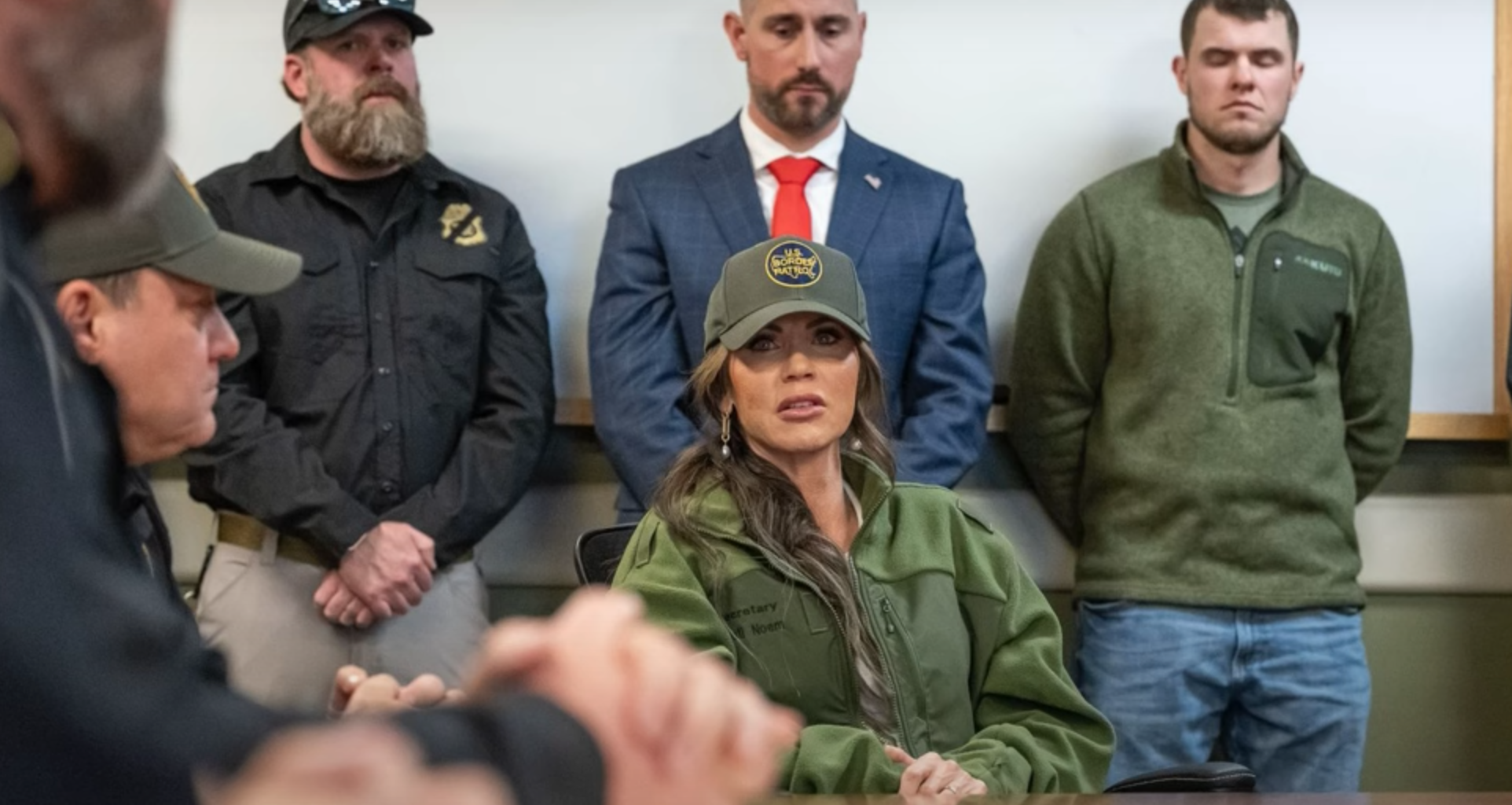
Homeland Security Secretary Kristi Noem announced Thursday that the wording would be “completely removed from the record,” following reports that the Coast Guard had planned to downgrade how hate symbols were classified — a move that critics said could allow them to remain on display even after being reported.
The uproar began last month when The Washington Post revealed that the Coast Guard’s draft policy softened its language around hate symbols, labeling them “potentially divisive” rather than explicitly prohibited. Under that framework, commanders would not have been required to remove such symbols in all cases, particularly if they appeared in private or semi-private spaces like family housing.
The revelation detonated on Capitol Hill.
Democratic Sen. Jacky Rosen of Nevada placed a hold on the nomination of Adm. Kevin Lunday to become Coast Guard commandant, accusing leadership of “backtracking” on prior commitments that swastikas and nooses are unambiguously hate symbols with no place in the service.
That pressure worked.

Following Noem’s announcement, Rosen lifted her hold, saying she was satisfied that the revised policy now includes “stronger language” against hate symbols.
“While I continue to have reservations about the process and the confusion created by leadership at the Department of Homeland Security,” Rosen said, “I am pleased to see that the policy now directly refers to stronger language against swastikas and nooses.”
Noem, for her part, dismissed the controversy as political theater — but still erased the language at the center of it.
“There was never a downgrade,” the Department of Homeland Security insisted, maintaining that the revisions were meant to strengthen reporting and enforcement. Still, Noem said the phrase would be removed entirely to prevent “press outlets, entities or elected officials” from misrepresenting the Coast Guard’s position.
She also called the delay of Lunday’s nomination a “politicized holdup,” urging swift confirmation and praising his nearly four decades of service.
Behind the scenes, the episode exposed how a few words buried in a policy document can trigger institutional chaos.
According to The Washington Post, Coast Guard officials initially wanted to strike the “potentially divisive” language but were unable to do so during earlier drafting stages. Once the policy leaked into public view, the reaction was immediate and unforgiving.
The Coast Guard moved quickly to contain the damage, issuing statements emphasizing that it maintains “zero tolerance” for hate symbols, extremist ideology, and conduct that undermines its core values.
“We prohibit the display or promotion of hate symbols in any form,” the service said. “Any suggestion otherwise is false.”
But for critics, the damage was already done — and only undone after congressional pressure forced the issue.
What began as a bureaucratic wording choice turned into a referendum on whether America’s military institutions would equivocate on symbols of terror and hatred.
For now, the answer is no.
Swastikas and nooses are no longer “potentially divisive.”
They are exactly what they’ve always been — and the Coast Guard’s policy now says so, without qualifiers.



