
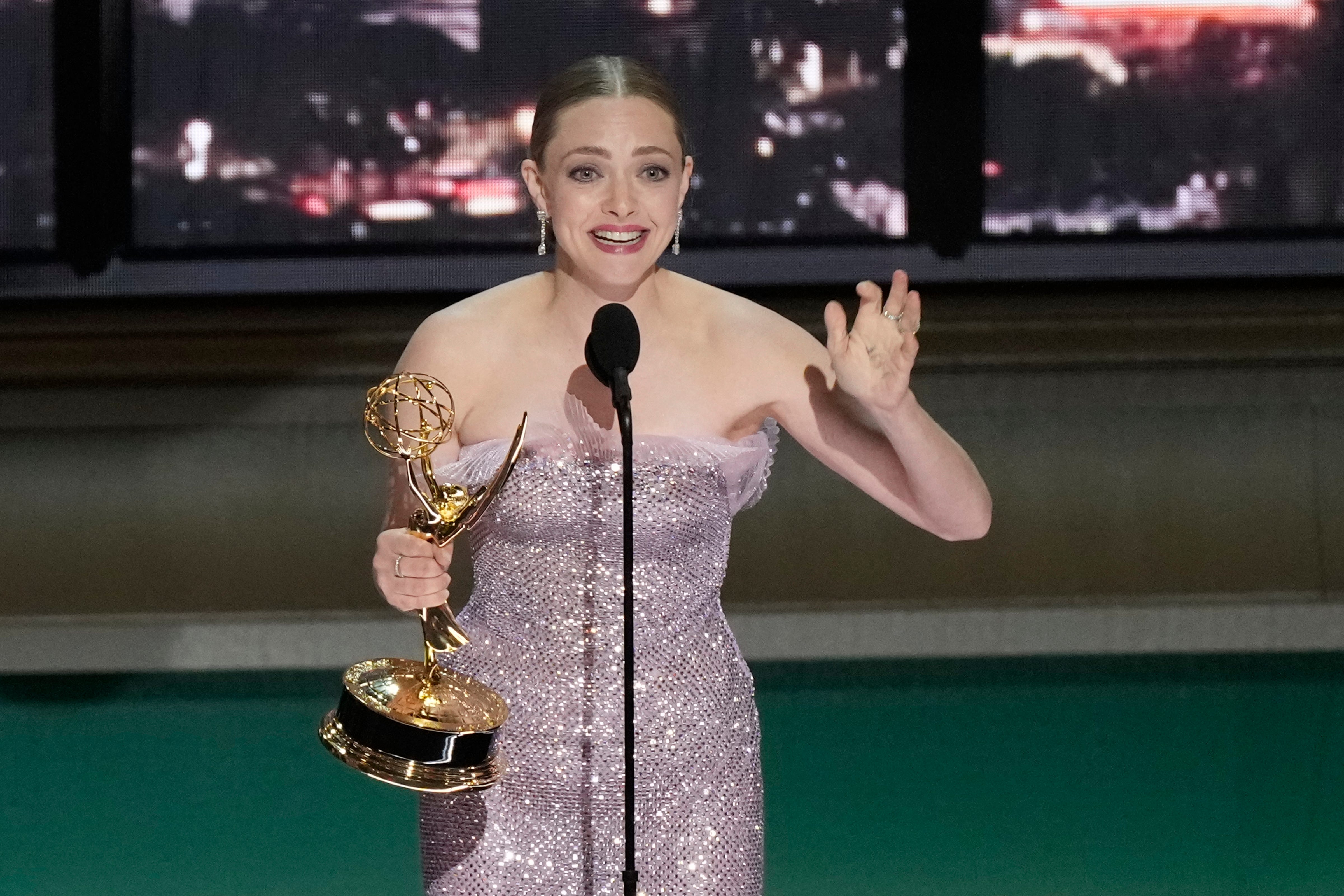
The Hollywood glam meets political gunpowder this week as Amanda Seyfried stepped out of the soft-focus glow of prestige dramas and straight into the crosshairs of America’s conservative outrage machine. Her crime? Calling Charlie Kirk — the polarizing right-wing activist slain in a rooftop assassination at Utah Valley University — “hateful.”
Seyfried didn’t whisper it. She didn’t backslide. And when the backlash arrived — fierce, fast, and eager to paint her as endorsing Kirk’s death — she didn’t flinch.

At the York Theater in Fort Bragg, actress Amanda Seyfried signs autographs for fans during the Premiere of “Dear John” a movie based on the Nicholas Sparks book of the same name, starring Channing Tatum and Amanda Seyfried on Saturday, Jan. 23, 2010.
“I’m not [expletive] apologizing for that,” she told Who What Wear in a blistering new cover interview. “For [expletive] sake, I commented on one thing. It was based on actual reality and actual footage and actual quotes. What I said was pretty damn factual.”
The firestorm erupted after Seyfried responded to a social-media compilation of Kirk belittling immigrants, Black women, and birth control — a greatest-hits reel of his most combustible rhetoric during his “American Comeback Tour,” a 15-stop campus circuit built around provocation and confrontation. Kirk was engaging with students in one such debate when a sniper’s bullet tore through his neck on September 10th. A 22-year-old suspect, Tyler Robinson, was arrested after a frantic manhunt.
But Seyfried’s critics quickly reframed her comment as something darker — as though calling out rhetoric was equal to endorsing murder. The actress felt her words had been “stolen and recontextualised,” a familiar game in American politics, where nuance goes to die.
So she reclaimed the narrative on Instagram.
“I can get angry about misogyny and racist rhetoric AND ALSO very much agree that Charlie Kirk’s murder was absolutely disturbing and deplorable,” she wrote. “No one should have to experience this level of violence. This country is grieving too many senseless and violent deaths and shootings.”
In her interview, Seyfried said Instagram became her lifeline in the maelstrom: “Thank God for Instagram. I was able to give some clarity… it was about getting my voice back.”
While the political storm swirls, Seyfried is also experiencing a different kind of spotlight — one far sweeter. She revealed that her viral dulcimer performance of Joni Mitchell’s “California” on The Tonight Show landed her more opportunities than her Emmy win for The Dropout. “I got work from that,” she said proudly. “I feel like that made more of an impact than my Emmy did.”
It’s an irony fit for Hollywood noir: an actress navigating a nation’s rawest political wounds while simultaneously reaping the rewards of a folk-rock cover born in pandemic isolation.
But in an America where every word is weaponized, Seyfried’s message cuts through the fog:
She can condemn racism without condoning violence.
She can hold two truths at once.
And she won’t let anyone else tell the story for her.



