
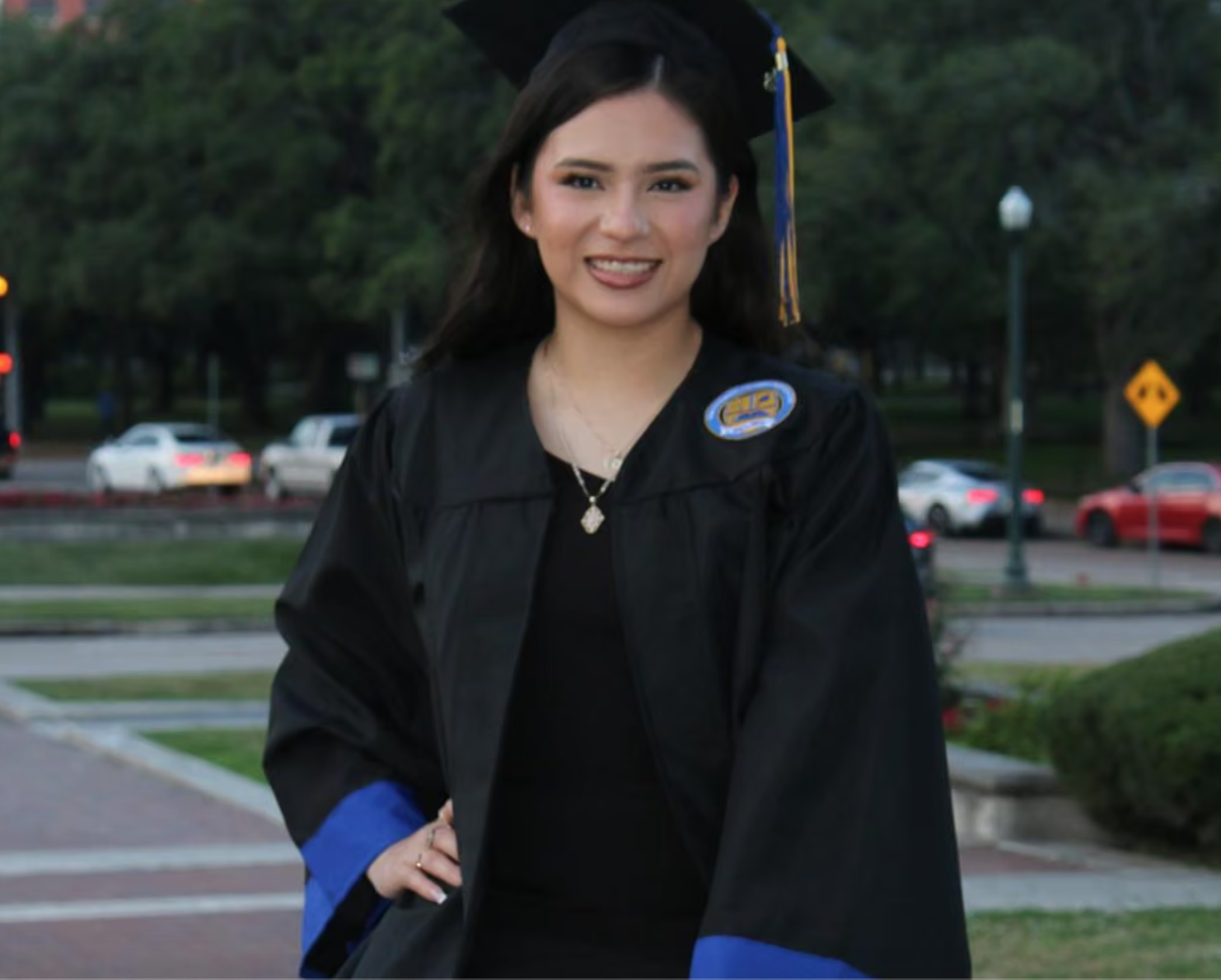
Any Lucia López Belloza was supposed to be heading home to Austin for Thanksgiving, surprising the parents and little sisters she hadn’t seen since leaving for her first semester at Babson College outside Boston. A family friend had given her the plane tickets. She’d made it to the gate. Then an airline agent said there was an “error” with her boarding pass.
Moments later, the 19-year-old business student was in handcuffs.
She told the Guardian that two men she believed to be Immigration and Customs Enforcement agents took her into custody without explanation. “I thought: I was traveling to surprise my parents for Thanksgiving, and now the surprise will be that I won’t be there,” she said. Her parents immediately contacted a lawyer, and by the next morning a federal judge issued an emergency order barring her removal for at least 72 hours.

But the following day, López was shackled at her wrists, ankles, and waist and put on a flight out of the country. She was deported to Honduras—her birthplace, but a country she left at age seven and barely remembers.
Her rapid expulsion, completed in under 48 hours, has become one of the most startling examples of alleged abuses under Trump’s revived mass deportation strategy. López now stays with her grandparents in San Pedro Sula, one of the most violent cities in the Western Hemisphere. Gang-controlled neighborhoods, extortion, and political instability have pushed generations of Hondurans to flee. In 2014, when López’s family escaped, the city was known as the murder capital of the world.
Her lawyer, Boston attorney Todd Pomerleau, said the government’s actions violated both constitutional protections and the federal court’s explicit order. “Her case is an unconstitutional horror show,” he said. He argued that López was given no hearing, no legal access, and no due process. ICE officials have long claimed deportation priorities focus on criminals, but López has no record. Being undocumented is a civil infraction, not a crime.
A Department of Homeland Security spokesperson said López had a removal order from 2015, issued after she crossed into the U.S. the year before. But Pomerleau said neither he nor López has ever been shown such an order, and that even if it exists, arrests under it must occur within 90 days—not a decade later.
Human rights researchers warn that returning young women to Honduras carries specific dangers. Elizabeth G. Kennedy, a social scientist who studies deportees, said gang violence drives high rates of femicide and sexual assault. “Now you have a young woman back in a country where it’s very dangerous to be a young woman, who was given no due process rights in the U.S.,” she said.
López tries to stay focused. She wants to keep studying—either in Honduras or back at Babson if the courts allow her return. She dreams of reuniting with her family and rebuilding the life she was yanked from. “I try to be as positive and as strong as I can,” she said.
Babson College issued a statement saying its priority is supporting López and her family. Her lawyer awaits the government’s explanation for why the emergency order was ignored. “It’s possible the government will say: sorry, we made a mistake, and we’re going to bring her back,” Pomerleau said. “But they might have a different approach—and that’s going to require me to make a forceful argument.”
He added, “We’re not stopping until we get her back.”
López hopes that day comes soon. “My main goal in the U.S. was always to study,” she said. “What happened to me isn’t fair. We went there to study and work hard—pursuing that American dream so many of us had.”



