
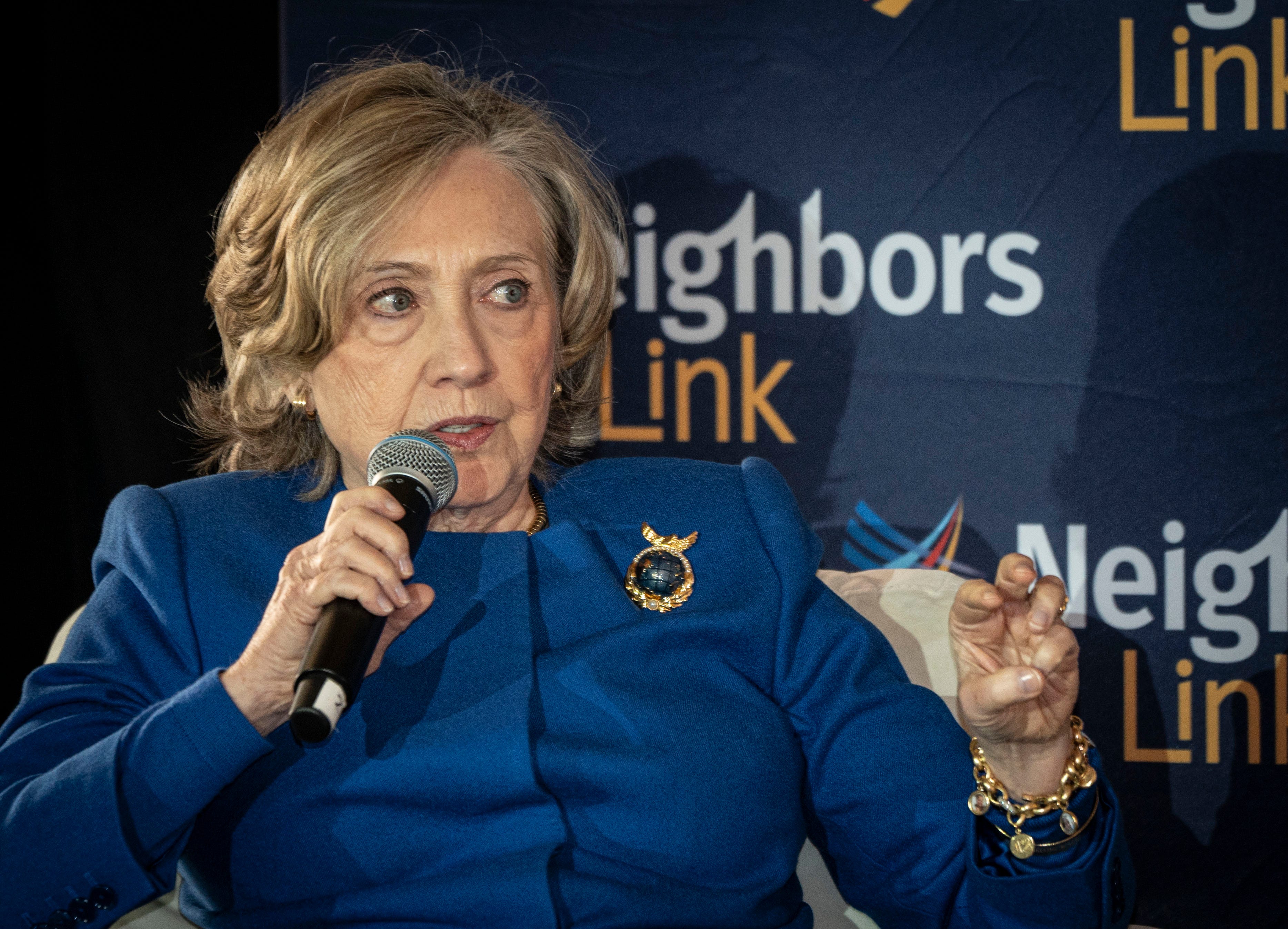
Hillary Clinton is sounding alarms about what she calls a dangerous media pipeline shaping young Americans’ views on the Israel-Hamas war. At a summit in New York hosted by Israel Hayom, the former secretary of state said social platforms—especially TikTok—are funneling warped, misleading, and sometimes fabricated images of Gaza to millions of young people who use them as their primary news source.
Clinton argued that the pro-Palestinian surge among young Americans didn’t come out of nowhere. Instead, she said, it grew out of unchecked feeds of short-form video that reward shock, amplify gore, and flatten history into viral fragments. In her telling, that algorithmic churn has become the closest thing to a teacher many young people have, and she insisted it is failing them.

She described trying to have “reasonable” conversations about the conflict with young people but said those efforts break down because their understanding is shaped almost entirely by what they’ve seen on their phones. She offered no examples of videos she believed were fabricated or manipulated, but she said the trend is clear: material circulating online is often “pure propaganda,” delivered without context or verification.
Clinton also singled out young Jewish Americans as part of that shift, suggesting they, too, are absorbing images without the historical grounding needed to parse them. More than half of young Americans get their news primarily from social media, she said, calling it a profound democratic risk—one that spans from Israel to the United States.
Her warning echoes recent remarks from Sarah Hurwitz, a former White House speechwriter under Barack Obama, who told an audience that TikTok is “smashing” young people’s brains with relentless streams of wartime images from Gaza. Hurwitz argued that the nonstop exposure has created a divide between older and younger Jews, making discussions about the conflict almost impossible.

Clinton referenced research from the Reuters Institute that found 54 percent of Americans now receive news through Facebook, X, and YouTube—outpacing television and traditional news apps. The report’s author, Nic Newman, warned that the shift puts enormous power in the hands of influencers and partisan personalities who face none of the scrutiny once reserved for journalists. The result, Newman wrote, is an information environment easily manipulated by bad actors looking for an audience.



