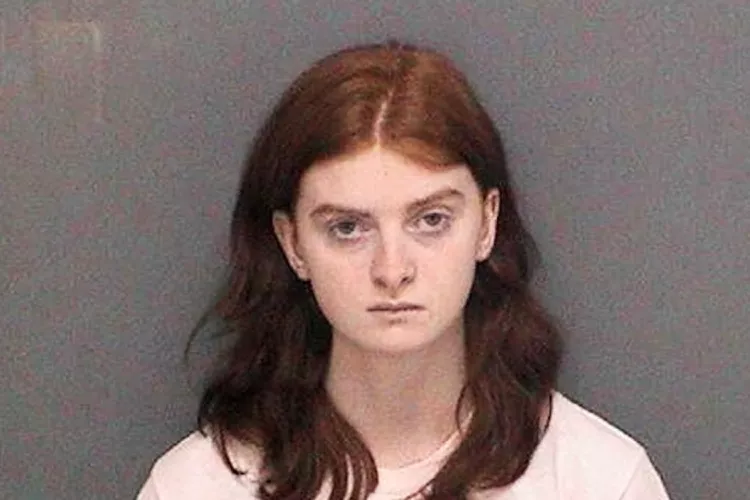
The girl who once spoke casually about slaughter suddenly found herself standing before a judge, choking on the consequences. In Indiana, 19-year-old Trinity Shockley will serve 12 years in prison for a mass-shooting plot that never materialized only because someone close to her decided they weren’t willing to gamble with a town’s life.
Shockley pleaded guilty to conspiracy to commit murder and received a 20-year sentence with eight years suspended, plus five years of probation.
The plan she discussed in messages and conversations circled around a grim date: February 14. Prosecutors say she intended to strike Mooresville High School on Valentine’s Day.

It wasn’t police surveillance or a school official who intervened—it was a friend. Someone who saw the signs, heard the fantasies, and picked up the phone to call the FBI’s Sandy Hook tip line. The tipster told agents that Shockley had access to an AR-15, had ordered a bulletproof vest, and openly admired Nikolas Cruz, the gunman who murdered 17 people in Parkland, Florida. That combination of access, intent, and fixation was enough to trigger an urgent investigation.
Shockley had long claimed she was bullied. In court, she looked less like the figure described in the affidavit and more like a frightened young woman who realized too late that her morbid fantasies had crossed into criminal territory. She apologized to her intended target, her classmates, and the entire Mooresville community. “I am so sorry I put you in that position of fear,” she said, later insisting therapy and support had steadied her mental health since her arrest.
Her attorney argued she never meant to follow through. “She knew she couldn’t do it, but she kept talking about it,” he said—a defense that prosecutors didn’t find convincing. Morgan County Chief Deputy Prosecutor Cassie Mellady told reporters the plea deal reflected the level of planning uncovered by investigators. For authorities, the threat was real enough to merit serious time.
The FBI’s Indianapolis office issued a rare, blunt statement after sentencing, calling the case a “powerful reminder that when the public speaks up, lives can be saved.”