
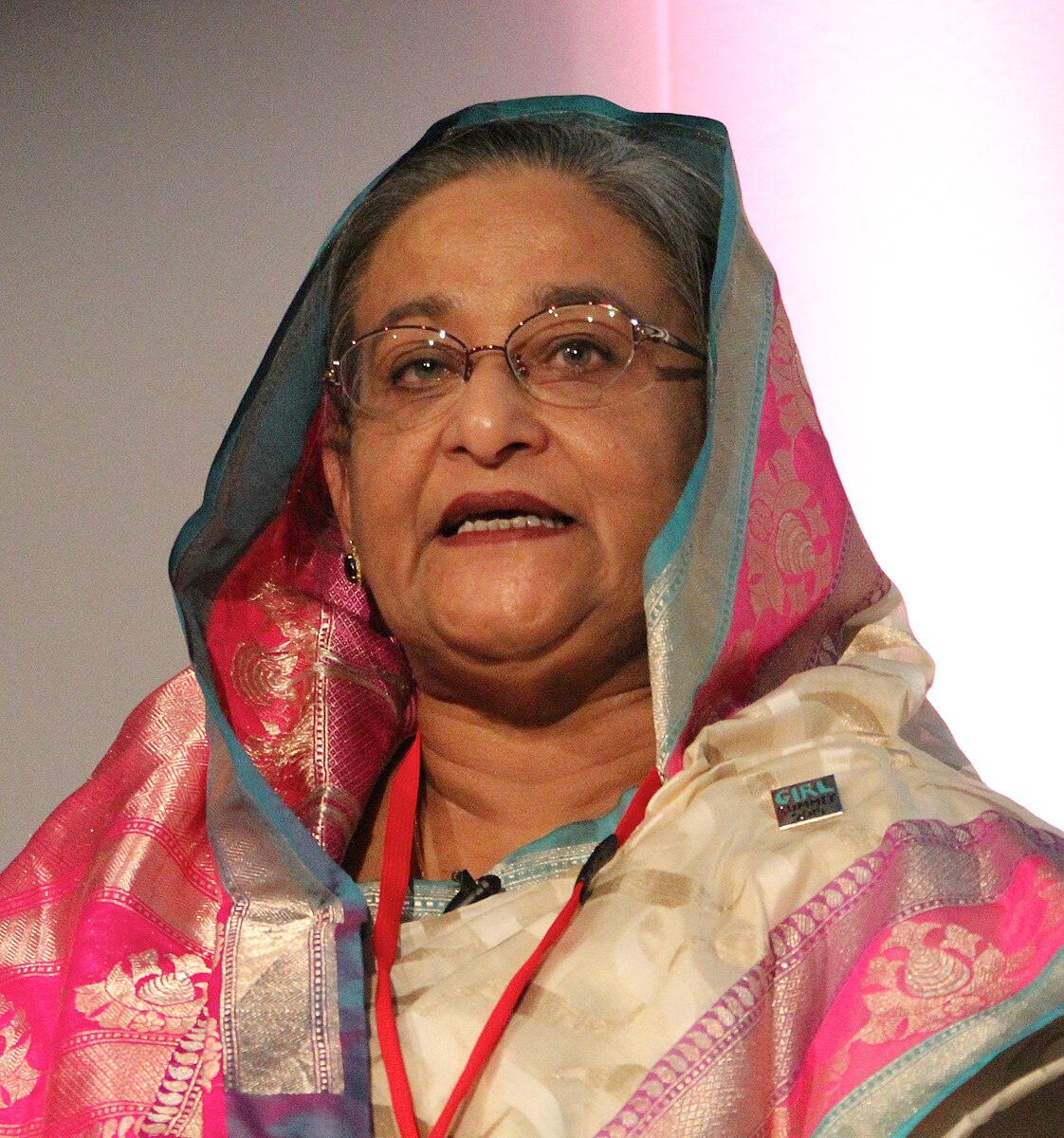
A Dhaka court handed down prison sentences Monday to former Bangladeshi prime minister Sheikh Hasina, her sister Sheikh Rehana, and her niece — British Labour Party MP Tulip Siddiq — in a corruption case that has escalated tensions between Bangladesh’s interim government and Hasina’s political allies at home and abroad.
Hasina, ousted last year amid a mass uprising and now living in exile in India, was sentenced in absentia to five years in prison. Siddiq received two years, while Rehana, identified by the judge as the “primary actor” in the scheme, was sentenced to seven. All three were fined $813, and the land plot at the center of the corruption scandal was ordered canceled. Fourteen others are also implicated.

The charges stem from a government housing project in which prosecutors say Rehana secured land for herself and two of her children. Judge Rabiul Alam ruled that Hasina abused her authority as prime minister to facilitate the scheme, and that Siddiq corruptly influenced her aunt. Siddiq, who represents London’s Hampstead and Highgate, condemned the verdict instantly.
“The outcome of this kangaroo court is as predictable as it is unjustified,” she said, calling the proceedings a political hit job. Bangladesh’s Anti-Corruption Commission insists Siddiq was tried as a Bangladeshi citizen, citing a passport, national ID, and tax number — claims she flatly rejects. “I am a British citizen,” she has repeatedly said.
Hasina’s Awami League blasted the ruling as “entirely predictable,” describing the proceedings as political theater staged by an interim government headed by Nobel laureate Muhammad Yunus. The party insists Hasina and her family are innocent and calls the trial process a violation of basic judicial standards. International legal experts have echoed those concerns.

The prosecution, however, says it wanted harsher penalties — life sentences for the central defendants — and is evaluating its next steps. Lead prosecutor Khan Mohammed Mainul Hasan said they will consult the commission and reach out to the British government through Bangladesh’s foreign ministry.
The fallout crosses borders. In London, the ruling Labour Party said it cannot accept the judgment, arguing Siddiq was never informed of the charges, never given access to legal counsel, and never offered a fair legal process. Siddiq had already stepped down as a minister in Prime Minister Keir Starmer’s government in January, saying the controversy was becoming a distraction even after she was told she had been cleared by British authorities.
Meanwhile, Hasina’s legal troubles continue to mount. Last month she was sentenced to death for crimes against humanity tied to the deadly crackdown that preceded her fall from power. Separate corruption cases handed down in late November resulted in another 21 years in prison for her, and five-year terms for each of her two children. All of the verdicts have been delivered in absentia.
Rehana, Siddiq’s siblings, and other relatives remain outside Bangladesh as additional cases tied to last year’s uprising move forward.
With national elections planned for February under Yunus’s interim rule, the country is bracing for the next chapter in its political upheaval. For now, the sentences deepen the divide between the old order and the new — and cast a long shadow over Bangladesh’s already volatile path toward its next government.



