
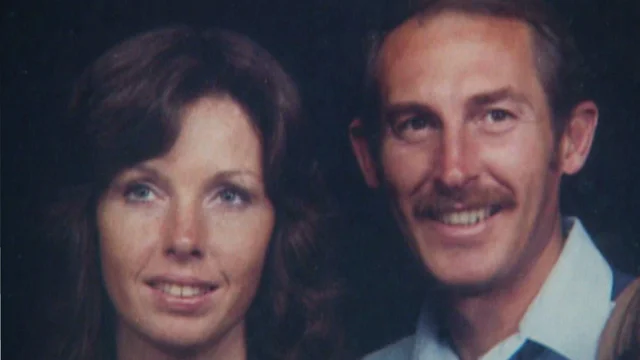
In February 2000, Jane Dorotik was living an ordinary life on her family’s horse ranch in San Diego County when everything changed. Her husband, Robert, went out for a jog while she stayed home working on the property. The next day, he was found bludgeoned to death on the side of the road.
Despite reports from four witnesses who saw Robert jogging, and another who claimed to have seen him slumped over in a car between two men, investigators almost immediately centered their attention on Jane. Just two days after his body was discovered, she was arrested and charged with first-degree murder.
A Narrative That Ignored Key Evidence
Prosecutors argued that Jane killed Robert in their bedroom, dragged his body downstairs, placed him in their truck, and dumped him along the roadside. They claimed blood and DNA evidence supported this theory and pointed to an alleged motive: avoiding future alimony payments if the couple were to divorce—despite no evidence that divorce was being discussed.
Even more troubling, evidence later revealed that the supposed blood in the bedroom was never actually tested, and two lab workers involved in the case had a documented history of serious testing errors. None of that stopped the case from moving forward.
In August 2001, Jane was convicted and sentenced to 25 years to life, beginning a two-decade chapter of wrongful imprisonment.
The DNA Breakthrough That Changed Everything
In 2015, after years of legal advocacy, a judge granted Jane’s request for advanced DNA testing. When the results came back, they fundamentally changed the understanding of the crime scene:
- Foreign male DNA—not Jane’s—was found under Robert’s fingernails.
- More foreign male DNA was found on the murder weapon.
- The testing excluded Jane as the source.
This evidence not only contradicted the prosecution’s narrative, but directly suggested the involvement of an unknown male.
By 2020, in light of the new forensic findings and previously undisclosed problems in the original investigation, Jane’s conviction was officially overturned with the help of the Loyola Project for the Innocent. Two years later, in 2022, prosecutors dismissed the case entirely—ending the criminal matter but leaving behind decades of loss.
A Rare Example of Female Exoneration
Wrongful convictions are devastating in any context, but for women, they carry unique dimensions. Women make up a small percentage of incarcerated individuals, which means their cases often receive less scrutiny, fewer resources, and limited systemic attention. Cases involving family members—especially spouses—can generate powerful assumptions that overshadow factual inconsistencies.
Jane’s case demonstrates how quickly investigators can lock onto a theory and how difficult it is for women to challenge forensic narratives that have gone untested or unverified. Her exoneration is now cited by advocates as an example of how easily tunnel vision can derail justice for women defendants.
A Civil Settlement That Raised Eyebrows
After her release, Jane pursued a civil claim for the 20 years she lost to a wrongful conviction. In November 2025, she received a settlement of $500,000—a figure widely criticized given the magnitude of the harm.
Broken down, the compensation equated to roughly $25,000 per year of incarceration—far below what many states mandate and far below what male exonerees have historically received.
Her case reignited debate around the country about how the justice system values (or undervalues) the lives and losses of wrongfully convicted women.
A Legacy of Strength and Persistence
Today, Jane Dorotik stands as a powerful symbol of resilience. She spent 20 years fighting to prove what the DNA evidence ultimately confirmed—she was not the killer. Her story continues to prompt discussions about forensic integrity, gender bias in investigations, and the urgent need for reform in wrongful conviction compensation.
While no settlement can restore the years she lost, Jane’s case serves as a reminder: wrongful convictions don’t just break systems—they break lives. And far too often, women like Jane must fight the hardest simply to be believed.



