
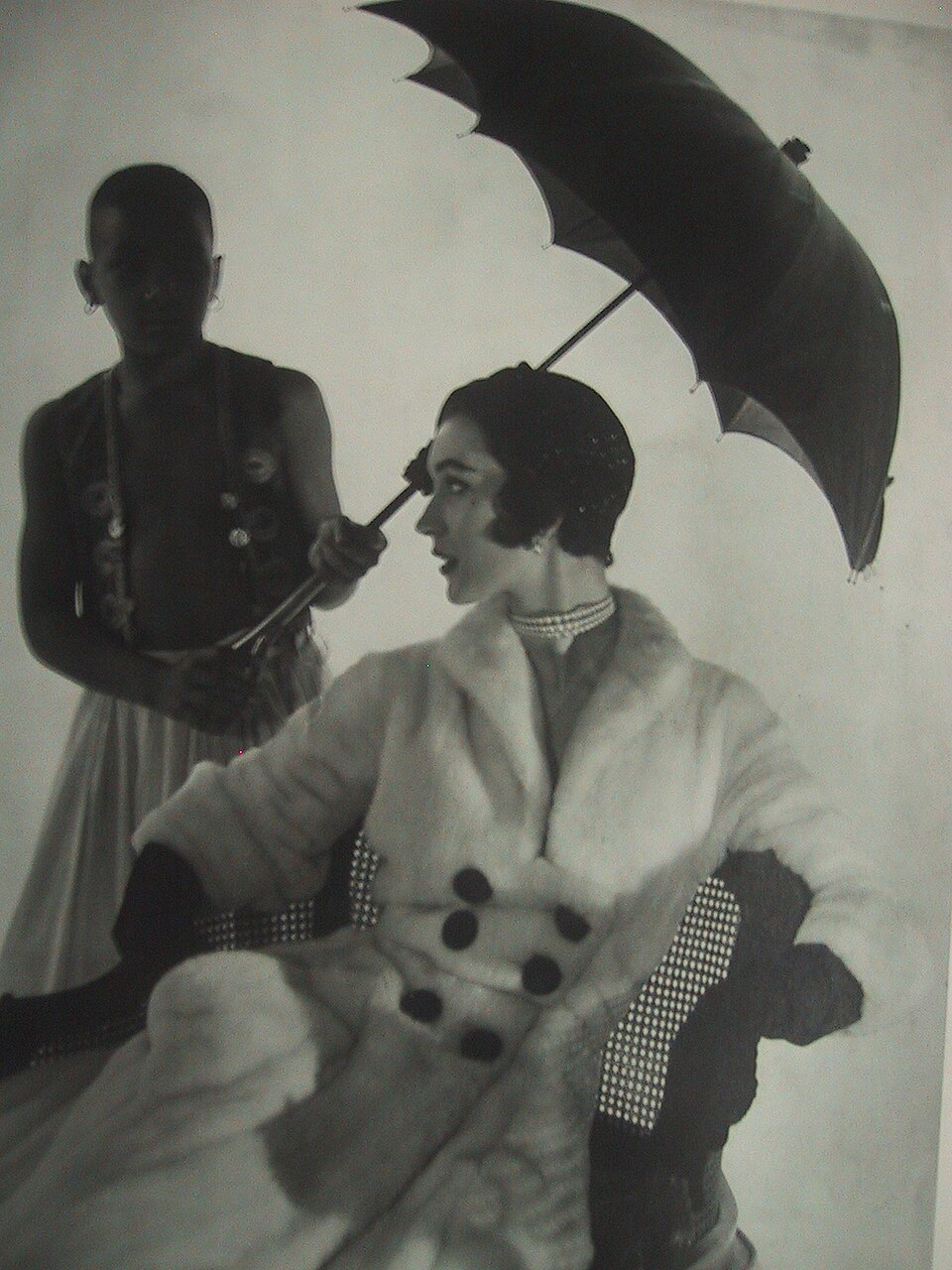
Dovima’s photographs have long been seen as some of the best in the fashion industry, and she managed a number of firsts as one of the leading models of the mid-century. However, her mysterious aura and elegant appearance hid a harsher personal life. Dovima, born Dorothy Virginia Margaret Juba, rose from a quiet upbringing in New York City to become one of the most recognizable faces in 1950s fashion. Her career began unexpectedly when a Vogue staffer approached her outside an Automat in 1949, leading to an immediate test shoot. Within a short period, she became one of the era’s top-earning fashion models and appeared across major magazines. Her work with famed photographer Richard Avedon helped cement her status as a cultural figure, especially through an image that became one of fashion photography’s most reproduced. Though she retired young and later faced financial hardship, her influence on modeling and visual style has endured for decades.
Early Life and How She Got Her Name

Dovima spent her childhood in Jackson Heights, a neighborhood in the borough of Queens in New York City. The area, a dense residential community, became the backdrop for her early years, which were marked by long stretches of illness. Rheumatic fever left her confined to bed for extended periods, and she used art to pass the time. During these years, she invented an imaginary playmate and combined the first letters of her three given names to create “Dovima.” She also carried a chipped front tooth from a childhood accident, a detail she instinctively hid by posing with her lips closed — a subtle trait that later contributed to her enigmatic expression and distinctive modeling style.
Discovery and Rapid Rise

Her entry into fashion began abruptly in Manhattan when a Vogue employee stopped her near an Automat (part of a popular restaurant chain at the time, in which people retrieved food from vending-machine cubbies) and asked whether she had modeled before. The following day she posed for photographer Irving Penn, whose images highlighted her composed, mysterious look. She soon joined the Ford modeling agency and quickly became one of its most successful talents, earning above-standard rates for the period. Fashion at the time favored a cool, aristocratic look, and Dovima’s angular posture and restrained facial expressions aligned with that aesthetic. Within a year she was appearing in leading fashion publications, becoming a central figure in the visual style of the 1950s.
The Avedon Era

Dovima’s work with Richard Avedon defined much of her public image. Avedon regarded her as uniquely striking, and their collaborations produced some of the most recognizable photographs in postwar fashion. Their most famous session took place in Paris in 1955 at the Cirque d’Hiver, where Dovima posed in an evening gown designed under Christian Dior by a young Yves Saint Laurent. The photograph juxtaposed her elegant pose with two circus elephants, creating a dramatic contrast that became widely reproduced and studied. Although this image is the most celebrated, Dovima’s cool, refined presence made her a standout even without elaborate staging or props.
A Life Far From Fashion

In the early 1960s, Dovima chose to leave modeling at age 35, deciding that aging would change how cameras captured her and, in her words, “turned cruel.” She attempted acting, appearing in television productions and as a model in the Audrey Hepburn film “Funny Face.” Her personal life, however, grew increasingly difficult. After multiple marriages and financial losses, she no longer had the security she once enjoyed. By the mid-1970s she had moved to Fort Lauderdale, Florida, to be near her retired parents. There she worked in everyday service roles, including cosmetics sales and hosting at a local pizzeria, far from the world of couture she had once dominated.
Final Years

In her later years, Dovima lived a quiet life in South Florida. She formed lasting connections locally, including another marriage that lasted until her partner’s death. Despite the contrast between her glamorous early career and her modest later life, recognition of her place in fashion history persisted. Her best-known photograph remains a popular reference point for students and admirers of mid-century design. Dovima died in 1990 at age 63 from cancer. Today she is remembered as one of the defining faces of 1950s fashion, a model whose presence helped shape the era’s visual vocabulary and influenced the evolution of modern fashion photography.
Sources: Vogue, The New York Times, Vanity Fair, Evie Magazine



