
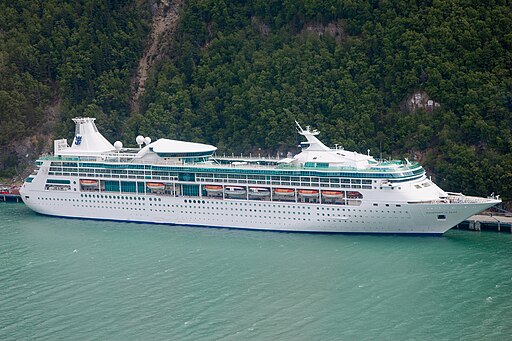
More than 25 years after Amy Lynn Bradley vanished during a Caribbean cruise, new details about an aborted $50,000 exchange have drawn additional attention to one of the most enduring mysteries connected to her disappearance. The information, shared by private investigator Jim Carey, adds another layer to the long trail of leads that have emerged since Amy was last seen aboard the Royal Caribbean ship in 1998.
Carey, who has worked on the case for the Bradley family for the past few years, described a previously undisclosed attempt by a police clerk in Curaçao to claim a large payment in exchange for leading investigators to Amy’s location. According to Carey, the clerk contacted the family in 1999 and said he had personally seen Amy alive. The family agreed to arrange the payment and coordinated with Interpol, which transported a cashier’s check to the island. However, the exchange quickly unraveled. The clerk refused to accept the check, despite being told that investigators could not bring that amount of cash into the country. Carey recounts that the man later broke into the hotel room of the Interpol agents in search of the money, after which the agents ended their involvement and left the island. Carey characterized the situation as indicative of the kind of unpredictable individuals who have inserted themselves into the case over the years.
Two decades later, Carey says he tracked down the same man, who again insisted he had seen Amy. While acknowledging the individual has made inconsistent statements, Carey maintains that the clerk continues to repeat his claim and believes the possibility should not be dismissed outright. For Carey, the failed payment and the clerk’s repeated assertions form part of a broader pattern of interactions on Curaçao, where others have claimed to have seen her.
According to Carey, other individuals on the island also reported seeing Amy shortly after she disappeared, including a local drug dealer who contacted the family during the initial search and gave them several specific locations where he believed she had been. That individual has since died, leaving no further opportunity to clarify his account. Carey argues that, taken together, these encounters raise questions about whether Amy may have been on the island even as official searches were underway.
The renewed attention to these events comes amid a wider resurgence of interest in the case following the release of a Netflix documentary. The series drew in hundreds of tips from viewers, with several considered particularly noteworthy by a source connected to the production. These included a previously unidentified bartender from the ship who was reportedly claiming someone was kidnapped the night Amy vanished, as well as a suspicious digital visit to the family’s missing-person website traced to a boat near Barbados. Another potential sighting in the region was also flagged. Amy’s mother has clarified that not all reported leads have been verified or followed up.
Carey has also presented his own theory about how Amy might have been removed from the ship. After reviewing security logs, witness statements and key-card data, he believes that she may have left her cabin early in the morning and encountered individuals who planned to abduct her. He argues that shipboard security at the time was minimal and that individuals who were not passengers had managed to board earlier in the trip. Although this theory has not been conclusively supported, it aligns with a longstanding view held by the Bradley family, who have never believed Amy accidentally fell overboard or committed suicide.
In the decades since Amy Bradley vanished, numerous reported sightings and fragmented leads have surfaced, but none have brought investigators any closer to finding her. The FBI’s inquiry remains open, and a reward for information still stands. For the Bradley family, the failed $50,000 exchange is one of many reminders of how elusive any answers remain.
Sources: The Mirror US, NewsNation, People



