
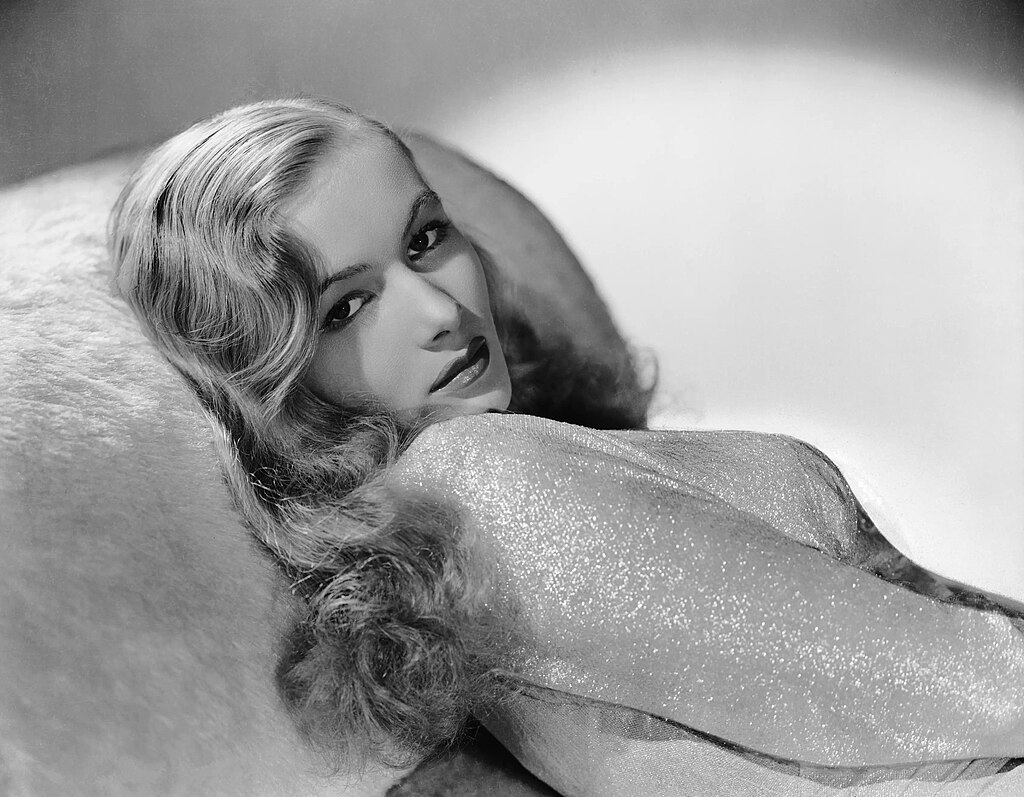
Veronica Lake became one of the most recognizable performers of the 1940s, noted for her distinctive hairstyle and roles in both comedies and film noir. Born Constance Ockelman in Brooklyn, she entered Hollywood as a teenager and quickly gained attention for her screen presence. Her “peek-a-boo” hairstyle became a defining element of her image and influenced fashion during World War II. Although she enjoyed major success early in her career, her later decades were marked by financial setbacks and serious health issues. Despite these difficulties, Lake’s influence remained visible in popular culture long after her career declined.
Early Life and Entry Into Film

Lake’s childhood involved repeated family moves after the death of her father and her mother’s remarriage. She spent time in Florida, New York and Montreal, where she attended a Catholic boarding school before being expelled. After relocating to Miami, she gained attention for her appearance in beauty contests, which led her mother to pursue acting opportunities for her. When the family moved to Beverly Hills in 1938, Lake, then using the name Constance Keane, began formal training at the Bliss-Hayden School of Acting. Her first screen work came shortly after, appearing in small, mostly unnamed roles in late-1930s films. These early performances helped introduce her to industry figures who took note of her unique screen look.
Breakthrough and Rapid Ascent at Paramount

Lake’s transition from minor roles to widespread recognition occurred in 1941, when she signed with Paramount and was given the name Veronica Lake. Her supporting role in 1941’s “I Wanted Wings” significantly raised her profile, leading to more prominent parts. She demonstrated versatility in comedies such as “Sullivan’s Travels” and “I Married a Witch”; after she was cast to work with Alan Ladd in “This Gun for Hire” in 1942, the two became an unexpectedly successful screen pairing, which led to multiple successful noir collaborations. During this period she became a leading figure in the studio system and was one of the most visible actresses of the early 1940s.
Influence of Her Hairstyle and Emerging Professional Strain

Lake’s “peek-a-boo” hairstyle became one of the most recognizable trends of the 1940s, widely copied by civilian women and especially noted among wartime workers. Its popularity grew to the point that government officials either asked or ordered her (depending on the source) to change hairstyles for the remainder of World War II after reports that factory employees imitating the style were injuring themselves when loose hair caught in machinery. Although this visibility reinforced her status, it coincided with early signs of professional strain. Several male colleagues, including Fredric March and later Raymond Chandler, expressed negative views of working with her, and even Alan Ladd made uncharitable remarks during later years.
Professional Decline and Personal Difficulties

After 1948, Lake’s career declined steadily. Her contract with Paramount ended, and subsequent films at 20th Century Fox received limited attention. Financial problems, including bankruptcy, and the end of her second marriage contributed to increasing strain. She experienced recurring health issues and periods of alcoholism, alongside diminished employment opportunities. Brief television and stage work followed, but her film roles grew infrequent. A final Hollywood feature in 1952 preceded several years of instability, including injuries, limited income, tax woes and strained relationships with her children. By the early 1960s she was living in New York, where she worked in service jobs before renewed publicity brought modest professional activity.
Later Career and Lasting Influence

Public attention returned briefly in the early 1960s after a newspaper story revealed Lake working at a New York hotel bar. The publicity helped her get jobs in which she hosted a television movie program, appeared in stage productions and made a final film in 1970. Her autobiography, published in 1969, described her experiences with the studio system and her later struggles. Lake spent her final years between the United States and England before her death in 1973 from complications of hepatitis. Even though her career was rocky, her image has remained influential all these years. Her “peek-a-boo” look and noir persona has inspired characters in film and animation, and performers have adopted elements of her style, solidifying her place in Hollywood history.
Sources: Turner Classic Movies, Vanity Fair, Hollywood Walk of Fame, The Los Angeles Times



