
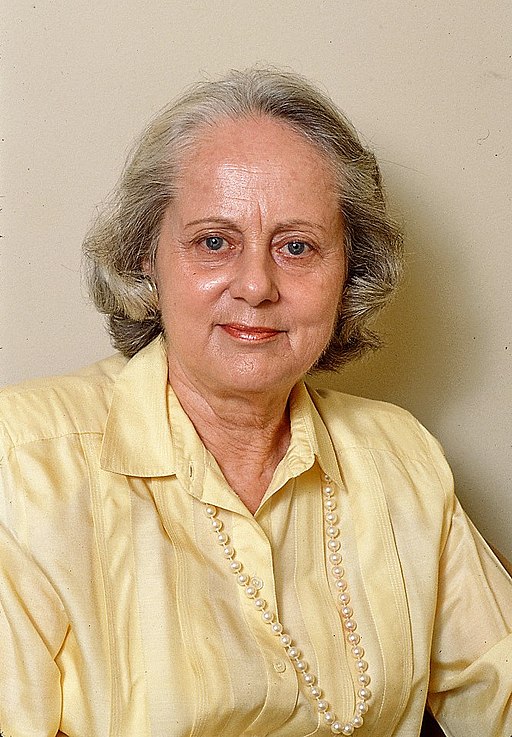
In 1980, the fatal shooting of Dr. Herman “Hy” Tarnower brought national attention to Jean Harris, a respected school headmistress. Her long relationship with the well-known cardiologist and author of The Complete Scarsdale Medical Diet suddenly transformed into a subject of intense public debate, fueled by questions about motives, gender roles, and personal responsibility. Harris maintained the shooting was the tragic result of a suicide attempt gone wrong, but prosecutors argued she acted out of anger and jealousy. Her 1981 trial became a cultural touchpoint, drawing widespread interest and prompting discussions about women and the justice system. Harris was convicted of second-degree murder and later received clemency after more than a decade in prison.
Harris’ Early Life and Professional Standing

Jean Harris was born Jean Witt Struven in 1923 and grew up in Cleveland Heights, Ohio, in a comfortable, upper-middle-class household. After graduating magna cum laude from Smith College, she married and raised two sons before her marriage ended in the mid-1960s. Harris went on to build a respected career in education, eventually becoming headmistress of the Madeira School, an elite girls’ institution in Virginia. By 1980, she was widely regarded as disciplined, principled and devoted to her profession. This strong public image contrasted sharply with the turmoil later revealed in her personal life, particularly her long and increasingly strained relationship with Dr. Tarnower, whose rising fame complicated their already uneven partnership.
The Relationship With Dr. Tarnower

Harris met Tarnower in 1966, and the two began a relationship that lasted 14 years. Although he initially gave her an engagement ring, he soon decided against marriage, continuing to see other women with Harris’ reluctant acceptance. Over time, tensions increased as he gained broader visibility through his diet book and lifestyle advice. By early 1980, Harris felt increasingly marginalized, aware of Tarnower’s growing interest in a younger woman, Lynne Tryforos. A difficult week at work and mounting personal distress led Harris to decide on suicide, and she drove from Virginia to his New York estate with a firearm. Her visit, meant as a final farewell, instead escalated into a confrontation that ended with Tarnower’s death.
The Shooting and Conflicting Accounts

Police tape off a crime scene, Saturday, July 6, 2024, on the 2600 block of Ridgecrest Drive in Florence, Ky.
The events inside Tarnower’s home on March 10, 1980, were reconstructed through evidence and testimony at Harris’ trial, though the exact sequence of events at the moment of the shooting remained disputed. Harris said she planned to take her own life and that Tarnower intervened, causing the weapon to discharge multiple times. Physical evidence showed he was struck by four bullets, one of which injured his hand. Harris acknowledged firing the gun but maintained the shots were unintended consequences of the struggle. The housekeeper’s emergency call reported the shooting shortly before 11 p.m., drawing immediate attention from authorities. The ambiguity surrounding what happened in those moments created the central tension of the case and shaped the arguments that unfolded at trial.
A Highly Publicized Trial

Mar 5, 2024; Columbus, OH, USA; An empty jury box in a Franklin County Common Pleas Court courtroom.
The 64-day trial quickly became a national spectacle, blending legal questions with broader cultural themes. Reporters, commentators and observers filled the courtroom, and the case inspired extensive coverage and, later, film adaptations. Harris testified for eight days, offering detailed but sometimes inconsistent descriptions of the struggle. Prosecutors argued she acted out of resentment and intended to harm Tarnower, while the defense described a desperate woman trying to take her own life. Jurors examined hundreds of pieces of evidence and reenacted the shooting in deliberations, with one juror even wearing Tarnower’s pajama top at one point. Ultimately, they found that Harris’ testimony did not support her claim of accidental firing. Harris was convicted of second-degree murder in 1981.
Life in Prison and Eventual Clemency

Aug 2, 2018; Bedford Hills, New York, USA; The Bedford Hills Correctional Facility, photographed Aug 2, 2018. The prison’s water treatment plant will now serve the hamlets of Bedford Hills and Katonah, as well as Katonah Elementary School, St. Mary’s Church in Katonah, and the Bedford Park Apartments in Bedford Hills. Mandatory Credit: Seth Harrison/The Journal News-USA TODAY NETWORK
Harris began serving a 15-years-to-life sentence at Bedford Hills Correctional Facility, where she adapted to the challenges of incarceration. She lived in a small cell and relied on reading and writing to cope with the environment. Over time, her professional background became an asset within the prison’s Children’s Center, where she taught parenting classes and cared for infants allowed temporary residence with their mothers. Her advocacy for children of incarcerated women eventually expanded into fundraising efforts and programming. After suffering multiple heart attacks and facing age-related health problems, Harris was granted clemency in 1992 by New York Governor Mario Cuomo. She spent her remaining years quietly, continuing to write and support causes connected to incarcerated families.
Later Years and Continuing Public Interest

Law books line a bookshelf Thursday, Oct. 17, 2024, at the Carroll County Courthouse in Delphi, Ind.
After her release, Harris settled in New Hampshire, focusing on writing and maintaining her connection to programs benefiting children of women in prison. Public interest in her story persisted, fueled by earlier films and ongoing debates about the case’s meaning. Some viewed her as an example of emotional vulnerability in a destructive relationship, while others considered the crime an act of deliberate violence. Retellings, including personal reflections from observers who followed the trial closely, underscored the cultural impact of the case in the early 1980s. Harris died in 2012 at age 89, leaving behind a complex impact shaped by her achievements, her crime and the broader societal questions her trial raised.
Sources: The Los Angeles Times, The New York Times, TIME Magazine



