
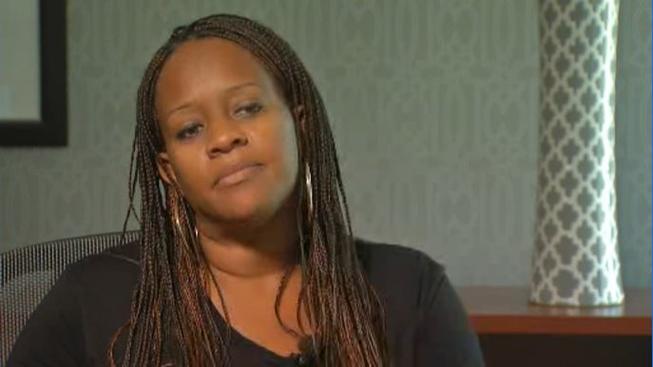
A California woman accused of stabbing a retired nurse to death in a mall parking structure was allegedly desperate for money — money she said she needed to send her teenage daughter on a cheerleading trip to Florida.
Opening statements began Wednesday in the murder trial of 47-year-old Cherie Lynette Townsend, who prosecutors say fatally stabbed 66-year-old Susan Leeds in 2018 at the Promenade on the Peninsula mall in Rolling Hills Estates, a quiet, upscale corner of Los Angeles County.
Leeds, a retired nurse, was found bleeding in her Mercedes SUV on May 3, 2018, after what seemed like a normal afternoon of shopping. She’d gone to The Gap, grabbed takeout, and returned to her car. Within minutes, she was dead—stabbed 17 times in the neck and torso. Her purse was missing. Her jewelry was not.
Prosecutors told jurors that Townsend had also been shopping at the same mall that day, driving a gold sedan caught on surveillance leaving the parking structure moments after Leeds was attacked. They say Townsend, who was struggling financially, had spent weeks searching online for ways to get cash—searching phrases like “how to duplicate credit cards,” “rob coin machines,” and “celebrity donations.” One search even asked how to “find a sugar daddy.”
Court filings show Townsend was behind on bills, bouncing checks to her daughter’s cheerleading team, and under pressure to make good on promises she couldn’t keep. She had reportedly told two of her daughter’s teammates she could take them to Florida for a national cheer competition if they each paid $350. The money was handed over, prosecutors said—but no flights were ever booked.
“She was in financial crisis and looking for fast money,” the prosecutor said. “And on May 3, she found it—in a woman who’d simply gone shopping.”
Investigators say Townsend’s phone was discovered under Leeds’ car. When police matched the phone to her through photographs on the device, they interviewed her. Townsend admitted being at the mall but said she didn’t remember where she lost her phone. She later visited a Verizon store to try to locate it.
Police searched Townsend’s car but found no sign of Leeds’ belongings and no murder weapon. She was arrested days later, then released when prosecutors said they didn’t have enough evidence to file charges. Townsend later sued Los Angeles County, accusing investigators of misconduct, and maintained her innocence in interviews with local media. Another man was briefly detained in the case but was cleared.
For years, the killing remained unsolved. Then, in August 2023, Townsend was rearrested after what prosecutors called “newly corroborated digital evidence.” She was charged again with murder and now faces trial in Torrance Superior Court.
Townsend’s defense attorney told jurors this week that prosecutors are building their case on coincidence and conjecture. “There’s no DNA. There’s no weapon. There’s no evidence she ever touched this woman,” the attorney said. “There are a lot of questions the prosecution can’t answer — and that’s reasonable doubt.”
The defense pointed out that Townsend’s DNA was excluded from 40 samples taken at the crime scene. They said prosecutors have “a story” but not proof.
Still, for Leeds’ family, the case is a grim reopening of old wounds. A six-year wait for justice has turned into another painful trial—one that feels almost surreal in its motive.



