
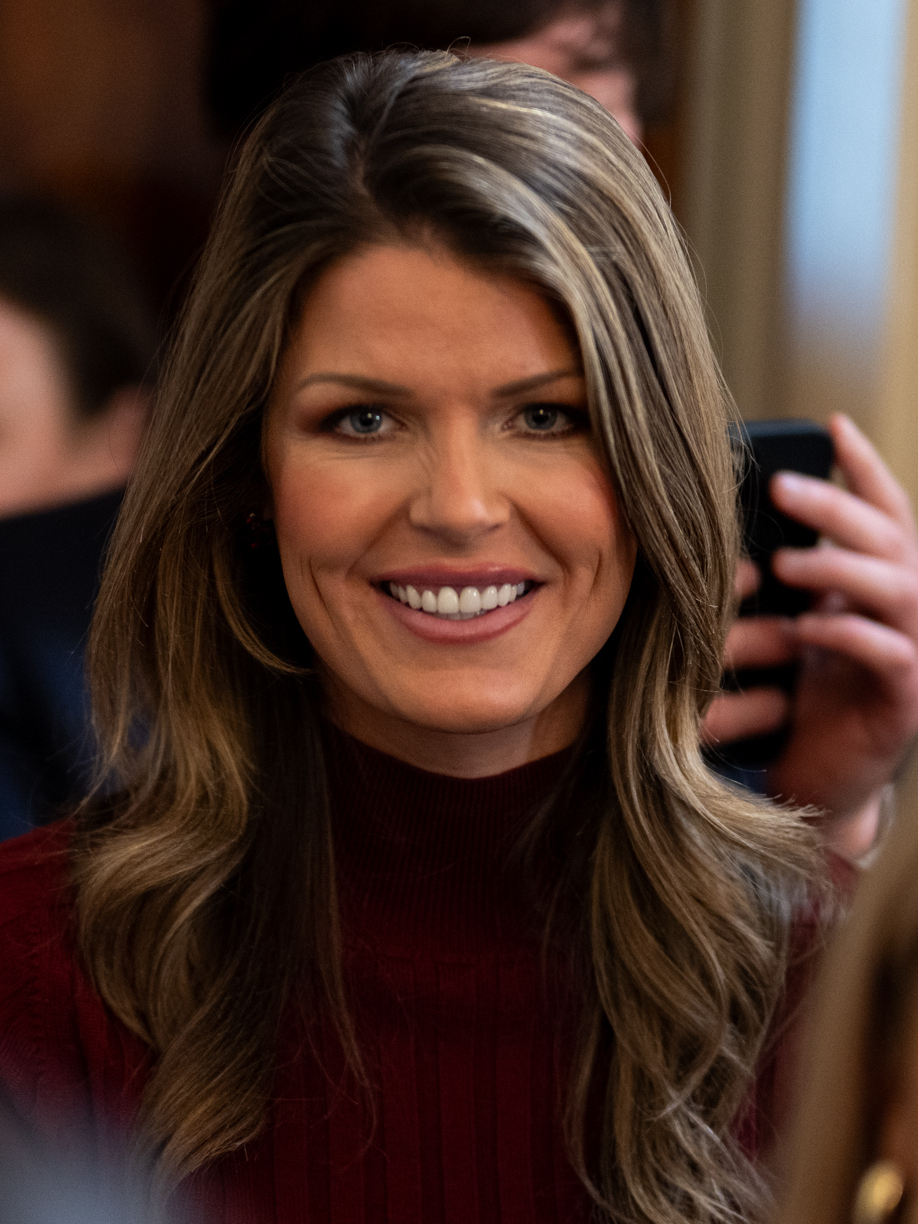
A high-profile dispute is unfolding in federal court over the legality of Lindsey Halligan’s appointment as interim U.S. attorney for the Eastern District of Virginia. Halligan, formerly a personal attorney for Donald Trump, oversaw the indictments of former FBI Director James Comey and New York Attorney General Letitia James. Both defendants argue that Halligan was never eligible to hold the position and that this invalidates the charges against them. A federal judge is now considering whether Halligan’s appointment violated statutory limits on interim prosecutors and whether the indictments should be dismissed as a result.
How Halligan Became Interim U.S. Attorney

Pam Bondi delivers opening remarks during a Senate Judiciary committee hearing on her nomination to be Attorney General of the United States on Wednesday, Jan. 15, 2025 in Washington, DC.
Halligan’s appointment followed the abrupt resignation of Erik Siebert, who had been serving as interim U.S. attorney since January. Siebert stepped down on September 19 after he resisted efforts to pursue politically sensitive charges. Halligan was sworn in three days later, having been installed by Attorney General Pam Bondi at Trump’s urging. Federal law allows for a temporary appointment of up to 120 days, but only once per vacancy, after which a district court may choose a replacement. (Siebert’s initial appointment expired in May, but judges within the Eastern District had the authority to allow him to continue in that capacity.) The core issue is whether Bondi had the authority to restart the 120-day clock after Siebert’s term ended. Critics argue the statute prohibits consecutive appointments by the attorney general, raising questions about whether Halligan ever held the role legally.
Challenges From Comey and James

New York Attorney General Letitia James listens to questions from attendees during a Protecting the People Community Impact Hearing at Westchester Community College in Valhalla on Thursday, May 8, 2025.
James Comey and Letitia James both contend that the indictments against them should be thrown out due to Halligan’s alleged ineligibility. They assert that the circumstances surrounding her appointment suggest political motivation and that her lack of prior prosecutorial experience raises concerns about her handling of grand jury proceedings. Judge Cameron Currie, brought in from South Carolina to avoid conflicts of interest, is overseeing a joint hearing on the matter. Currie has privately reviewed grand jury transcripts from both cases, which she may draw upon during deliberations. The defendants are also seeking dismissal with prejudice, arguing the indictments cannot stand if the prosecutor who brought them lacked lawful authority.
Legal Questions About the 120-Day Rule

Former FBI Director James Comey testifies in 2017 in front of the Senate Intelligence Committee in Washington, DC.
At the center of the dispute is the statute governing interim U.S. attorney appointments. The law permits the attorney general to fill a vacancy for 120 days, after which the district court can appoint someone if the Senate has not confirmed a new U.S. attorney. Comey and James’ legal teams argue that allowing back-to-back appointments by the attorney general would undermine Congress’ intent and effectively nullify the 120-day limit. They cite past legal interpretations, including a memo from then-Justice Department lawyer Samuel Alito, supporting the view that the attorney general may make only one interim appointment per vacancy. Several lawmakers involved in rewriting the statute in 2007 have submitted briefs backing this interpretation.
Potential Impact on the Comey and James Cases

There must be a truly independent investigation to thoroughly review these troubling allegations against the governor, New York Attorney General Letitia James says. Sd 092020 Attorney General A Metro
If Judge Currie finds Halligan was unlawfully appointed, she must also determine whether this invalidates the indictments. Since no other prosecutor signed the charging documents, the cases may be vulnerable. The statute of limitations could complicate the Comey case, as the five-year limit expired shortly after the indictment. However, prosecutors believe a separate federal law grants them an additional six months to refile charges if the indictment is dismissed. Letitia James faces a different timeline due to a longer statute of limitations for the bank fraud charge against her. The judge’s decision could therefore affect not only these specific cases but also the Justice Department’s broader strategy.
Broader Context and Related Challenges

Jun 8, 2017; Washington, DC, USA; Former FBI director James Comey testifies in front of the Senate Intelligence Committee in Washington. Mandatory Credit: Jack Gruber-USA TODAY NETWORK
Halligan’s situation is part of a wider pattern of legal challenges to Trump-era interim U.S. attorney appointments. Other acting prosecutors have been ruled ineligible in recent months, with courts in Nevada and New Jersey determining that appointees had exceeded the statutory limits governing interim service. Meanwhile, Halligan’s conduct is under scrutiny from bar associations in Florida and Virginia following complaints that her actions may undermine confidence in the justice system. Attorney General Bondi has attempted to reinforce Halligan’s authority by retroactively appointing her as a special attorney within the Justice Department, but defense lawyers argue this step cannot fix defects in her original appointment. Judge Currie’s forthcoming decision will shape the next steps for both defendants and the Justice Department.



