
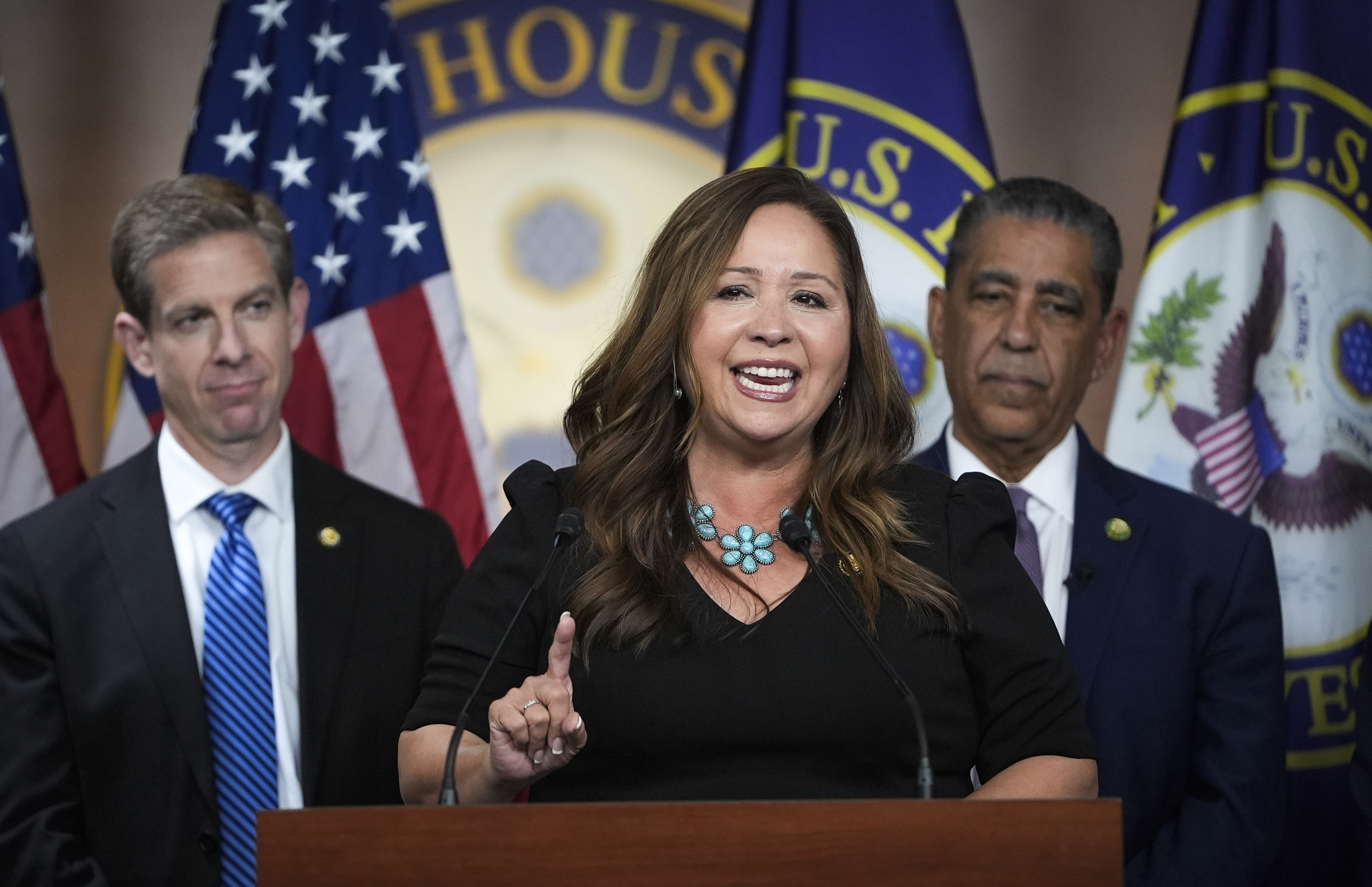
Representative Adelita Grijalva, the newly elected Democrat from Arizona, wasted no time making her presence felt in Washington. Just minutes after being sworn in on Wednesday, Grijalva added her name to a petition that reached the crucial 218th signature — the number needed to force a House vote on releasing the Trump administration’s investigative files related to Jeffrey Epstein.
For weeks, Grijalva’s swearing-in had been delayed. Speaker Mike Johnson, a Louisiana Republican, refused to seat her for more than seven weeks following her September special election victory. Grijalva accused him of deliberately stalling to avoid the politically explosive Epstein vote — a charge Johnson denied.
In her first remarks as a member of Congress, Grijalva called Johnson’s delay “an abuse of power” and condemned Republican leaders for stonewalling the release of information tied to Epstein, the financier and convicted sex offender whose death in federal custody in 2019 continues to provoke public suspicion. “The majority of this body has failed,” Grijalva said on the House floor. “Failed to hold the Trump administration accountable, failed to honor the survivors, and failed the American people’s right to know.”
Her signature triggered a countdown toward a long-delayed vote on a resolution demanding that the Justice Department disclose all files from the Trump-era investigation into Epstein and his network. Speaker Johnson, faced with mounting bipartisan pressure, confirmed Wednesday night that the vote would occur next week.
Even if the resolution clears the House, its path forward remains uncertain. A vote would force congressional Republicans to choose between their loyalty to the former president and the widespread public demand for transparency.
The Epstein files have been a source of contention since July, when Trump administration officials abruptly reversed course on their earlier promise to release them. That decision — coming after months of delay and speculation — reignited frustration among both Democrats and some on the far right who believe key evidence remains hidden.
The discharge petition that Grijalva signed was introduced in July by Representative Thomas Massie, a Kentucky Republican often critical of Trump, and Representative Ro Khanna, a California Democrat. Their resolution would require the Justice Department to release all Epstein-related files within 30 days. Under House rules, once a petition garners a majority of signatures, the leadership must schedule a vote.
Only three Republicans — Marjorie Taylor Greene, Nancy Mace, and Lauren Boebert — had joined Democrats to support the petition, leaving it one signature short for weeks. Grijalva’s victory in Arizona’s special election, and her promise to add her name immediately upon being sworn in, gave Democrats the final vote they needed.
As she took her oath, two women who had survived Epstein’s trafficking operation, Elizabeth Stein and Jessica Michaels, watched from the House gallery at Grijalva’s invitation.
By day’s end, Grijalva’s first official act in Congress had set in motion a vote the White House had spent months trying to prevent. Whether the measure succeeds or fails, her signature ensured that the question of what the Trump administration knew about Jeffrey Epstein — and when — will finally be debated on the House floor.



