
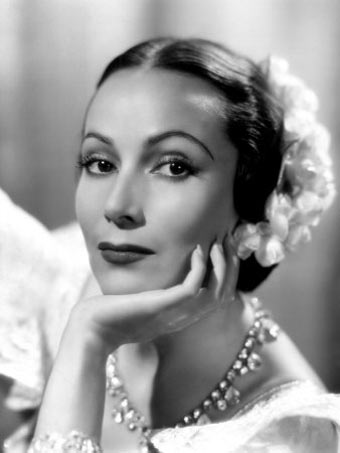
Dolores del Río was more than one of Hollywood’s earliest international stars; she was a trailblazer who reshaped how Mexican women were seen on screen and beyond. Born María de los Dolores Asúnsolo y López-Negrete in 1904 in Durango, Mexico, she rose from aristocratic privilege to global fame. Over five decades, del Río transformed from a silent film beauty into a pioneer of modern Mexican cinema. Her life was marked by glamour and heartbreak as she fought to move beyond exotic stereotypes and claim artistic control over her career. Today, she is remembered not only for her elegance but for breaking barriers that paved the way for generations of Latina artists.
Comfort and Revolution

Dolores del Río grew up in comfort as the only child of an affluent Mexican family. Her early years were filled with music, dance and theater, but the Mexican Revolution upended her privileged world. Her mother whisked her away from Durango to safety in Mexico City, narrowly escaping advancing forces. The turmoil left a lasting mark, but del Río’s fascination with art and performance endured. Educated at a convent and trained in dance, she developed the poise and presence that would later captivate the film world. Even as a young woman, she displayed the quiet determination that would guide her through the challenges of stardom.
Hollywood’s “Exotic” Star

In the 1920s, del Río’s striking beauty caught the attention of American director Edwin Carewe, who persuaded her to move to Hollywood. Promoted as the “female Rudolph Valentino,” she became one of the first Mexican-born actresses to achieve international fame. However, Hollywood’s fascination with her appearance often confined her to roles that emphasized exoticism rather than talent. Films like “What Price Glory?” and “Bird of Paradise” made her a sensation, but del Río longed for substance beyond glamour. Despite her success, she still faced the racism and stereotyping that defined the industry’s treatment of nonwhite actors at the time. Her growing frustration with shallow parts and controlling mentors set the stage for a dramatic reinvention.
A Life of Beauty and Restraint

Del Río’s personal life mirrored her complex screen image. After divorcing her first husband, she married MGM art director Cedric Gibbons, known for his opulent “big white set” designs. Together, they built a dazzling Art Deco mansion that became a gathering place for Hollywood’s elite. Yet del Río often struggled with loneliness and lingering grief from her first marriage. Her circle included luminaries like Marlene Dietrich and Greta Garbo; artistic kinship and the pressures of fame led the three to become fast friends. Though admired for her flawless looks and impeccable style, del Río quietly yearned for creative freedom, knowing that her glamorous life had become a gilded cage.
Reinvention in Mexico’s Golden Age

By the early 1940s, disillusioned with Hollywood’s limited roles, del Río returned to Mexico, where a cinematic renaissance was underway. There, she found the respect and control she had always sought for herself. Working with director Emilio Fernández and cinematographer Gabriel Figueroa, she starred in acclaimed films such as “María Candelaria” and “Flor Silvestre.” These works explored social and cultural themes that Hollywood had ignored, earning del Río multiple Ariel Awards and solidifying her status as Mexico’s leading actress. She became the face of national cinema, revered for bringing dignity and depth to Mexican identity onscreen. Her return home was not a retreat, but rather a triumphant transformation into an artist on her own terms.
A Lasting Legacy of Grace and Strength

Dolores del Río continued to act, produce and advocate for the arts throughout her later life. Her marriage to director Lewis Riley brought stability and partnership, and together they promoted theater and film in Mexico. Even as Hollywood’s attention shifted elsewhere, del Río remained a symbol of cultural pride. She challenged stereotypes and represented a vision of Mexican womanhood rooted in intelligence and strength. When she died in 1983 at age 78, she left behind more than films; she left a legacy of empowerment. Through her artistry and perseverance, del Río opened the door for future Latina stars to shine on their own terms.
Sources: American Film Institute, Los Angeles Times, Vanity Fair



