Betsy Ross is one of the most recognized names from the American Revolution, often credited with sewing the first U.S. flag. While her exact role in the flag’s creation remains uncertain, what is clear is her significant contribution to the Revolutionary War through her skills as a seamstress and upholsterer. Working from her Philadelphia shop, Ross supported the patriot cause by producing essential goods for soldiers and sailors. Her life tells the story of a woman who persevered through personal loss and social rejection to aid the fight for independence with needle and thread, transforming fabric into a tool of resistance.
Early Life and Training in Craftsmanship

A staged look at the room of Betsy Ross inside the Betsy Ross House in Philadelphia. Jl Airbnb 12422 10
Elizabeth Griscom, later known as Betsy Ross, was born on January 1, 1752, in Gloucester City, New Jersey, to a Quaker family. She learned to sew from her great-aunt and honed her skill through an apprenticeship under an upholsterer in Philadelphia, mastering the art of sewing furnishings, draperies and uniforms. This training would later become vital as the colonies moved toward war. By her early twenties, Ross was an accomplished craftswoman capable of creating everything from household goods to military supplies. These were skills that would serve both her livelihood and her country’s emerging fight for freedom.
Marriage, War and Personal Sacrifice

Betsy Ross flag Xxx Usa9266 Jpg Usa Dc
In 1773, Betsy married John Ross, an Anglican upholsterer, and together they opened their own shop. Because she married outside her Quaker faith, she was disowned by her religious community, forcing her to rely on her trade to survive. When war erupted in 1775, her husband joined the local militia to guard ammunition stores. Betsy continued working in their shop, sewing uniforms, tents and blankets for patriot troops. Only months into the conflict, John Ross was killed while on duty. At just 24 years old, Betsy became a widow but continued to support the war effort, using her craft to supply American forces with materials essential to their survival.
Supplying the Revolution at Home

The York County Rifle Company heads out of York to join George Washington’s troops around Boston in the American Revolution. Their march came just weeks after Paul Revere and others made their famous rides to Lexington and Concord to warn that British troops were coming. The resulting clash led to the first shots of the Revolutionary War.
Despite the hardships of war, Betsy Ross kept her upholstery business running and expanded her work to include military commissions. By 1777, records show she produced flags, banners and “ships colours” for the Pennsylvania Navy. A surviving receipt dated May 29, 1777, confirms her payment for producing naval flags — one of the few verifiable pieces of evidence of her contributions. In fact, the patterns and colors used in the flags that she sewed for the Pennsylvania Navy were so similar to the future American flag that the naval flags are now considered to be possible early models. While some historians credit Francis Hopkinson with the flag’s design, Ross’s skillful production of such symbols demonstrates how artisans like her played a direct, tangible role in supporting the Revolutionary cause.
The Flag Legend and Family Legacy

Jan 6, 2021; Washington, DC, USA; A Betsy Ross American flag flies in front of the African American History Museum as demonstrators gather in Washington, D.C. to support outgoing President Donald Trump as the U.S. Congress meets to formally ratify Joe Biden as the winner of the 2020 Presidential election on Jan. 6, 2021. Mandatory Credit: Hannah Gaber-USA TODAY
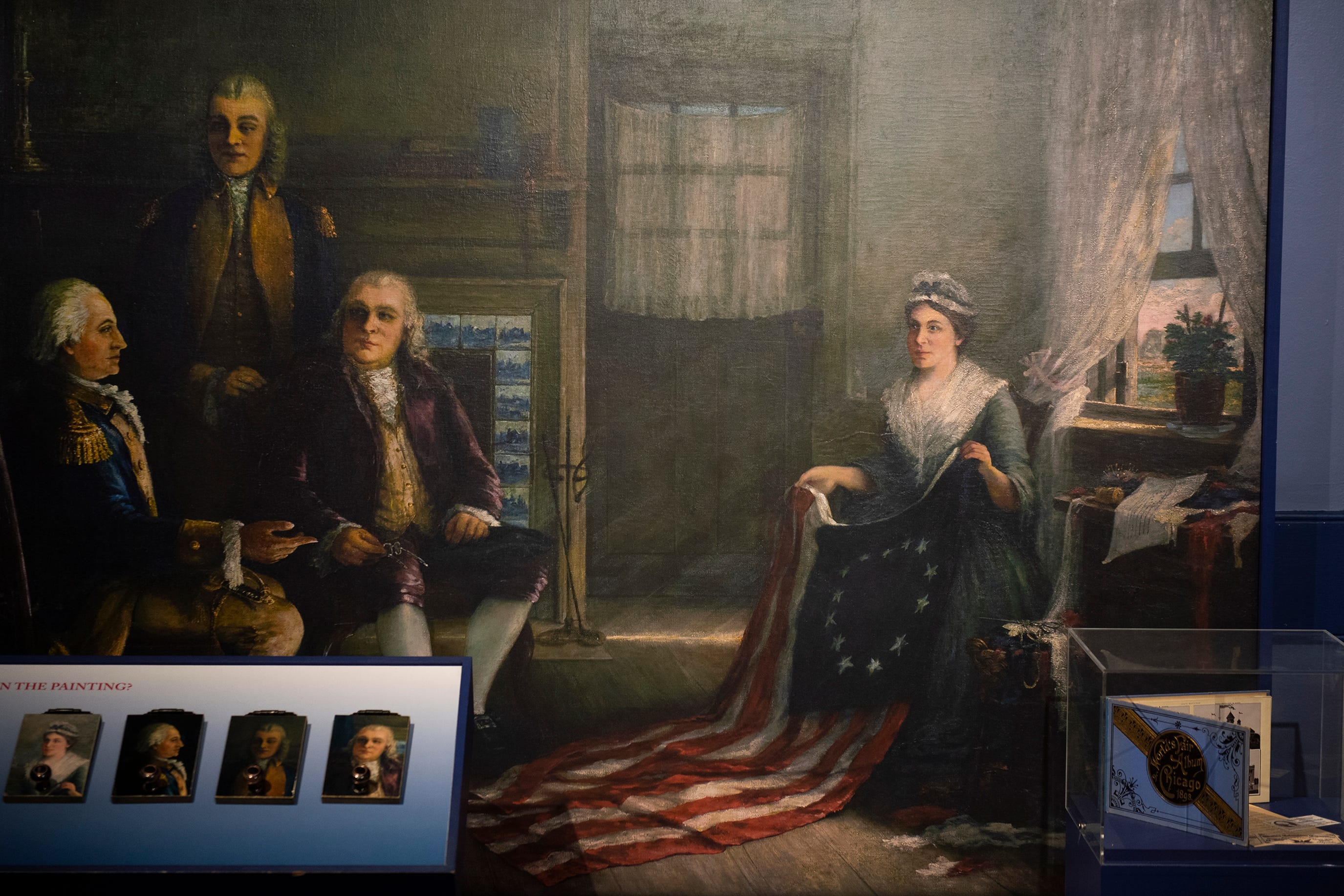
The enduring legend of Betsy Ross designing the first American flag originated nearly a century after the war. In 1870, her grandson William Canby presented a story to the Historical Society of Pennsylvania claiming that Ross had met with George Washington, Robert Morris and Colonel George Ross to create the first flag in 1776. According to family accounts, she suggested changing the stars from six points to five. While this story captured the imagination of generations, historians have found no official records confirming it. The story has long been considered to be likely false, and when the U.S. Post Office released a stamp in 1952 commemmorating the meeting between Ross, Washington and the others, it received pushback from historians about the authenticity of the story. Regardless of whether she designed the flag, the tale reinforced her reputation as a skilled patriot whose needlework became part of America’s foundational story.
Enduring Patriotism and Lasting Influence

The Betsy Ross House in Philadelphia. Jl Airbnb 12422 08
Betsy Ross’s life reflected the resilience and quiet determination of many women who served the Revolution in domestic yet vital ways. She endured the deaths of two husbands, John Ross and later Joseph Ashburn, a privateer who died in British captivity, before remarrying veteran John Claypoole. Through these hardships, she continued to produce military textiles and later taught her daughters and granddaughters the trade. Ross died in 1836, leaving behind a thriving upholstery business and a powerful legacy. Whether or not she stitched the first American flag, Betsy Ross undeniably helped sew the fabric of the nation.
Sources: American Battlefield Trust (1), American Battlefield Trust (2), National Postal Museum, HISTORY