
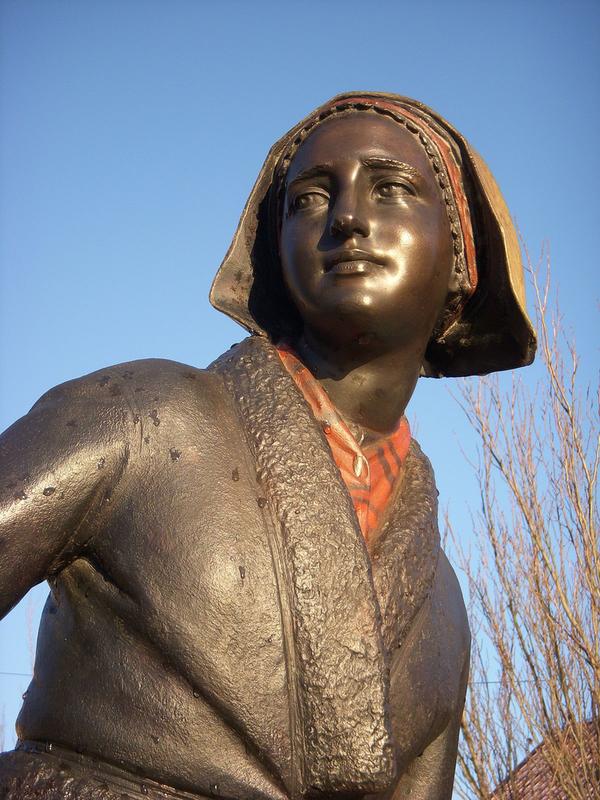
In 19th-century Sweden, a young woman named Pilt Carin Ersdotter became famous for something that seems almost impossible today – she was arrested for being too beautiful.
Born in 1814 in the small town of Djura in Dalarna, Ersdotter worked as a milkmaid, a job common among women in her community. Like many in her region, she was known for her discipline, her physical strength, and her independence. But what made her unforgettable was her face.
Ersdotter’s smooth, unblemished complexion set her apart in an era when most Europeans bore the marks of smallpox. Milkmaids, who often contracted the milder cowpox, were spared the disease’s scarring effects. That biological twist of fate—along with her dark hair, striking cheekbones, and clear skin—helped turn her into an early kind of celebrity, decades before photography and film could capture fame.
At 19, she traveled to Stockholm for seasonal work, selling milk in the capital’s busy streets. It didn’t take long for crowds to gather wherever she stood. People called her Vackra Dalkullan—the “Beautiful Dalarna Girl.” Her beauty caused such chaos that police eventually arrested her, though the judge quickly dismissed the case, reportedly saying he’d sooner fine someone for being ugly than for being too attractive.
The incident made Ersdotter a national sensation. Newspapers spread her story, and soon she was invited to appear at social gatherings hosted by Sweden’s wealthy elite. She was paid simply to be present—to sit quietly and grace a room with her beauty. It was a strange transaction, both empowering and demeaning: a poor working woman suddenly commanding the attention of a world that would otherwise never have seen her.
Ersdotter’s celebrity came at a cost. When she returned home at the end of the season villagers assumed that no woman could have earned so much money from respectable work. To restore her reputation, she was forced to obtain letters of good character from the nobles she’d worked for in Stockholm.
In time, she withdrew from public life, married, and returned to the countryside. History records little of what became of her afterward, except that she lived comfortably and remained, as ever, “the beautiful milkmaid.”



