

When the First World War began in 1914, women across the globe were expected to stay home. Most couldn’t vote, few could work outside domestic roles, and nearly none were allowed near the battlefield. But the war upended everything — and women, suddenly essential to survival, seized the moment. They entered factories, drove ambulances, performed surgeries, and staffed front-line communications. By the time the armistice was signed in 1918, they had reshaped not only the workforce, but the world’s understanding of what women could do.
Women Entered The Workforce In A Major Way

On the home front, the industrial war demanded labor on a scale no one had ever seen. The nations that could produce the most weapons and feed the most soldiers would win. When millions of men were sent to the front lines, women stepped into their jobs. In Germany, where the arms manufacturer Krupp had employed almost no women in 1914, women made up nearly 30 percent of its 175,000 workers by 1917. Across the country, 1.4 million women joined the wartime workforce.
British Women Played A Major Part In Allied Victory

In Britain, the number of women in paid employment jumped from 3.3 million in 1914 to 4.7 million just three years later. They worked in munitions factories, shipyards, and farms — and in some cases, wore military uniforms of their own. British women joined the Royal Navy and the newly formed Royal Air Force, serving as clerks, mechanics, and dispatchers. Florence Green, a member of the RAF, would later become the last surviving veteran of World War I, passing away in 2012 at 110 years old.
Stateside, Patriotism Began In The Kitchen

In the United States, women’s entry into the industrial workforce opened doors that had long been closed — especially for African American women. As men enlisted, Black women took jobs in factories and offices, many for the first time. Poet and civil rights activist Alice Dunbar Nelson observed that they worked “as ammunition testers, switchboard operators, stock takers… in every kind of factory devoted to war materials.” Some African American women also served overseas as YMCA volunteers, supporting troops and refugees. Even those who stayed home were part of the effort. American housewives were asked to sign a pledge to follow the advice of the U.S. Food Administration: canning food, growing vegetables, and cutting back on meat and wheat so soldiers could be fed abroad. Patriotism began in the kitchen, and women carried much of the weight.
Hundreds Of Nurses Were Sent Overseas

On the front lines, thousands of women risked their lives as nurses, doctors, and ambulance drivers. The American Red Cross sent hundreds of nurses overseas, many of whom died treating the wounded. By mid-1918, more than 3,000 American nurses were serving in British hospitals in France. But while nursing was accepted, women doctors faced resistance. Barred from the U.S. Army Medical Corps, they found their own way to serve — contracting with the Red Cross, joining the French Army, or raising funds through the Medical Women’s National Association to send female physicians into devastated regions. Nearly 80 women doctors eventually worked in war-torn Europe, treating soldiers and civilians alike. Some women served so close to the front that they shared the dangers of the men they treated. Sophie Gran, an anesthetist with the U.S. Medical Corps, recalled working under bombardment in France: “I had just given this poor boy anesthesia when a bomb hit. We were supposed to hit the floor, but he was out and didn’t know what was going on. I took a tray and put it over our heads. It wasn’t because I was brave. I was just scared.”
Women Advanced Technology During The War

As technology advanced, so did women’s contributions. The automobile age brought motorized ambulances, and women volunteered to drive them — ferrying wounded soldiers through shellfire. Among them was Marie Curie, who developed mobile X-ray units, known as “little Curies,” and trained 150 women to operate them near the front. Curie herself drove one of the machines, an act of service that likely contributed to her later death from radiation exposure.
Some Women Actually Joined The Navy

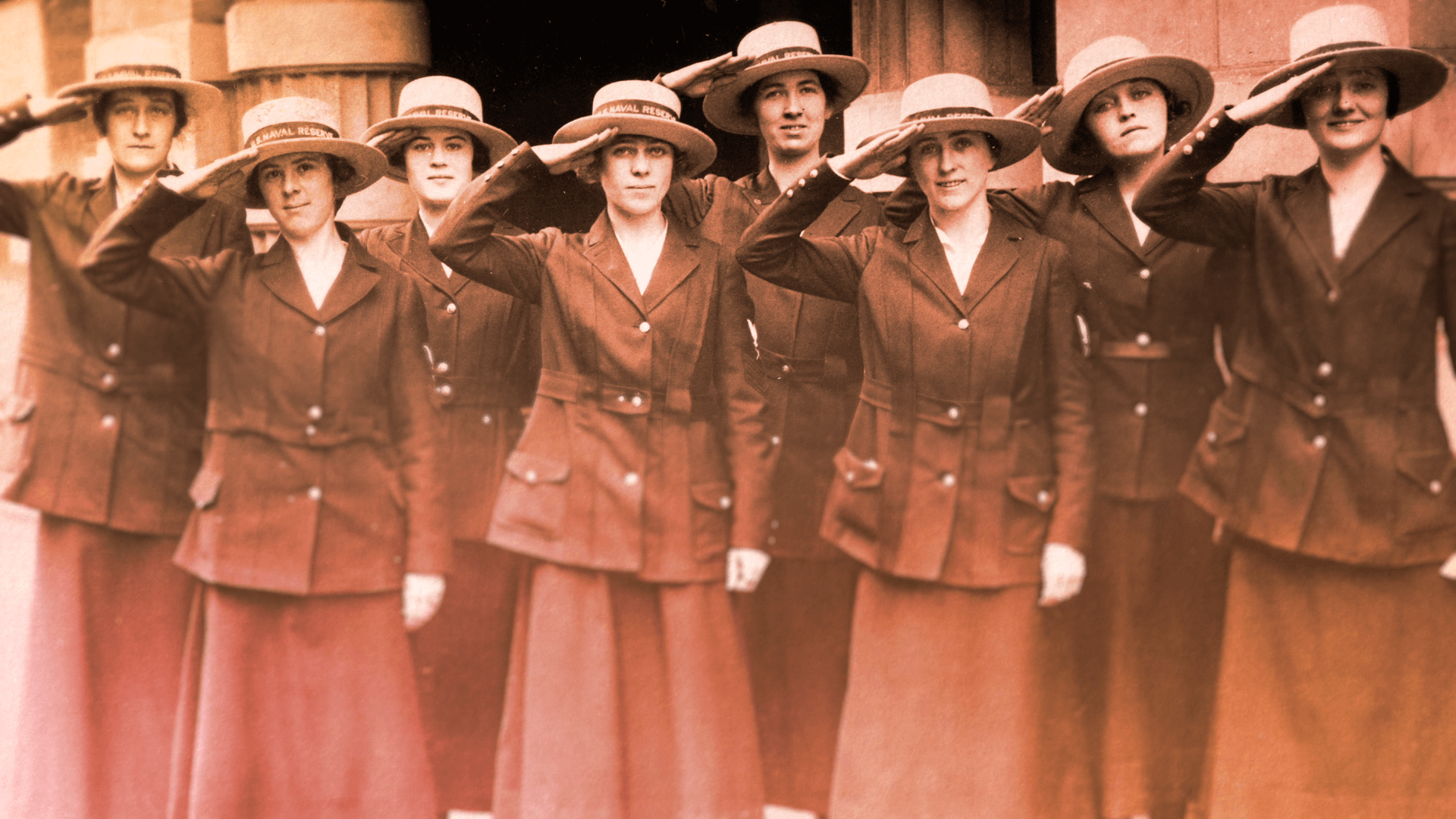
In the U.S. Navy, women found a rare loophole in the law that allowed them to enlist as “Yeoman (F),” non-commissioned officers who performed clerical, communications, and technical work. About 12,000 women served in the Navy, earning the same pay as men — $28.75 a month. Another 200 women, known as the “Hello Girls,” operated telephone switchboards on the Western Front. Fluent in both French and English, they connected calls between Allied commanders under constant fire. When they returned home, they weren’t recognized as veterans until 1977.
Russia Had A Group of Fighting Women

And in Russia, some women even fought. Maria Bochkareva, founder of the “Women’s Battalion of Death,” convinced the Czar to let her enlist. She led an all-female combat unit into the 1917 Kerensky Offensive — one of the few female battalions in history to see actual battle. By the end of the war, women had filled nearly every role once thought beyond their reach. They kept nations fed, soldiers alive, and armies supplied. They proved that the machinery of modern life — and modern war — could not run without them.
The war ended in 1918, but the transformation did not. When peace returned, so did the question that had hung over every factory, hospital, and battlefield: after doing so much, could women ever go back to doing less?
‘



