
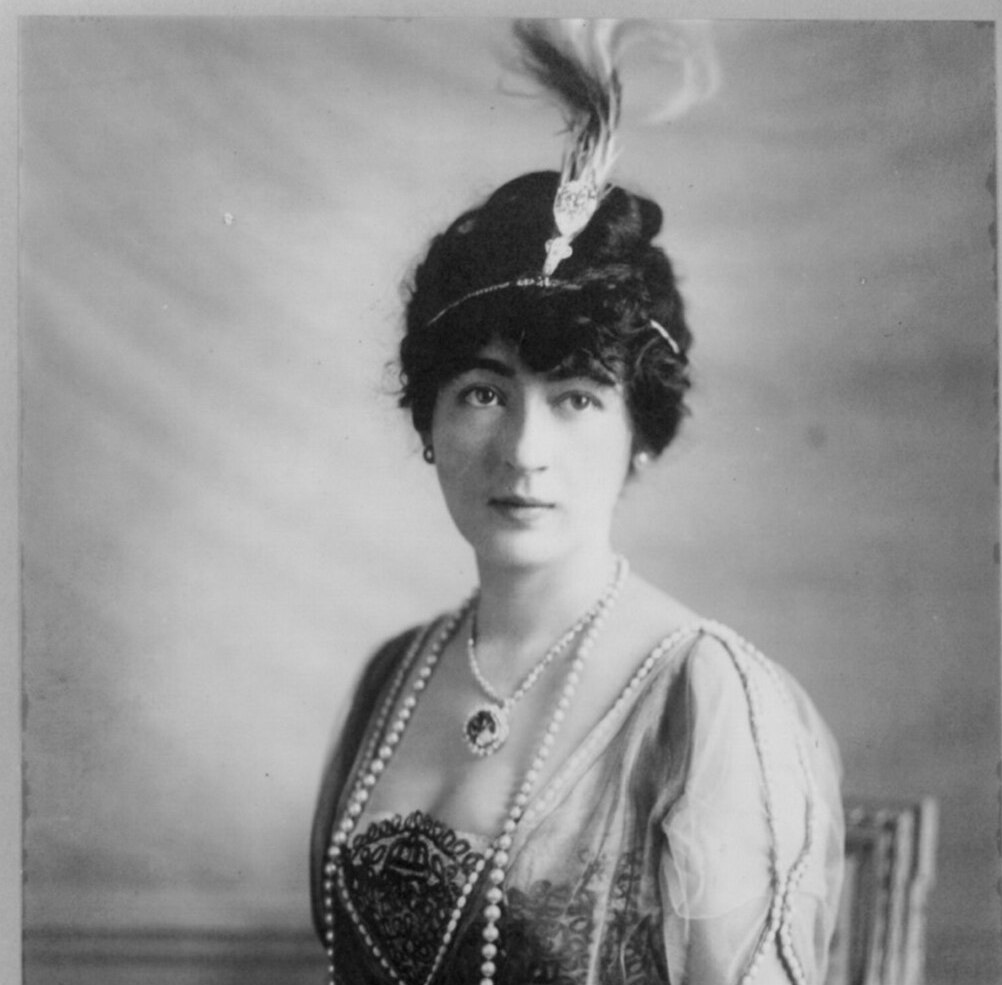
Evalyn Walsh McLean was born in Denver in 1886, the daughter of Irish immigrant Thomas F. Walsh, whose discovery of the Camp Bird gold mine in Colorado transformed the family’s fortunes. Virtually overnight, they went from living in mining towns to residing among Washington, D.C.’s elite. Evalyn was educated abroad and soon became known for her charm and sense of adventure. In 1908, she married Edward “Ned” McLean, heir to two publishing empires — The Washington Post and The Cincinnati Enquirer. Their marriage united two of the nation’s wealthiest families, and the couple quickly became fixtures in high society. But behind the glittering façade of wealth and privilege, tragedy and scandal would shadow much of Evalyn’s life.
The Hope Diamond Enters Her Life

During a European trip in 1912, Evalyn and Ned McLean purchased the 45.52-carat Hope Diamond from jeweler Pierre Cartier. The stone, famous for its striking blue color and supposed curse, had once belonged to French royalty and was said to bring misfortune to its owners. Cartier’s tale of the diamond’s haunted past intrigued Evalyn, who insisted that bad luck for others might mean good luck for her. She paid $180,000 for the gem after Cartier reset the gem into a necklace surrounded by 16 white diamonds. The Hope became her signature, worn to nearly every event she hosted or attended. Far from hiding the gem, she flaunted it at parties and even lent it to her Great Dane, Mike, placing it on his collar.
Life, Loss and the “Cursed” Gem

Despite her fascination with the Hope Diamond, Evalyn’s life was marked by relentless tragedy. In 1919, her young son Vinson was killed in a car accident near their estate while she and her husband were away. Her marriage unraveled soon after, as Ned McLean descended into alcoholism and erratic behavior that led to his confinement in a mental institution. Their fortune dissipated, and Evalyn had to pawn the Hope Diamond when the family’s finances faltered (she eventually bought it back). Yet she refused to believe the gem caused her troubles, calling it a beautiful possession rather than a curse. Over time, she suffered more loss: Her daughter, Evalyn Reynolds, died from a drug overdose in 1946, a year before Evalyn herself succumbed to pneumonia.
The Hope Diamond and a Life of Contradictions

Evalyn’s ownership of the Hope Diamond captured public imagination. She wore it not just as a fashion statement but as a symbol of defiance against superstition. Friends recalled that she often displayed the gem at her famous parties, sometimes placing it around guests’ necks or using it to amuse wounded soldiers during World War II gatherings. At the same time, her wealth and generosity became legendary. She opened her estate, Friendship, to convalescent soldiers and veterans, hosted lavish social events for hundreds and used her resources to support charities. She was also, unfortunately, the target of a scam artist who conned her out of $104,000 that would supposedly help find the kidnapped child of aviator Charles Lindbergh.
The Legacy of the Hope Diamond

When Evalyn Walsh McLean died in 1947 at age 60, her estate was heavily in debt. Her will instructed that her jewelry, including the Hope Diamond and another diamond, the Star of the East, remain in trust until her youngest grandchild turned 25. But legal judgments forced the sale of her collection two years later. The famed jeweler Harry Winston purchased her jewels, using them in his traveling “Court of Jewels” exhibition before donating the Hope Diamond to the Smithsonian Institution in 1958. Today, it remains one of the museum’s most visited treasures. Evalyn’s life was a blend of privilege, generosity and sorrow, but it endures through the sparkle of the gem she wore so fearlessly.
The Intriguing Evalyn Walsh McLean

Evalyn’s story continues to intrigue historians and jewelers alike. Her life represented both the excess and fragility of America’s Gilded Age elite. She was a hostess to presidents, a benefactor to soldiers and a woman who faced personal loss with public grace. Yet she is best remembered as the most famous owner of the Hope Diamond; she was the woman who wore the “cursed” jewel without fear. The stone’s journey from her elegant soirées to the Smithsonian’s vault mirrors her own transformation from heiress to legend. Though her fortunes faded, Evalyn’s spirit and the lore surrounding her most dazzling possession remain timeless symbols of beauty and tragedy.
Sources: The New York Times, Smithsonian Magazine, Smithsonian National Museum of Natural History



