
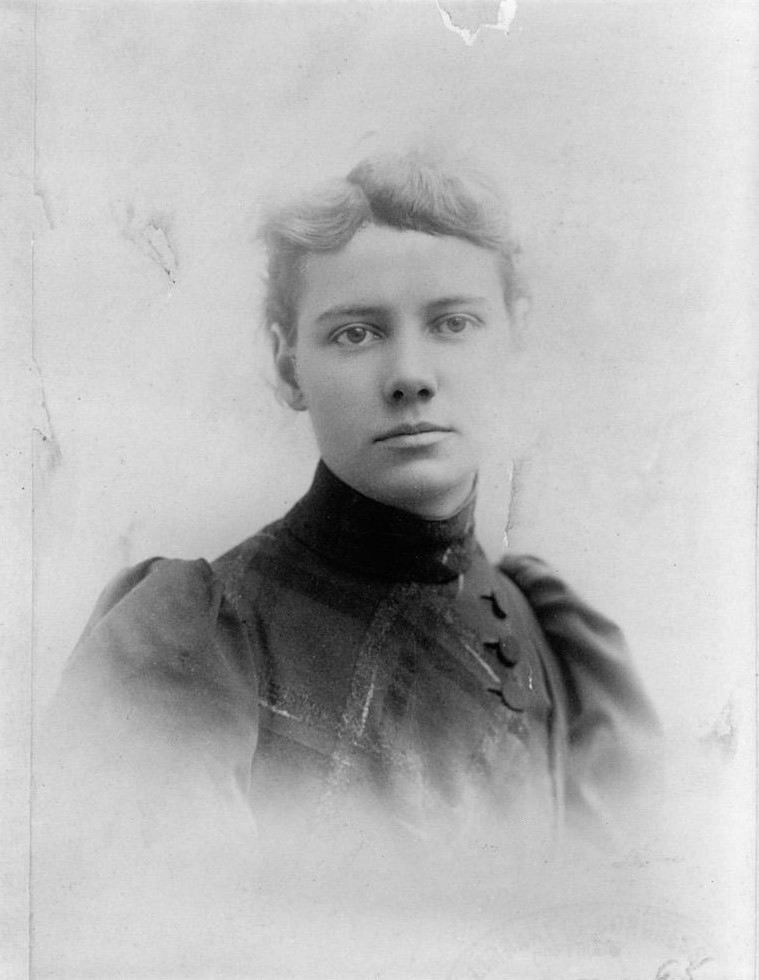
Nellie Bly, born Elizabeth Jane Cochran in 1864, became one of the most influential journalists of the late 19th century. Her groundbreaking reporting redefined the limits of women’s roles in journalism and helped establish investigative reporting as a respected practice. Bly’s fearless undercover investigation of a New York asylum exposed abuse and neglect, leading to real reforms and inspiring a generation of “stunt reporters.” Beyond journalism, she broke new ground as a world traveler, inventor and industrialist. Over her remarkable career, Bly demonstrated how persistence and courage could change both public awareness and professional opportunities for women in a male-dominated industry.
Early Life and Entry Into Journalism

Elizabeth Jane Cochran was born in Cochran’s Mill, Pennsylvania, in 1864. After her father’s death left the family struggling financially, she left school and moved to Pittsburgh with her mother. In 1885, her response to a newspaper column that criticized working women caught the attention of the editor of the Pittsburgh Dispatch, who offered her a reporting job. Adopting the pen name “Nellie Bly,” she wrote about women’s labor, poverty and social inequality. However, as editors limited her to “women’s pages,” she grew frustrated and left for New York in search of broader opportunities. Her determination to tackle serious stories soon brought her to The New York World, the newspaper that would make her famous.
“Ten Days in a Madhouse”

In 1887, while working for The New York World, Bly undertook one of the most daring assignments in journalism. Pretending to be mentally ill, she secured admission to Blackwell’s Island asylum to investigate conditions from within. For 10 days, she observed the neglect and cruelty that patients endured. Her subsequent exposé, Ten Days in a Mad-House, shocked the public and led to significant reforms, including increased funding and oversight of mental institutions. Bly’s work not only improved patient treatment but also established a new model of investigative journalism — reporting that relied on direct experience and personal risk to uncover social injustice. The story made her a national celebrity.
Around the World in 72 Days

Building on her fame, Bly set out to test whether fiction could become fact. Inspired by Jules Verne’s Around the World in Eighty Days, she embarked on a solo trip to circumnavigate the globe in 1889. Traveling by ship, train and carriage, she passed through Europe, Asia and the Pacific region, sending back regular dispatches to the World. The newspaper published updates that captivated readers worldwide. Bly completed the 25,000-mile journey in just 72 days, setting a record and solidifying her reputation as an adventurous and resourceful journalist. Her success proved that women could meet any challenge of endurance or daring that had previously been reserved for men.
Business, Invention and War Reporting

After years of high-profile journalism, Bly married industrialist Robert Seaman in 1895 and retired from reporting. When her husband died, she took over his Iron Clad Manufacturing Company, where she patented designs for oil barrels and steel containers still used decades later. Although she was known for her progressive management — offering workers health benefits, for example — poor financial oversight and employee fraud led to bankruptcy. Bly returned to journalism during World War I, reporting from the front lines in Europe. Her later work covered women’s issues and international affairs, showing her continued commitment to giving voice to those often overlooked by mainstream society.
Legacy and Lasting Impact

Nellie Bly’s fearless reporting changed journalism and opened doors for women across professions. Her asylum exposé spurred institutional reforms, and her inventive spirit expanded her influence beyond the newsroom. Though her record for fastest world travel was soon broken, her achievements in courage and creativity endured. Bly remained active in journalism until her death in 1922, leaving behind a legacy as one of America’s earliest and most influential investigative reporters. Her life’s work, spanning media, business and advocacy, continues to symbolize persistence and the belief that determination can transform both individual lives and public institutions.
Sources: National Women’s History Museum, Heinz History Center, Library of Congress



