In the 1870s, travelers along Kansas’ Osage Mission Trail often stopped at the Bender family’s inn for what they thought would be a warm meal and rest. Behind its ordinary façade, however, lay one of the most chilling crimes in American history. Between 1870 and 1873, at least eight people — possibly 11 — were murdered there. At the center of the story was Kate Bender, a young woman who presented herself as a spiritualist and healer, but who became the most infamous figure in a violent family that vanished without a trace. More than 150 years later, historians still debate her true role in the killings that shocked the frontier.
A Deadly Partnership

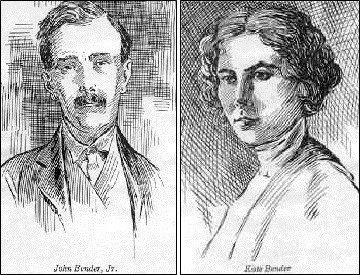
The family consisted of four adults—John Sr. and his wife, an older German-speaking couple, and the younger pair, Kate and John Jr. Though they told others they were siblings, evidence suggests Kate and John Jr. were likely partners. Together, they operated a roadside inn that catered to settlers seeking land under the Homestead Act. Kate’s supposed role was crucial: She would have been the one to greet guests, conduct séances and ensure visitors felt at ease. Once seated with their backs to a curtain, victims were allegedly struck from behind, their throats slit before being buried in the orchard. Kate’s charm and intelligence made her the perfect lure in the Benders’ grim enterprise.
The Enigmatic Kate Bender

While the two elder Benders in the family apparently weren’t that interested in dealing with people outside the homestead, the two younger adults were more social and more likely to greet travelers. Fluent in English and drawn to the era’s spiritualist movement, Kate offered séances and claimed to communicate with the dead. Her ambitions went beyond frontier life. According to researchers, Kate may have viewed crime as an easier way to get the money she desired. Her charm helped disarm guests, masking the family’s darker intentions. Though she often appeared kind and intelligent, neighbors later described her as capable of sudden, unsettling intensity.
Infamy on the Frontier

Most of the disappearances of people who stopped at the Benders’ cabin were assumed to be victims of bandits or other violence that the trails through Kansas were known for. However, when prominent physician Dr. William York disappeared in 1873, his brother, Senator Alexander York, began a search that led to the Benders’ deserted cabin. Beneath the family’s apple trees, investigators unearthed multiple graves, including one of a man and his toddler daughter, who appeared to have been buried alive after her father was killed. Kate’s name dominated headlines, as newspapers fixated on the younger woman of the group. Some claimed she masterminded the crimes; others believed the violence came from the men in the family. What is certain is that Kate’s public persona, including her spiritualist lectures and her charm, turned her into both scapegoat and legend.
Escape and Enduring Mystery

By the time authorities arrived, the Benders had vanished. Reports surfaced of their flight through tribal lands toward Texas, where they may have assumed new identities. Despite rewards and manhunts, the family was never found. Theories abound; some say they were killed by vigilantes, while others believe Kate and her companion moved on and lived quietly in Colorado. Without photographs or reliable records, none of these claims could be proved. Kate became the enduring face of the case — a figure both feared and fascinated over time, representing the blurred line between myth and truth in America’s early crime history. Two women were initially accused of being Kate and her mother, but the two were able to prove their innocence and escape a trial.
Kate’s Legacy in History and Culture

In the decades that followed, the story of the “Bloody Benders” entered folklore. Books and films revisited the crimes, often centering on Kate as the mysterious, manipulative woman at the heart of it all. Modern scholars, however, have re-examined her story, exploring how gender roles and sensational journalism shaped her reputation. Archaeological teams from classes at the University of Kansas have searched the property, now called the Bender Mounds, for new evidence at the old homestead site, while locals preserve the history at museums near Cherryvale. Whether villain or victim of mythmaking, Kate Bender remains one of the most haunting figures in America’s frontier past.
Sources: A&E, New York Post, People, KCTV, Kansas Reflector, Library of Congress