
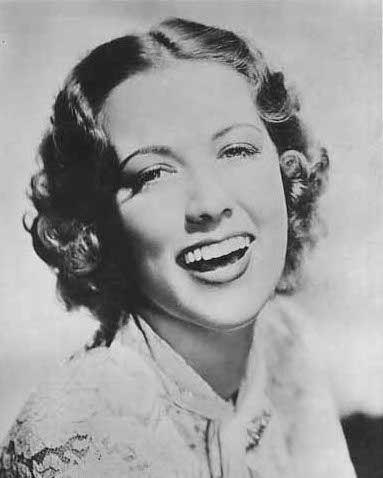
Eleanor Torrey Powell, born November 21, 1912, in Springfield, Massachusetts, became one of Hollywood’s most remarkable tap dancers during the 1930s and 1940s. Known for her precision and athleticism, Powell stood apart from her peers in an era dominated by male performers. Her powerful, rhythmic routines and expressive energy made her a standout in Metro-Goldwyn-Mayer’s lavish musicals. Often performing solo, she exuded confidence and independence that challenged traditional Hollywood portrayals of women. Though she appeared in relatively few films, each performance reflected her unmatched technical skill and dedication to her craft. Powell’s legacy continues to inspire dancers and audiences alike, embodying both the artistry and strength that defined classic American cinema.
Early Talent and Broadway Beginnings

Powell’s path to stardom began in childhood, when she studied ballet at six before turning to tap as a teenager. Her natural rhythm and enthusiasm quickly drew attention, and she was discovered performing acrobatics on an Atlantic City beach. Vaudeville producer Gus Edwards cast her in the Vaudeville Kiddie Revue, marking the start of a professional journey that would lead to Broadway. By 1928, Powell appeared in the musical revue “The Optimists” at New York’s Casino de Paris, followed by “Follow Thru” the next year. Her dynamic footwork earned her acclaim and comparisons to top male dancers of the time. By age 17, she was headlining stage productions, and her growing fame made her one of Broadway’s most exciting new talents.
Hollywood Breakthrough and MGM Stardom

In 1935, Powell transitioned from stage to screen, debuting in “George White’s Scandals.” She was initially disappointed by the experience due to a make-up and costuming mistake. However, Powell still received a contract offer from MGM executives who recognized her potential. Powell was hesitant, initially refusing the contract. She asked the studio for an amount of money that she thought the executives would find excessive in an attempt to make them stop contacting her. That scheme backfired to her advantage when the studio agreed to pay her as much as she requested. She joined the studio and was soon given her breakout role in “Broadway Melody of 1936.” Her performance captivated audiences with its energy and precision, establishing her as a star of the musical film genre. Powell’s success continued with hits like “Born to Dance” (1936), “Rosalie” (1937), “Honolulu” (1939), and “Broadway Melody of 1940.” Her films were credited with reviving MGM’s fortunes in the late 1930s, making her one of the studio’s most valuable performers. Powell’s radiant presence and technical mastery redefined the standard for female dancers in Hollywood, and dancer Ann Miller later said that it was Powell who inspired her to go into dance.
Dance Style and Onscreen Presence

Powell’s dancing style was groundbreaking for its power and self-assurance. Rather than serving as a graceful counterpart to male leads, she dominated the stage with bold, rhythmic movements and complex routines. Her footwork was described as precise, fast, strong and impeccably timed. She often performed without a partner, emphasizing individuality and control, qualities rare for women in musicals of the time. Her collaboration with Fred Astaire in “Broadway Melody of 1940” is iconic, particularly their “Begin the Beguine” duet, which showcased her ability to match his elegance while maintaining her own distinct presence. Her dedication to perfection was on full display during the filming of 1941’s “Lady Be Good,” in which she spent several weeks training Buttons the dog to “dance” in a routine with her. Powell’s approach to dance presented her as an equal rather than a supporting act, an achievement that shaped her enduring reputation.
Later Career and Personal Life

As musical and film-going tastes changed in the 1940s, Powell’s film career slowed. She appeared in “Sensations of 1945,” featuring a memorable sequence where she danced inside a giant pinball machine, and later made a brief return in “Duchess of Idaho” (1950). After marrying actor Glenn Ford in 1943, Powell stepped away from Hollywood to raise their son, Peter Ford. The couple divorced in 1959, after which she reemerged onstage in Las Vegas and New York revues in the early 1960s. She also hosted a faith-based TV series, “The Faith of Our Children,” between 1953 and 1955.
Legacy of a Dance Icon

Eleanor Powell’s influence endures as one of the defining forces in 20-century tap dance. She was honored by the Dance Masters of America in 1965 as the “World’s Greatest Tap Dancer,” a title acknowledging her unmatched skill and innovation. Known for her independence and artistic integrity, she broke barriers for women in an industry often resistant to powerful female performers. Though she appeared in only 14 films, her work remains a masterclass in precision and musicality. Powell passed away in 1982 at her Beverly Hills home, leaving behind a legacy of excellence that continues to inspire generations of dancers.
Sources: Hollywood Walk of Fame, Britannica, The New Republic, The New York Times, Turner Classic Movies



