
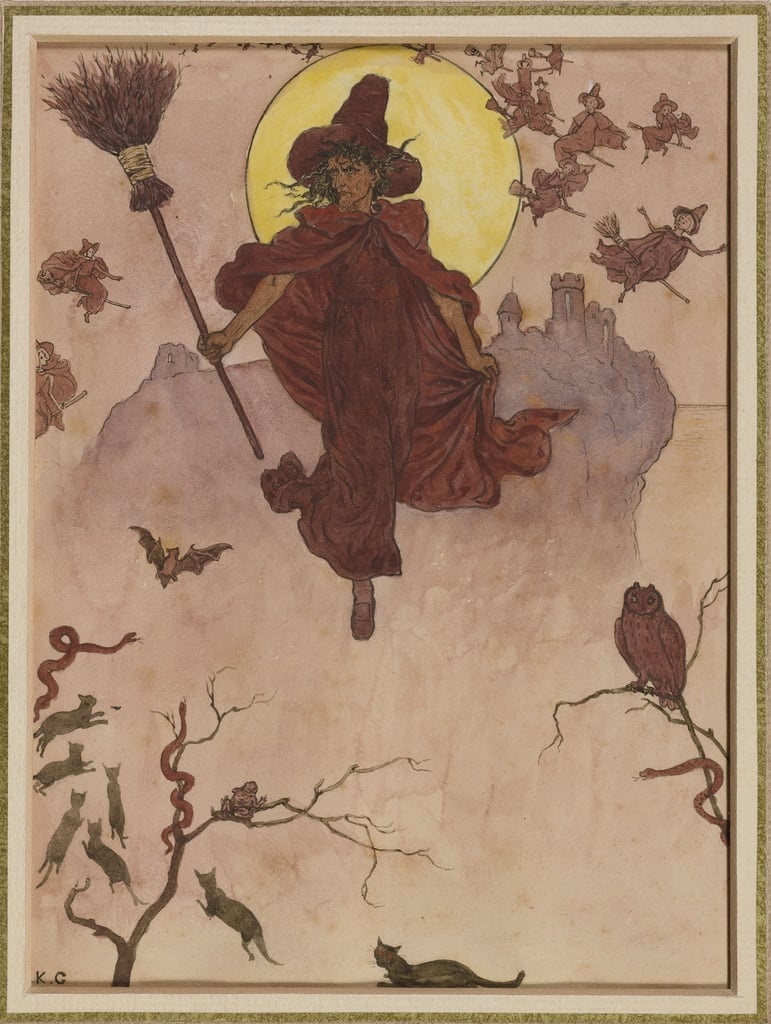

For centuries, witches have haunted the margins of history. They were feared, burned, romanticized, and even reinvented. Once considered emissaries of the Devil, they now appear on everything from Halloween costumes to the silver screens. The real story of witchcraft isn’t just about superstition or sorcery. It’s a story about power — who has it, who doesn’t, and what happens when fear turns that imbalance into violence.
The Earliest Mention of Witches Was In The Bible

The idea of witchcraft stretches back millennia, to a time when magic and medicine blurred together. One of the first known references appears in the Bible, in the book of 1 Samuel, where King Saul consults the Witch of Endor to summon the spirit of the prophet Samuel. She warns him that his kingdom will fall, and by the next day, he and his sons are dead. The Old Testament’s warning, “Thou shalt not suffer a witch to live,” would echo for centuries in the minds of the faithful.
Medicinal Healers Were Targeted In The Middle Ages

By the Middle Ages, the Christian church had redefined witches as agents of Satan rather than village healers or spiritual guides. The shift was political as much as theological. As the church expanded across Europe, it worked to absorb or eliminate older, pagan traditions. Women who practiced folk healing, midwifery, or herbal medicine became easy targets. They held knowledge the church couldn’t control — and that made them dangerous.
The Malleus Maleficarum

The fear turned deadly in the 1400s. As plague, famine, and war tore through Europe, witch hunts offered a grim kind of order. Misfortune needed an explanation, and witches became the scapegoats. The 1486 publication of Malleus Maleficarum, or The Hammer of Witches, codified that paranoia. Written by two German Dominican inquisitors, the book laid out in obsessive detail how to identify, interrogate, and execute witches. It called witchcraft heresy and claimed women were especially prone to it because of their “weaker faith.” The book sold second only to the Bible for a hundred years — a fact that says as much about its influence as it does about Europe’s appetite for fear. Between 1500 and 1660, roughly 80,000 people were executed for witchcraft across Europe. Four out of five were women. In Germany, entire villages were wiped out by witch trials. Ireland had the lowest numbers, but nowhere was untouched. Single women, widows, the poor, and the odd were the first accused — the people easiest to blame and least able to defend themselves.
Fear Comes To Salem

As hysteria in Europe waned, it crossed the Atlantic. The New World, shaped by disease, frontier violence, and religious zeal, was fertile ground for suspicion. In 1692, two girls in Salem, Massachusetts — Elizabeth Parris, 9, and Abigail Williams, 11 — began suffering from strange fits and hallucinations. Their symptoms, later thought to be caused by a fungus, sparked one of the most infamous moral panics in American history. Within months, more than 150 people had been accused of witchcraft. Nineteen were executed, among them Bridget Bishop, hanged after declaring her innocence.
There Were Witch Hunts Across New England

Salem’s story endures because it’s so stark — children’s fear weaponized by adults, authority twisted into cruelty, the line between faith and fanaticism erased. But witch hunts weren’t confined to Massachusetts. In Connecticut, 46 people were accused and 11 executed before 1700. Virginia held dozens of trials but executed none. There, in 1706, a woman named Grace Sherwood was bound hand and foot and thrown into a river in what was called a “trial by water.” If she floated, she was guilty. Sherwood floated. She spent eight years in prison. By the 1730s, witch mania had begun to look absurd even to its believers. Benjamin Franklin’s satirical 1730 article in The Pennsylvania Gazette mocked the idea that witches were still lurking in colonial America. From then on, laws began to change, and witchcraft faded from the courtroom to the cultural imagination. But witches never disappeared. They transformed.
20th Century Witches

By the 1730s, witch mania had begun to look absurd even to its believers. Benjamin Franklin’s satirical 1730 article in The Pennsylvania Gazette mocked the idea that witches were still lurking in colonial America. From then on, laws began to change, and witchcraft faded from the courtroom to the cultural imagination. But witches never disappeared. They transformed. In the 20th century, witchcraft found new life in Wicca, a modern pagan religion that emphasizes nature and ritual. Their ceremonies honor the seasons and cycles of life. Their “spells” are closer to prayer than the dark incantations of yesteryear. But things aren’t all peachy keen for someone who identifies as a witch now that we’re in the modern era. In parts of Africa, South America, and Papua New Guinea, accusations of witchcraft still lead to violence and death. In 2010, a young mother in Papua New Guinea was burned alive after being accused of sorcery. In Tanzania, dozens of older women are killed every year for being “witches.” What began as superstition has endured as a social weapon — one used, again and again, against the powerless.
We’ll Always Have Witches

The witch’s story, then, is not just a Halloween myth. It’s a mirror. In medieval Europe, in Puritan New England, and in modern villages half a world away, witch hunts show what happens when fear, ignorance, and authority align. And yet, there’s another truth beneath the terror: witches survive. From the midwives burned in 16th-century Germany to the Wiccan practitioners casting protection charms today, the figure of the witch has endured — reshaped, reclaimed, and reimagined as something powerful, not evil. Every October, when the pointy hats and broomsticks reappear, it’s worth remembering where that image came from — and who paid for it.



