
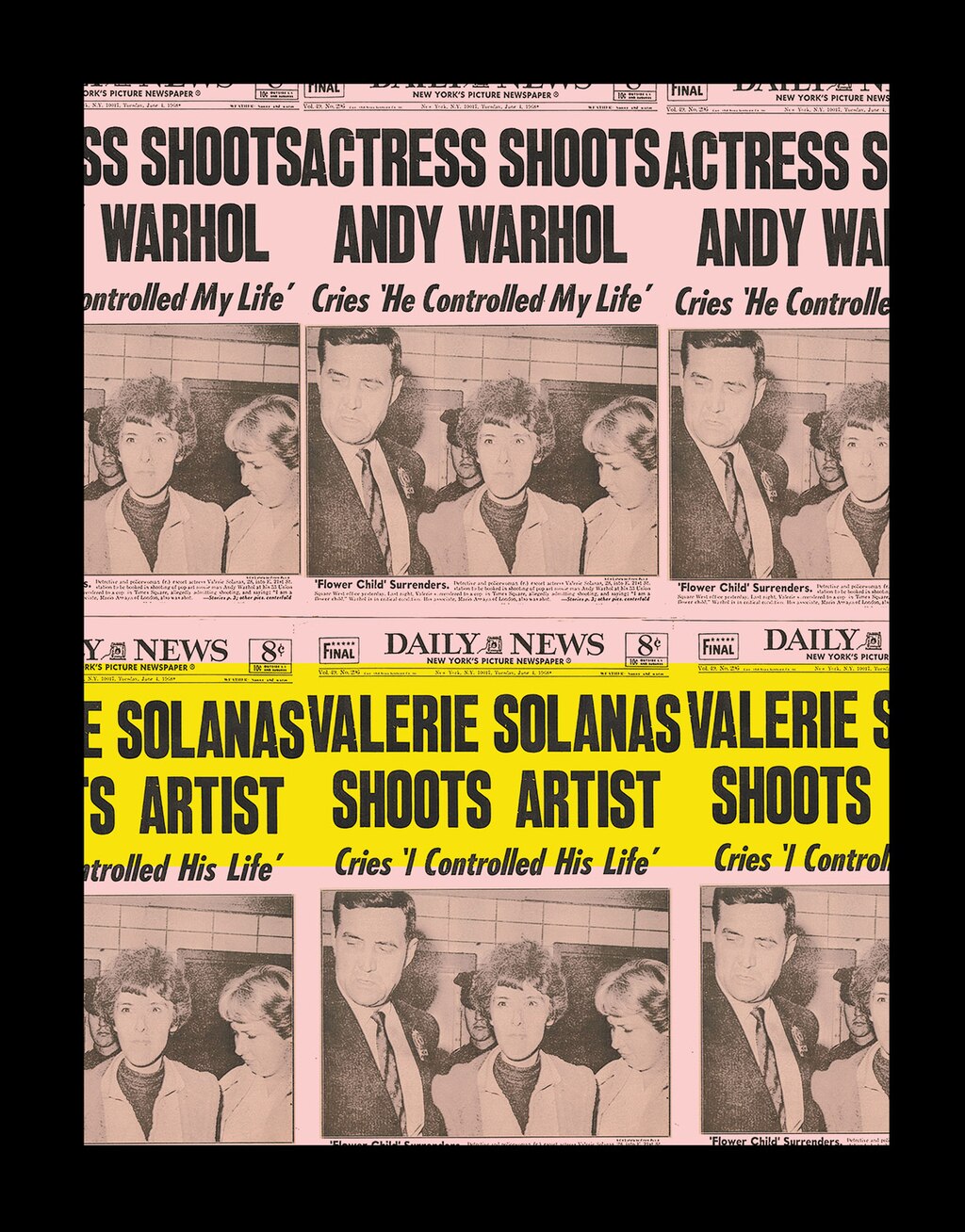

Valerie Jean Solanas was one of the most controversial and misunderstood figures of the 1960s counterculture. Born in 1936 in New Jersey, she endured a difficult childhood marked by family instability and alleged abuse. Despite early struggles, she excelled academically and earned a psychology degree from the University of Maryland. Solanas’ intellect and unconventional ideas about gender shaped her later work as a radical feminist writer. Her life would become infamous after she shot pop artist Andy Warhol in 1968, an act that brought her brief notoriety and lasting cultural fascination.
Early Life and Education

Solanas grew up in a fractured family and was sent to live with her grandparents after her parents’ separation. She was bright and outspoken but often defiant, leaving Catholic school after an altercation with a nun. By her mid-teens, she had given birth twice, and both children were raised by others; one was adopted by another family, and the other was raised as Solanas’ sister. Despite these hardships, she excelled academically and earned a reputation for intelligence and determination. At the University of Maryland, she studied psychology and supported herself through various jobs. Ordered into counseling for her temper, she still graduated and went on to begin a master’s program at the University of Minnesota before dropping out, frustrated by gender inequality in academia.
Arrival in New York’s Art Scene

After traveling across the country, Solanas moved to New York City in the early 1960s, drawn to its creative energy and bohemian freedom. Living in modest hotels, she wrote constantly, carrying her typewriter everywhere. In 1965, she completed “Up Your Ass,” a provocative play about a streetwise lesbian sex worker. Hoping to have it produced, she approached Andy Warhol, a leading figure in the avant-garde art scene. Warhol dismissed the play as too explicit, though he later cast her in one of his films. Solanas also began circulating her writings independently, selling mimeographed pages on the streets of Greenwich Village to support herself while refining the ideas that would define her manifesto.
The SCUM Manifesto

Between 1965 and 1967, Solanas wrote her most famous work, “The SCUM Manifesto,” short for “Society for Cutting Up Men.” The text called for a world without male dominance and outlined a radical vision of female-led society. Some read it as satire; others viewed it as a genuine call for revolution. Solanas self-published the work and sold copies directly to readers, charging men double. The “Manifesto” quickly circulated among feminist and countercultural circles, cementing her as a polarizing figure. She also sought backing from controversial publisher Maurice Girodias, who paid her an advance for another project. Over time, Solanas grew paranoid, believing Girodias and Warhol were trying to steal her writing and ideas.
The Showdown at the Factory

On June 3, 1968, Solanas confronted Warhol at his studio, the Factory, in Manhattan. She had become convinced he was trying to control or suppress her work. Armed with a pistol, she shot Warhol and art critic Mario Amaya. Amaya’s injuries were minor, but Warhol’s wounds were nearly fatal, damaging several internal organs. He survived after multiple surgeries and wore a surgical corset for the rest of his life. Solanas turned herself in hours later, telling police that Warhol had “too much control” over her life. Declared mentally ill, she spent time in psychiatric hospitals before being sentenced to prison. This became one of the most notorious events in 1960s New York art history.
Later Life and Legacy

After her release, Solanas lived on the margins, briefly working for a feminist newsletter before fading from public view. She published a revised edition of “The SCUM Manifesto” and occasionally gave interviews, but her health and mental stability deteriorated. She died alone in San Francisco in 1988 from pneumonia, aged 52. Though her name is often remembered for violence, scholars and artists have re-examined her as a complex figure who challenged gender norms and artistic power structures.
Sources: Biography, New York Times, HISTORY



