
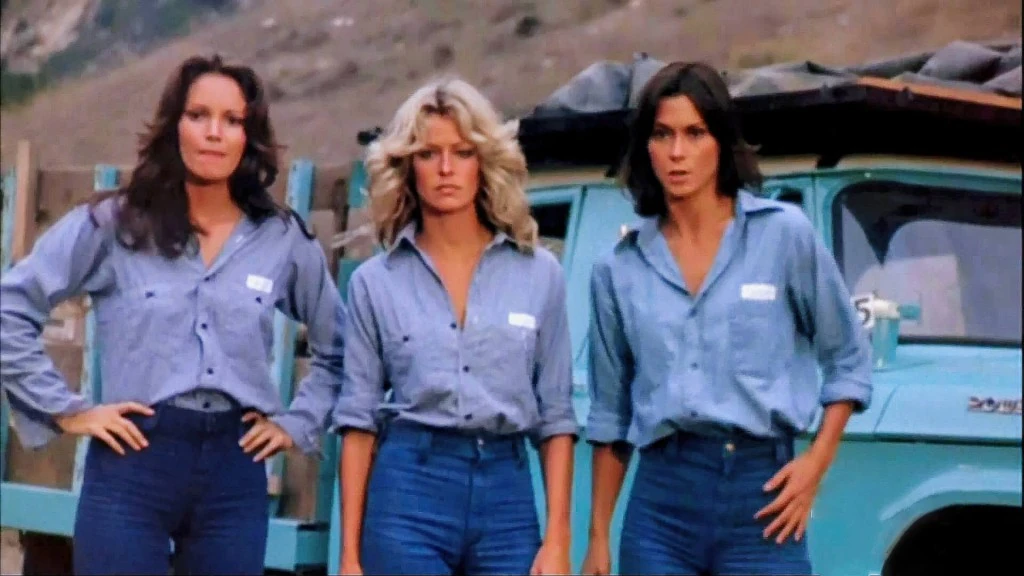

When Charlie’s Angels premiered in 1976, network executives thought it would flop. The premise — three glamorous women working as private detectives for a mysterious, unseen boss — sounded absurd to ABC decision-makers like Michael Eisner and Barry Diller. “One of the worst ideas I’ve ever heard,” Eisner reportedly told producer Aaron Spelling. But Spelling, ever the showman, believed the network — and the country — was ready for something different. He was right. By the time the pilot aired on March 21, 1976, Charlie’s Angels drew more than half of America’s television audience. In a decade defined by second-wave feminism, the women’s liberation movement, and shifting gender expectations, Spelling’s “outrageous idea” turned into a cultural lightning bolt.
“Jiggle TV” And The Rise Of The Female Led Series

Before Charlie’s Angels, few hour-long dramas featured women in lead roles. Female characters were often wives, secretaries, or supporting figures orbiting a male protagonist. Spelling flipped the formula — three women solving crimes, carrying guns, and chasing bad guys while still leaning into television’s fascination with glamour and beauty. Critics sneered at what they called “jiggle TV,” but the show’s success was undeniable.
Everyone Wanted To Be Farrah Fawcett

August 1, 1980; Jupiter, FL, USA; Farrah Fawcett gets a butterfly-shaped plaque from actress Joan Caulfield (left) to celebrate her stage debut in ‘Butterflies Are Free’ at the Burt Reynolds Theatre in Jupiter. The Post headline on Fawcett’s debut: ‘Proven! Farrah Can Act!’ Mandatory credit: George Millener-USA TODAY NETWORK via Imagn Images
Farrah Fawcett, the breakout star, became one of the most recognizable faces in America. Her feathered blond hair, dazzling smile, and swimsuit poster — dreamed up by her manager Jay Bernstein — became defining images of 1970s pop culture. Women copied her hairstyle. Men decorated their dorm rooms with her poster. Her fame predated cable television and the internet, yet she managed to achieve a kind of omnipresence that only a handful of celebrities have ever matched.
Breaking Down Walls And Kicking Open Doors

The show’s impact went beyond its surface appeal. For all its camp and kitsch, Charlie’s Angels represented a new kind of power fantasy. These weren’t just models or sidekicks — they were detectives, professionals, and problem solvers. They were the heroes. It was the rare network show where women got to drive the story, even if the stories themselves were wrapped in glossy, sometimes ridiculous packaging. Tricia Helfer, who later portrayed Fawcett-Majors in NBC’s Behind the Camera: The Unauthorized Story of Charlie’s Angels, put it plainly: “It really opened doors for women as being able to be characters and draw an audience. Now there are so many female shows.”
The Show Suffered After The First Season

Fame has a cost. After one season, Fawcett found herself overwhelmed by celebrity and pulled between career and marriage. Her then-husband, actor Lee Majors, reportedly wanted her home every night to cook dinner. Under pressure, she left the show, prompting lawsuits and industry fallout that ended only after Fawcett agreed to make limited guest appearances. She was replaced by Cheryl Ladd, but the damage — and the myth — had already been done. Behind the scenes, Aaron Spelling played the role of both producer and protector. He kept peace between the network and the cast, assuring worried stars that “we want our viewers riveted,” even as he fought to preserve a show that balanced empowerment and objectification in equal measure.
Charlie’s Angels Was One Of A Kind

Looking back, Charlie’s Angels was a contradiction — feminist and exploitative, progressive and deeply commercial. Yet it changed what was possible for women on television. It proved that audiences would watch women lead an action series, that glamour could coexist with agency, and that sometimes even a show dismissed as “jiggle TV” could help rewrite the rules. It wasn’t just a hit. It was a turning point — one that made the small screen a little bigger for the women who came after.



