
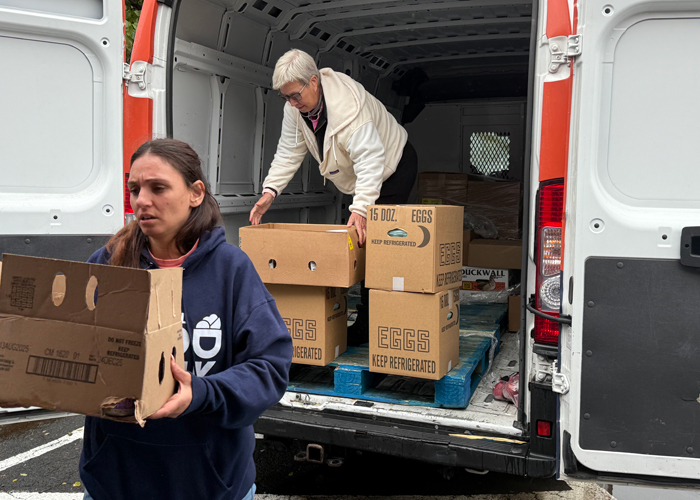
As the federal government shutdown moves into its second week with no sign of resolution, its effects are starting to ripple far beyond Washington. In Highland Falls, New York — a small village of about 3,000 people just outside the gates of West Point — a group of women has stepped in to help neighbors who suddenly find themselves without paychecks.
The women, many with ties to the military, have organized a food drive that’s keeping families afloat while federal workers and military employees wait for Congress to act. “Our community is struggling right now,” said Erin Healy, an Army veteran and military spouse helping to coordinate donations. “We’re in this time of uncertainty. People really don’t know what the future holds.”
West Point is the area’s largest employer, and with paychecks frozen, the local economy has come to a crawl. Residents say the ripple effects — from missed rent payments to grocery shortages — could be “catastrophic” if the shutdown continues much longer.
Tierney Cain, a federal employee volunteering at the food drive, said the need became clear almost immediately. “A majority of the people I work with are not getting paychecks right now,” she said. “And food is expensive. People have kids, pets — it adds up fast.”
Donations have poured in from food banks, local businesses, and ordinary residents, including baby formula and pet food. “We have our furry friends we’re taking care of too,” Healy said, smiling as she helped unpack a box of dog food.
The drive’s founder, Jennifer Gargiulo, said the idea came after she scrolled through Facebook and saw local families expressing panic about how they’d feed their kids. “It started as me trying to see if anyone needed help,” she said. “Now it’s turned into this big thing — and it’s not about politics, it’s about people.”
Volunteers are determined to keep going “as long as it takes,” Gargiulo said. Meanwhile, the gridlock in Washington shows no sign of easing. Lawmakers remain divided on how to fund the government, with Republicans and Democrats talking past each other on competing spending proposals. The Senate has already held multiple failed votes, and the House has yet to reconvene in full session.
While political leaders argue over the fine print, everyday Americans — from federal employees to service families — are left in limbo. The last major government shutdown in 2019 lasted 35 days and cost the U.S. billions in lost productivity. Economists warn that if this one drags on, the consequences could be similar: rising food insecurity, delayed pay for millions, and lasting economic scars.



