
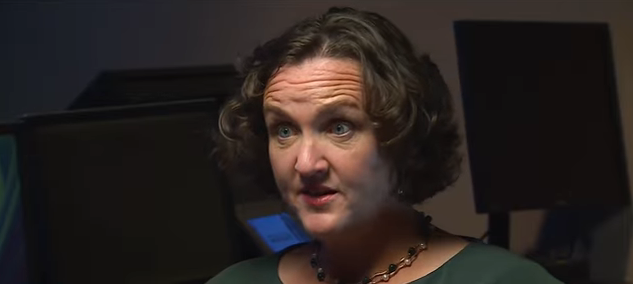
California gubernatorial candidate and former congresswoman Katie Porter drew widespread attention after a tense on-camera exchange with CBS News correspondent Julie Watts. The interview, which quickly went viral, showed Porter pushing back against a line of questioning about her appeal to voters who supported former President Donald Trump. Porter, a Democrat and early frontrunner in the race to succeed Governor Gavin Newsom, appeared visibly frustrated as the conversation turned into a series of pointed follow-ups. Though Porter later continued the interview, the brief moment of confrontation has become a flashpoint in California’s high-profile 2026 governor’s race, raising questions about how candidates handle media scrutiny and voter outreach.
The Interview That Made Headlines

May 11, 2023; Washington, D.C., USA; — Ranking Member Katie Porter asking questions of Susan T. Mayne, Ph.D., Director, Center for Food Safety and Applied Nutrition, U.S. Food and Drug Administration as Mayne testifies before House Oversight and Accountability holding a hearing on the baby formula shortage in Washington, D.C., May 11, 2023. Mandatory Credit: Jack Gruber-USA TODAY
The exchange began when reporter Julie Watts asked Porter what she would say to the roughly 40% of Californians who voted for Donald Trump and whose support she might need to win the general election. Porter questioned the premise, asking, “How would I need them in order to win?” and later suggesting she could prevail without those voters in a race against a Republican. When Watts pressed further — asking how she would fare in a contest against another Democrat — Porter dismissed the scenario, saying she did not expect that outcome. The discussion grew tense as Porter accused the reporter of being argumentative, signaling she might end the interview before ultimately continuing after the cameras stopped rolling briefly.
Porter’s Response and Clarifications

{Nov. 30, 2018} {10:30 a.m.} — Washington, DC — Rep. Elect Katie Porter of California (D) talks with reporters following the lottery that assigns the order in which new members of Congress are allowed to pick their offices. — Photo by Hannah Gaber, USA TODAY StaffHgs 0621
Following the release of the clip, Porter’s campaign clarified that she did not walk out and that the full interview continued for another 20 minutes. A spokesperson said the candidate had simply objected to the tone and repeated follow-up questions. Porter has maintained that her record in Congress, where she represented a politically mixed district in Orange County, demonstrates her ability to attract independent and Republican voters. The campaign framed the viral exchange as a moment of miscommunication rather than hostility, and Watts had said that the same question was posed to other candidates in the race. Still, the moment offered a rare glimpse into the pressures candidates face when navigating complex questions about coalition-building in a deeply divided political climate.
Reaction From Other Candidates

Secretary Xavier Becerra and White House Domestic Policy Council Director Neera Tanden at announcement of a $500 million investment in health care Navigators at Adelante Healthcare in Goodyear on June 7, 2024.
Porter’s rivals quickly seized on the viral moment to emphasize their own messages of inclusion and accessibility. Former Los Angeles Mayor Antonio Villaraigosa said California needs “a leader who will solve hard problems and answer simple questions,” while former Health and Human Services Secretary Xavier Becerra emphasized that he is “not interested in excluding any vote.” Republican candidate Steve Hilton also weighed in, pledging to serve all Californians regardless of party affiliation. State Schools Superintendent Tony Thurmond criticized Porter’s tone, suggesting candidates owe transparency to voters and the press alike. The reactions underscored how a single exchange can shape public perception in a crowded field, especially when social media amplifies every campaign misstep in real time.
The Broader Political Context

A poll worker cleans a voting booth inside St. Mary of the Nativity Catholic Church’s hall during the 2022 California Primary elections in Salinas, Calif., on Tuesday, June 7, 2022.
The interview controversy emerged as Porter led early polling in California’s 2026 gubernatorial race. A University of California, Berkeley survey conducted in August placed her ahead of a wide field of Democrats with 17% support, followed by Republican Sheriff Chad Bianco at 10% and Becerra at 9%. Still, more than a third of voters remained undecided, leaving significant room for movement. California’s top-two primary system allows the two highest vote-getters, regardless of party, to advance to the general election, meaning Porter could face another Democrat on the November ballot. With that possibility in mind, analysts say moments like the CBS interview could test her ability to broaden her appeal beyond her existing Democratic base.
Porter’s Record and Public Image

Feb 7, 2023; Washington, DC, USA; Feb. 7, 2023; Washington, DC, USA. Rep. Katie Porter (D-CA) during the House Committee on Oversight and Accountability hearing on border and immigration issues on February 7, 2023 in Washington.. Mandatory Credit: Jack Gruber-USA TODAY
Katie Porter first gained national attention for her sharp questioning of corporate executives and government officials during congressional hearings, often using a trademark whiteboard to illustrate her points. Her direct style earned her both praise and criticism, contributing to her reputation as a tough but sometimes combative figure. After three terms in the U.S. House, she left Congress to pursue higher office. While her assertiveness has resonated with many progressive voters, it has also drawn scrutiny over reports of strained staff relationships and a past domestic dispute. As she seeks to become California’s next governor, Porter faces the challenge of translating her reputation for accountability into a broader message of unity and leadership for a diverse electorate.
Sources: The Hill, Politico, USA TODAY



