
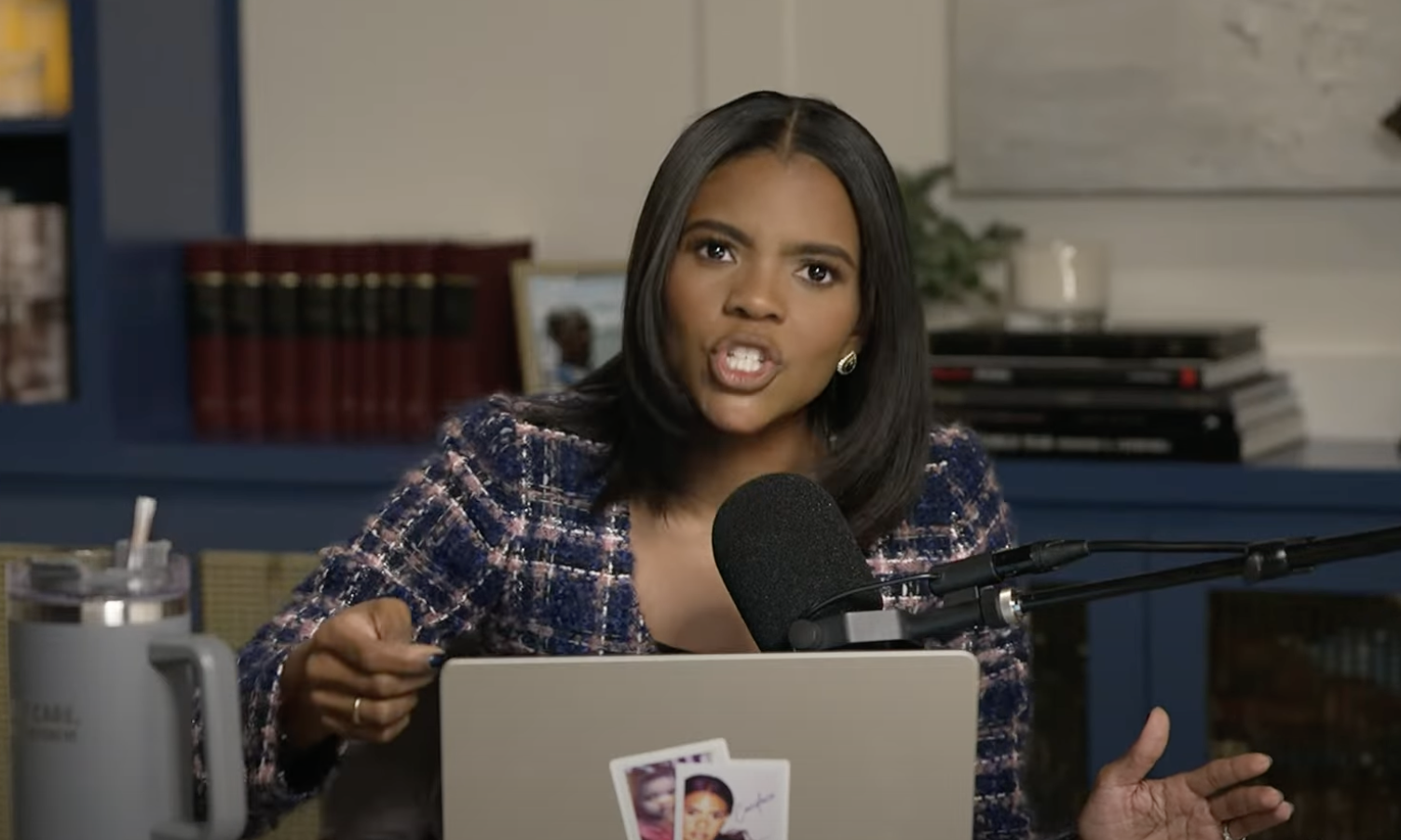
The latest episode of Candace Owens’ podcast centers on her criticisms of Turning Point USA (TPUSA) in the aftermath of Charlie Kirk’s death. Owens argues that TPUSA leaders and allied influencers are discouraging inquiry, spreading “micro-lies,” and mishandling public communication. She frames her comments as a call for transparency, separating her opinions from official narratives.
The “David Hogging” Concept
Owens introduces a term she calls “David Hogging”: using tragedy-driven emotion to discourage questions. She claims TPUSA figures are appealing to grief—particularly references to Kirk’s widow—to imply that scrutiny is inappropriate. In her view, telling the public not to ask questions after a traumatic event is manipulative and ultimately erodes trust.

Branding vs. Substance
Using business analogies, Owens says audiences care more about “menu items” (the substance) than corporate reshuffles. She likens Charlie Kirk to a brand-defining figure—similar to a recognizable logo—arguing that TPUSA’s perceived shift away from confronting official narratives feels like changing the core product. The public, she says, “catches a vibe” when messaging doesn’t match facts on the ground.
Claims of “Micro-Lies”
Owens accuses TPUSA voices of sharing half-truths about minor details that cumulatively foster skepticism. She argues that even small inaccuracies are troubling in a crisis. Her thesis: if leaders want trust, they must avoid spin, acknowledge unknowns, and correct contradictions promptly.
Faith, Identity, and Public Narrative
A recurring theme is whether Kirk was moving toward Catholicism. Owens says he attended Mass regularly, prayed the rosary, wore a St. Michael pendant, and had clergy involvement at key moments. She contrasts this with influencers who, in her view, downplayed or reframed those facts to preserve an evangelical identity associated with TPUSA’s faith network. Owens presents this not to claim a formal conversion but to challenge what she sees as selective storytelling.
Donor Pressure and Internal Tensions
Owens claims Kirk faced donor pressure regarding guest selections and commentary related to Israel. She references a group chat (with names partially withheld) to support the idea that he resisted being “bullied” by donors. Her broader point is about incentives: if fundraising or relationships steer messaging, organizations should disclose those pressures rather than retrofitting narratives after the fact.

The SD Card Discrepancy
A focal dispute concerns why a TPUSA staffer removed SD cards from a camera after the shooting. Owens notes two explanations: one suggesting the action was to prevent theft or protect the widow from seeing traumatic footage; another implying law enforcement requested securing the footage before lockdown. She flags the inconsistency and argues that changing rationales invite suspicion, even if the footage ultimately resides with authorities.
“Release the Footage” Argument
Owens questions why, during a 33-hour manhunt, authorities released only limited or blurry imagery if multiple high-resolution angles exist. Her contention: sharing more visual evidence then could have aided capture and bolstered public confidence. She says that withholding clear footage on the grounds of protecting a future trial makes little sense during an urgent search, and that transparency is the best antidote to speculation.
On Accusations and Tone
Owens emphasizes she is not alleging TPUSA carried out a crime; rather, she is challenging inconsistencies and urging openness. She criticizes heated responses—lawsuit threats, labeling skeptics as “demonic,” or dismissing independent analysts as “doing it for clicks”—arguing that such tactics harden public doubt. Her advice to TPUSA: stop moralizing, stop gaslighting, and answer straightforward questions.

“DOGE Department,” Audits, and Governance
Owens discusses an internal email she says described a new “Doge” (or “Doge-like”) department aimed at rooting out waste or internal issues. She argues that citing annual nonprofit audits doesn’t address potential intraorganizational problems audits may miss (e.g., contractor arrangements). Her governance takeaway: routine compliance is not the same as proactive internal accountability.
Pastors, Politics, and Scripture
Owens responds to pastors who publicly criticized her, cautioning against using scripture to validate political talking points or to shame congregants into silencing questions. She distinguishes between faith and political branding, urging clergy to pursue theological integrity without turning sermons into rebuttals of media figures.
Sponsors and Media Optics
She notes the juxtaposition of grief with media features and fundraising, critiquing choices—like posed photos near memorials or enthusiastic praise for federal agencies—as jarring to audiences still processing shock. Her concern is less about individual mourning styles and more about optics that appear curated instead of candid.
Core Ask: Transparency Over Tribes
Owens closes by returning to a simple message: truth withstands scrutiny. She urges TPUSA and authorities to clarify contradictions, release as much relevant footage as feasible, and allow good-faith questions without smearing questioners. In her view, honoring Kirk means pursuing answers with integrity, not narrowing inquiry to protect reputations or relationships.
Source: Candace Owens/YouTube



