
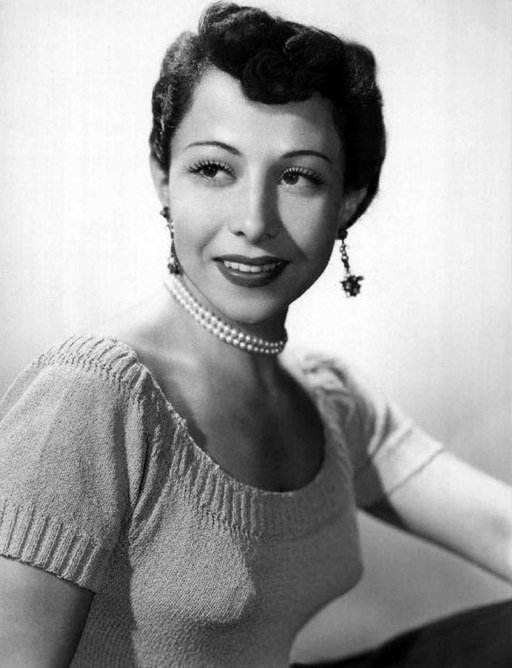
June Foray was born June Lucille Forer in Springfield, Massachusetts, on September 18, 1917. Her remarkable career began at age 12, when she performed in a local radio drama. By 15, she was a regular on Springfield’s WBZA radio station and soon moved with her family to Los Angeles. There, Foray quickly became one of radio’s busiest young voices, appearing on national programs like “The Jimmy Durante Show” and “Lux Radio Theatre.” She credited her early radio years with teaching her to think fast and perform across a range of characters — a skill that would define her long and groundbreaking career in animation.
Breaking Into Animation

By the 1940s, Foray had transitioned from radio to film, finding her niche in animation. Her first major studio role came at Walt Disney Productions, where she voiced Lucifer the cat in “Cinderella” and later performed as a mermaid reference model in “Peter Pan.” Around the same time, she lent her voice to Tex Avery’s cartoons at MGM and Walter Lantz’s “Woody Woodpecker” shorts. At Warner Bros., she became the defining female voice of the Looney Tunes era, portraying Granny, the owner of Tweety and Sylvester, and Witch Hazel, the cackling witch still imitated by voice artists today. Her versatility made her one of the most sought-after performers in the industry.
Collaborations and Radio Fame

Foray’s talents extended beyond animation. In the 1950s, she frequently collaborated with satirist Stan Freberg, appearing on comedy records like “St. George and the Dragonet” and “Sh-Boom.” She also starred in “The Stan Freberg Show,” considered the last network radio comedy series. Her sharp timing and ability to shift between accents and ages made her a favorite among colleagues, including Daws Butler, Paul Frees and Mel Blanc. Though she occasionally appeared on camera in film and television, Foray recognized that her greatest strength was behind the microphone, bringing distinct, emotionally rich characters to life through her voice alone.
Rocky, Bullwinkle and Lasting Stardom

Foray’s best-known work began in 1959 with “Rocky and His Friends,” later known as “The Bullwinkle Show.” As both Rocky the Flying Squirrel and villainous spy Natasha Fatale, she helped define Jay Ward’s clever, pun-filled animated world. The series became a cultural touchstone for its mix of slapstick and political satire, appealing to both children and adults. Foray’s performance as Rocky, known for the phrase “Hokey smoke!”, made her a household name. She went on to voice Nell Fenwick in “Dudley Do-Right” and countless other Jay Ward creations, solidifying her reputation as the “female Mel Blanc” of American animation.
A Career Spanning Generations

Even as animation evolved, Foray continued to find new audiences. She voiced Cindy Lou Who in the 1966 holiday classic “How the Grinch Stole Christmas” and later appeared in “The Smurfs,” “Garfield and Friends” and “Tiny Toon Adventures.” In 1998, she brought warmth and humor to Grandmother Fa in Disney’s “Mulan,” introducing her voice to yet another generation. Beyond cartoons, Foray also lent her voice to dolls like Chatty Cathy and Disneyland attractions including Pirates of the Caribbean, and she provided the voice for Talky Tina in a classic episode of “The Twilight Zone.” Her career encompassed more than 300 roles across film, television, and radio — an extraordinary achievement that spanned nearly nine decades.
Legacy of a Voice Legend

June Foray passed away in 2017 at age 99, leaving behind one of the richest legacies in entertainment history. Colleagues remembered her as a consummate professional whose emotional range helped elevate animation from simple comedy to an art form. Animator Chuck Jones once said that Foray did for female cartoon voices what Mel Blanc did for the men — imbuing them with personality and depth. She was also a member of ASIFA-Hollywood, the organization that promotes animation and sponsors the Annie Awards. Foray’s influence continues to resonate through every voice actor who followed in her footsteps, proving that one voice can truly define an era.
Sources: Annie Awards, Hollywood Walk of Fame, CBS News, ASIFA-Hollywood



