
The 21st century has ushered in a new era of political leadership, with women across the globe breaking barriers and making history in government and public service. These trailblazers have redefined what political power looks like and opened doors for future generations of women to lead. From Europe to Africa to Latin America, each of these leaders represents a historic first and a step forward in the long journey toward gender equality in politics.
Angela Merkel: Germany’s First Female Chancellor

July 3, 2010; Cape Town, SOUTH AFRICA; South Africa president Jacob Zuma (left) in attendance with Germany chancellor Angela Merkel in attendance at the quarterfinals of the 2010 World Cup between Argentina and Germany at Green Point Stadium. Mandatory Credit: Valeria Witters/Witters Sport via Imagn Images
In 2005, Angela Merkel became Germany’s first female Chancellor, a role she would hold for 16 years, making her one of the longest-serving leaders in modern Europe. Known as a pragmatic and steady presence, Merkel guided Germany through economic challenges, the Eurozone crisis, and global political shifts. Her tenure not only shaped Germany’s standing on the world stage but also set a powerful example of female leadership in one of the world’s most influential democracies.
Claudia Sheinbaum: Mexico’s First Female President

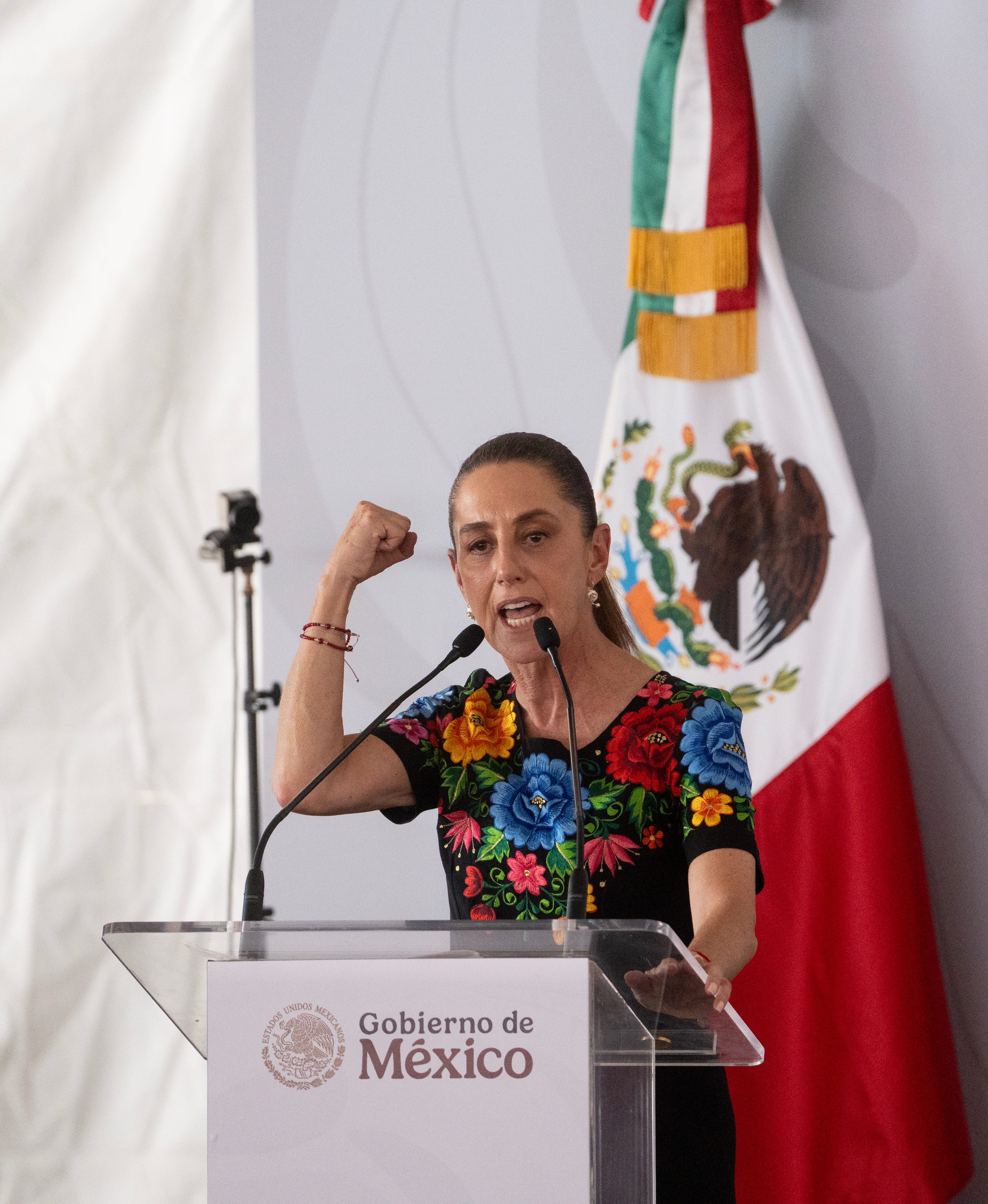
Mexican President Claudia Sheinbaum shouts “¡Viva México!” as she concludes her speech at Estadio de Beisbol Juárez Vive in Ciudad Juárez, Mexico, on Thursday, Sept. 26, 2025. Sheinbaum is touring all 32 states as part of her first annual address since taking office.
In 2024, Claudia Sheinbaum made history as the first woman elected President of Mexico, breaking more than two centuries of male leadership in the country. A scientist by training and former mayor of Mexico City, Sheinbaum’s election signaled a landmark moment in Latin American politics. Her presidency represents a profound shift in a nation where women have long fought for political representation and recognition at the highest levels of power.
Ellen Johnson Sirleaf: Africa’s First Elected Female Head of State

Ellen Johnson Sirleaf became Africa’s first elected female head of state when she won Liberia’s presidency in 2006. Her leadership came at a critical time, as Liberia was emerging from years of civil war. Nicknamed the “Iron Lady,” Sirleaf focused on rebuilding institutions, advancing women’s rights, and securing international aid for the country. Her groundbreaking election demonstrated the potential for women to lead even in nations with deeply entrenched political challenges.
Jacinda Ardern: A New Kind of Leadership

May 25, 2022; Washington DC, USA; Senate Majority Leader Charles Schumer (D-NY) and New Zealand Prime Minister Jacinda Ardern pose for photographs on May 25, 2022 in Washington, DC, the day after at least 19 children and two teachers were killed when a gunman entered Robb Elementary School in Uvalde, Texas on May 24, 2022. Mandatory Credit: Jessica Koscielniak-USA TODAY
Jacinda Ardern became Prime Minister of New Zealand in 2017 at just 37 years old, making her one of the youngest world leaders at the time. She quickly became known for her empathetic and decisive leadership, particularly during the Christchurch mosque attacks and the COVID-19 pandemic. Ardern’s approach emphasized compassion, inclusivity, and strong communication, reshaping global expectations of how leaders can govern with both strength and humanity.
Sanna Marin: Finland’s Youngest Prime Minister

In 2019, Sanna Marin was sworn in as Finland’s Prime Minister at the age of 34, becoming one of the youngest sitting heads of government in the world. Leading a coalition government dominated by women, Marin prioritized progressive policies on climate change, education, and equality. Her leadership stood out not only for her youth but also for her representation of a new generation of leaders redefining politics in the 21st century.
Michelle Bachelet: Chile’s First Woman President

HYANNISPORT– 09/23/08– Joe Kennedy and his mother Ethel, at right head down the lawn to hear Senator Edward Kennedy who played host to the president of Chile, Michelle Bachelet, at the Kennedy Compound, where the senator was presented with the Order to the Merit of Chile , the country’s highest civilian award. Cape Cod Times/Steve Heaslip
Michelle Bachelet made history in 2006 when she became Chile’s first female president. A pediatrician and former political exile during the Pinochet dictatorship, Bachelet brought a unique perspective to leadership. She focused on expanding social programs, promoting gender equality, and strengthening democracy. Her presidency paved the way for more women in Latin American politics and inspired many with her story of resilience and determination.



