
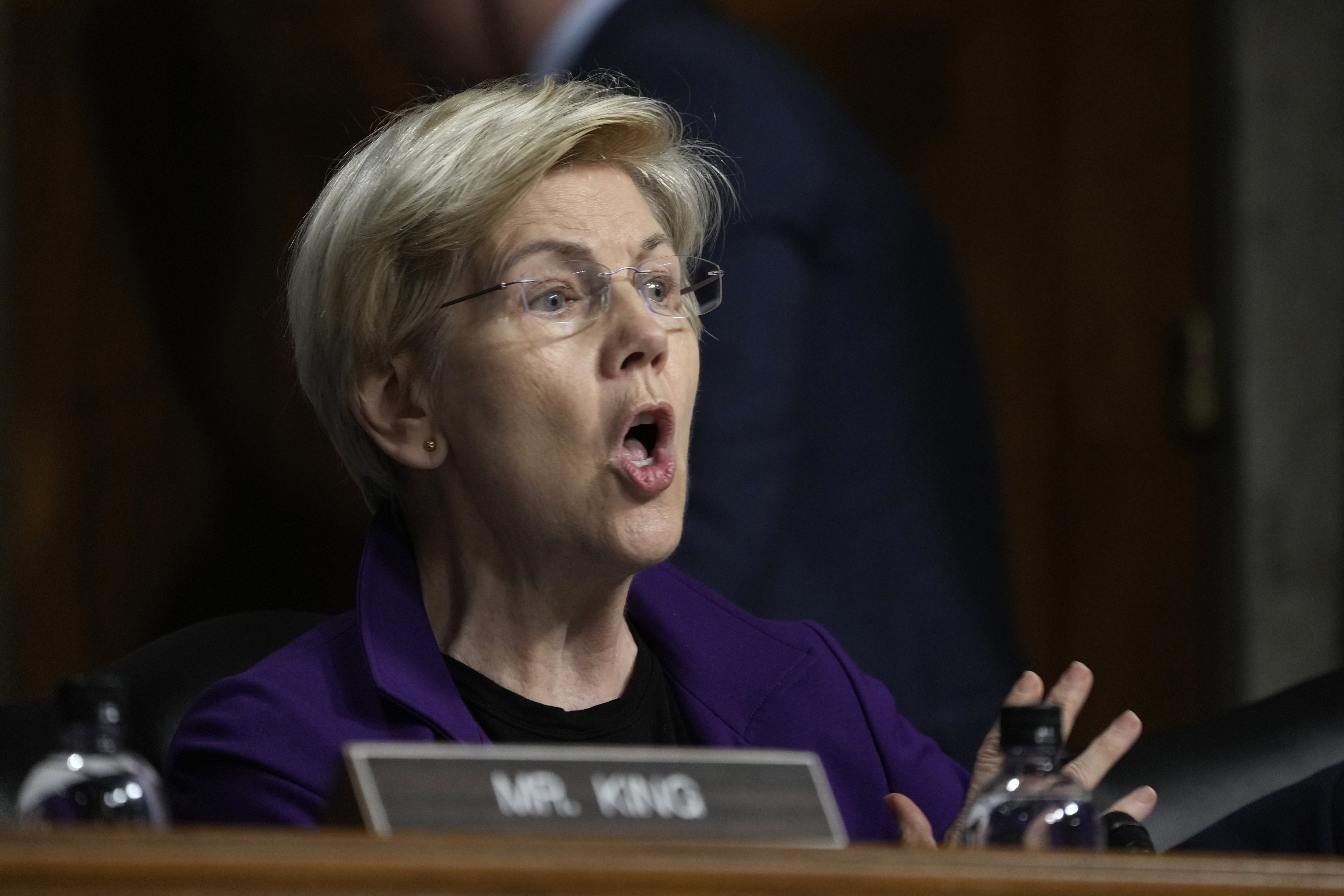

Jan 14, 2025; Washington, DC, USA; Sen. Elizabeth Warren, D-Mass., delivers remarks during a Senate Armed Services committee hearing on the expected nomination of Pete Hegseth to be Secretary of Defense on Tuesday, Jan. 14, 2025 in Washington, DC. Mandatory Credit: Jack Gruber-USA TODAY
At a Senate Finance Committee session on taxing digital assets, Senator Elizabeth Warren focused her questions on whether several cryptocurrency policy ideas would create “special rules” that lower taxes or weaken safeguards compared to traditional finance. While opening by criticizing the broader political backdrop and shutdown debate, her exchanges stayed centered on the technical tax and compliance implications for crypto—what’s taxed, when, and how it’s reported.
Warren on the De Minimis Proposal

Sen. Elizabeth Warren, D-Mass., speaks during the Senate Finance Committee confirmation hearing on Robert F. Kennedy Jr.’s Secretary of Health and Human Services nomination on Jan. 29, 2025 in Washington, DC.
One idea under discussion is a de minimis exemption that would let taxpayers ignore gains from small crypto transactions (under $300). Warren asked tax attorney Andrea Kramer whether buyers of $300 in gold or Apple stock must report gains. Kramer said yes. Warren then asked if a de minimis rule for crypto would mean crypto investors pay less tax than stock investors on equivalent transactions; Kramer again said yes. Warren cited an estimate from the Joint Committee on Taxation that such an exemption could amount to about $5.8 billion in reduced tax collections over time.
Warren’s Take on Mining, Staking, and When Taxes Are Due

Greenidge Generation Holdings of Dresden, N.Y., announced it will enter a 10-year lease for a portion of the former LSC Communications printing plant. It expects its Spartanburg cryptocurrency operation to start by early next year. Greenidge Bitcoin Usa Today 2
Warren next compared income earned by a self-employed accountant (taxed when received) to crypto miners and stakers who maintain blockchains. She described a proposal to let miners and stakers defer taxes on tokens earned until they are sold—potentially years later. Asked if that would result in less tax than a similarly situated professional paying tax upon receipt, Kramer answered yes. Warren referenced a JCT estimate of roughly $4.3 billion in effects tied to this timing change.
Warren on Reporting Rules and Law-Enforcement Visibility

The IRS is sending stimulus payments to 1 million taxpayers who filed a 2021 return but wrongly didn’t claim the recovery rebate credit.
Turning to anti-money-laundering guardrails, Warren noted that businesses receiving over $10,000 in cash must file additional reports to the IRS—rules meant to help detect money laundering and tax evasion. She asked tax professor Annette Nellen about a crypto-industry push to exempt digital asset transactions from that threshold reporting. Nellen said the purpose of the existing cash rule is precisely to surface potential illicit activity, and removing crypto from an equivalent requirement would make oversight more difficult, even acknowledging practical differences between cash and crypto transactions.
Warren’s Through-Line: “Same Risks, Same Rules”

Sen. Elizabeth Warren, D-Mass., delivers remarks during a Senate Armed Services committee hearing on the expected nomination of Pete Hegseth to be Secretary of Defense on Tuesday, Jan. 14, 2025 in Washington, D.C.
Warren’s broader point: taken together, the floated changes (small-transaction exemptions, deferral for mining/staking income, relaxed large-transaction reporting) all tilt in the same direction—toward lower taxes or reduced traceability for crypto compared to analogous activities in traditional finance. She emphasized a principle she said Congress has long applied: similar transactions with similar risks should face similar rules, whether it’s stocks, commodities, cash, or digital assets.
What to Watch Next, According to Warren

Feb 11, 2025; Washington, D.C., USA; Jerome Powell, Chair of the Federal Reserve speaks as Chairman Tim Scott (R-SC), left, and Ranking Member Sen. Elizabeth Warren (D-MA) listen during the Senate Banking, Housing, and Urban Affairs hearing of the Federal Reserve’s Semi-Annual Monetary Policy Report. Mandatory Credit: Jack Gruber-USA TODAY
The hearing did not produce new law, but it clarified the fault lines:
- Supporters of the proposals frame them as modernizing rules to fit crypto’s everyday uses and technical realities.
- Skeptics worry about preferential treatment and enforcement gaps that could erode the tax base or complicate anti-money-laundering efforts.
As lawmakers refine digital-asset tax legislation, expect continued debate over whether updates are leveling the field or carving out advantages—and how Congress measures both revenue impact and enforcement visibility in a fast-evolving market.



