
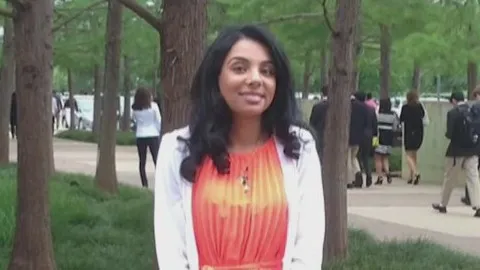

The death of 27-year-old Sonam Kshatriya has been under a cloud of uncertainty since the day her body was discovered in her Manhattan apartment in 2019. Initially ruled a suicide, the case has since grown more complicated and more troubling.
She Was Found Hanging in 2019

On September 16, 2019, Kshatriya’s ex-boyfriend told police he found her hanging in the walk-in closet of her upscale apartment, her body suspended by the belt of a terrycloth bathrobe. Dr. Julian Samuel of the New York City Office of the Chief Medical Examiner ruled her death a suicide. But almost immediately, her family questioned the conclusion. They argued that Kshatriya—a Columbia University graduate with a career in music publishing—had too much ahead of her to take her own life. Their doubts only deepened when the funeral director preparing her for cremation found extensive bruising on her body. Calling the injuries “significant and troubling,” he sent her remains back for a second look. Samuel performed an autopsy two days later, but his ruling did not change: suicide.
Her Family Wants To Reclassify the Death

That decision set the stage for years of legal battles. In February 2023, Kshatriya’s family filed a petition in New York State Supreme Court, demanding the manner of death be reclassified. Their filing cited bruises, blood evidence, and phone records that they believe point to foul play. The petition also noted that her ex-boyfriend continued to access her apartment after their breakup. Among the details the family points to are cellphone records showing Kshatriya stopped using her phone just after midnight on September 15, more than a full day before her ex said he found her body. She was also discovered in the same clothes she had worn Saturday night. Experts consulted by the family argued that the evidence was consistent with a struggle and potentially a staged scene.
An Attorney Has Compared Her Death To Ellen Greenberg’s

Attorney Joseph Podraza, representing the family, has drawn comparisons between Kshatriya’s case and that of Ellen Greenberg, a Philadelphia woman whose suspicious 2011 death—ruled a suicide despite 20 stab wounds—has become the subject of national scrutiny and a Hulu documentary. Podraza, who helped push that case back into the courts, says the pattern is clear: “When you have these problems, you can’t call this a suicide. What you need to do is more investigation to figure out what happened here.” So far, the courts have not agreed. In May 2024, a judge denied the family’s petition, even after multiple experts disputed the suicide ruling. In June, they filed an appeal, which now sits before the New York State Appeals Court.
Her Family Needs Peace

Kshatriya’s family wants to find accountability in a system where a single ruling can determine whether a death is investigated further. As Podraza put it, “Every citizen in New York state should be concerned about this case because medical examiners wield so much power and discretion in these matters as to essentially be virtually unchecked.” Nearly five years after her death, the case remains unresolved, balanced uneasily between official determination and lingering doubt. For her family, the pursuit of answers is far from over.



