
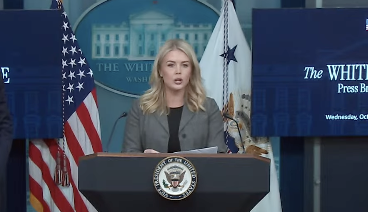
At a packed Oct. 1 briefing, Press Secretary Karoline Leavitt—joined by Vice President J.D. Vance—framed the ongoing federal shutdown as the result of a collapsed funding deal and sharp disagreement over health care policy. Both officials pressed Senate Democrats to back a short-term “clean” continuing resolution (CR) that, they said, mirrors a stopgap Congress passed earlier in the year.
Leavitt argued Democrats “shut down the government” by blocking a House-passed CR that would extend current funding into late November. She said Democrats conditioned support on “taxpayer-funded health care for illegal aliens,” a characterization Democrats dispute. Leavitt contrasted the standoff with recent administration actions she said would lower costs for Americans: a newly announced agreement with a major drugmaker to reduce prescription prices and an executive order intended to accelerate medical breakthroughs, including pediatric cancer research.
Vice President Vance echoed the message and stressed practical fallout. He said unpaid troops, paused food assistance for some low-income households, and disruption to flood insurance and travel operations would follow if the impasse continues. Vance repeatedly urged Democrats to “reopen the government first,” then negotiate broader health care issues, saying the administration is willing to discuss ways to ensure “better care at lower cost” for U.S. residents after funding is restored.
Reporters pressed Vance on two points Democrats have made publicly—that the shutdown is the GOP’s fault and that they are not seeking benefits for undocumented immigrants. Vance pointed to vote counts he said show Republicans largely supported reopening the government, and cited legislative text he argued would expand access to care for people lacking legal status. He predicted the shutdown would be short, saying some Democrats are “cracking” and signaled openness to negotiations once agencies are funded again.
Questions also ranged beyond the funding fight. Vance defended the temporary freezing of some New York transportation funds as triage during the shutdown, denied that any workforce reductions would target employees for political reasons, and said the administration’s priority is to keep “essential services” operating. On a lighter but contentious note, he addressed a social-media meme featuring Democratic leaders in sombreros, calling it a joke while insisting it wouldn’t impede talks.
When Leavitt returned to the podium, she listed anticipated near-term impacts if the shutdown persists: unpaid active-duty service members and Coast Guard personnel, pauses or delays affecting WIC enrollment, aspects of Medicare services, federal law enforcement pay, and air travel staffing. She said the Office of Management and Budget is preparing for “imminent” reductions in force if funding isn’t restored, while acknowledging the typical practice in past shutdowns has been temporary furloughs. Asked about economic effects, she said the depth depends on duration.
The briefing touched briefly on foreign and financial policy. Leavitt said the administration is awaiting a response on a Middle East proposal within “three or four days,” declined to preview specifics, and defended Jared Kushner’s involvement in regional diplomacy as “volunteer” work leveraging relationships. She also described a new federal equity stake in a U.S. lithium venture as part of “creative” efforts to bolster revenue and address national debt. On a separate legal matter, she noted the White House respects the Supreme Court’s decision to hear a case related to a Federal Reserve governor while maintaining the president acted within his authority.
On the Affordable Care Act’s enhanced premium tax credits—which are set to expire at year’s end—both Leavitt and Vance said the administration is open to discussing options but argued that debate should follow immediate action to fund the government. Pressed for a timeline on potential layoffs, Leavitt said only that they would come “very soon” if the shutdown continues.
The administration closed by saying it needs a handful of additional Democratic votes in the Senate to reopen agencies, and that it stands ready to negotiate health policy “in good faith” once the lights are back on. For now, both sides appear dug in, and agencies are preparing for a longer standoff even as leaders signal they want a quick resolution.
Source: The White House



