
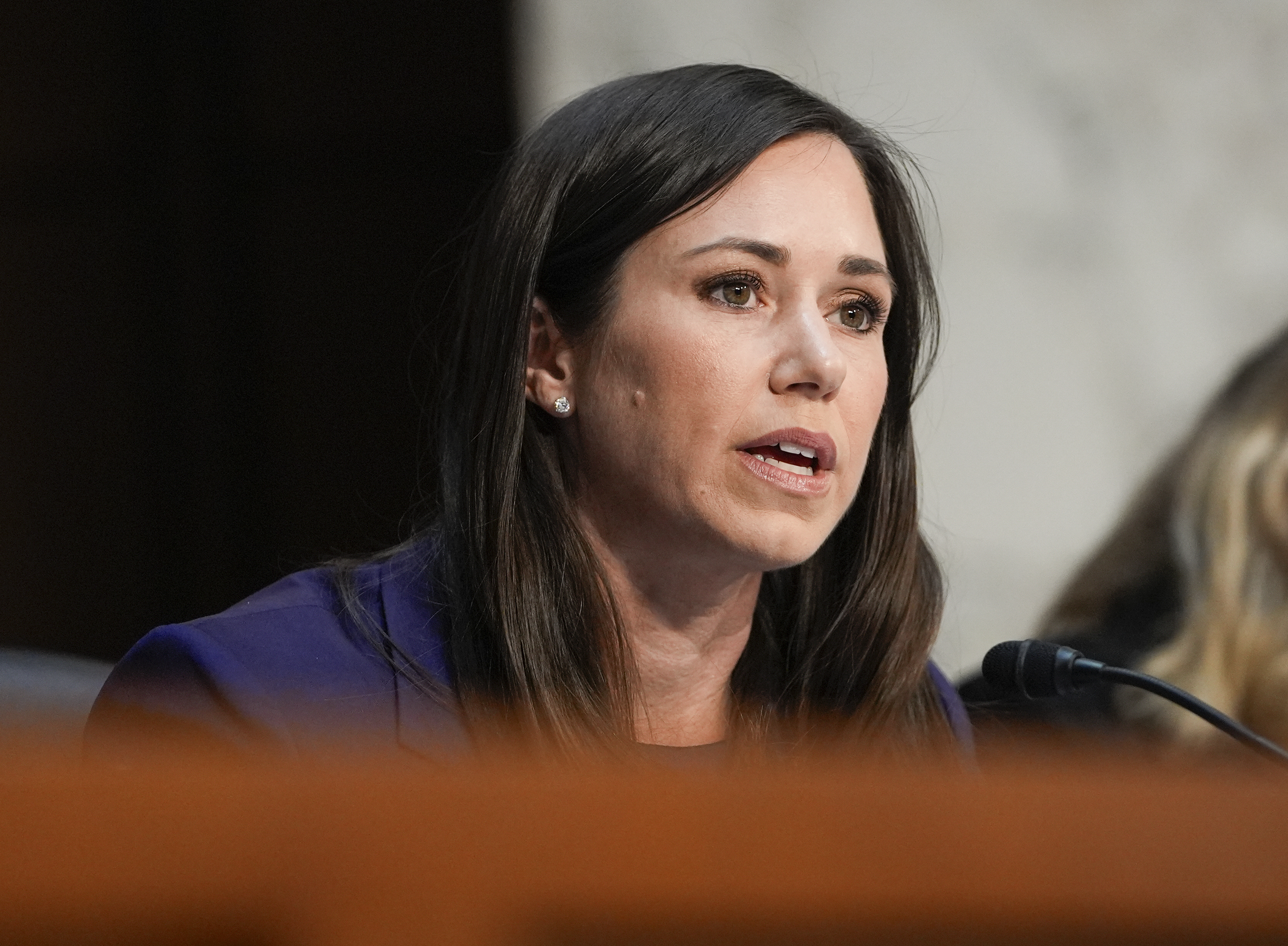
As the clock ticks toward another possible government shutdown, Senator Katie Britt of Alabama took to the Senate floor to warn her fellow lawmakers that if federal workers go without pay and government operations grind to a halt, Democrats will be the ones to blame.
The speech came during a tense debate over a continuing resolution — the stopgap measure Congress often turns to when it can’t agree on a long-term budget. Britt argued that Republicans had already put forward what she called a “clean” measure to keep the government open for seven weeks, without adding new partisan spending. In her telling, it’s Democrats who have stalled progress by tacking on billions in what she characterized as unnecessary priorities.
Her remarks fit neatly into the broader standoff playing out in Washington. With appropriations bills still bogged down and deadlines looming, lawmakers face the same familiar choice: pass a short-term fix or risk a shutdown. The difference this time is the political context. Donald Trump is back in the White House, Democrats control the Senate, and neither party seems eager to be tagged with responsibility for a disruption that would affect millions of Americans.
Britt’s argument rested on two main points. First, that Republicans have made real progress this year on appropriations, passing several bills before the summer recess — something she pointed out hadn’t happened since 2018. Second, that Democrats, by seeking to extend spending at levels set under President Biden, are ignoring the clear outcome of the 2024 election, which she said reflected voters’ preference for Trump’s economic agenda.
She argued, they were holding the government hostage to push through “a wish list of demands,” including funding she said would benefit undocumented immigrants and sympathetic media outlets.
What made her speech resonate, though, wasn’t just the partisan blame. It was the way she placed the looming shutdown in moral terms. “Make no mistake,” she said, “if the government shuts down, if federal workers go without a paycheck, if things go awry, that will be Democrats’ burden to bear.”
For Democrats, the calculation is different. They see the Republican stopgap as papering over deeper disagreements about spending priorities, while demanding cuts to programs they view as essential. Senate leaders have insisted that any deal must reflect a balance — not just partisan dictates.
In the end, the shutdown fight is about more than numbers on a spreadsheet. It’s about which party can claim to be the responsible steward of government at a time when trust in institutions is fragile. Britt’s warning is part of that contest: an effort to make sure that, if the lights do go out in Washington, the public knows exactly who to blame.
The Senate has only days left to figure it out.



