
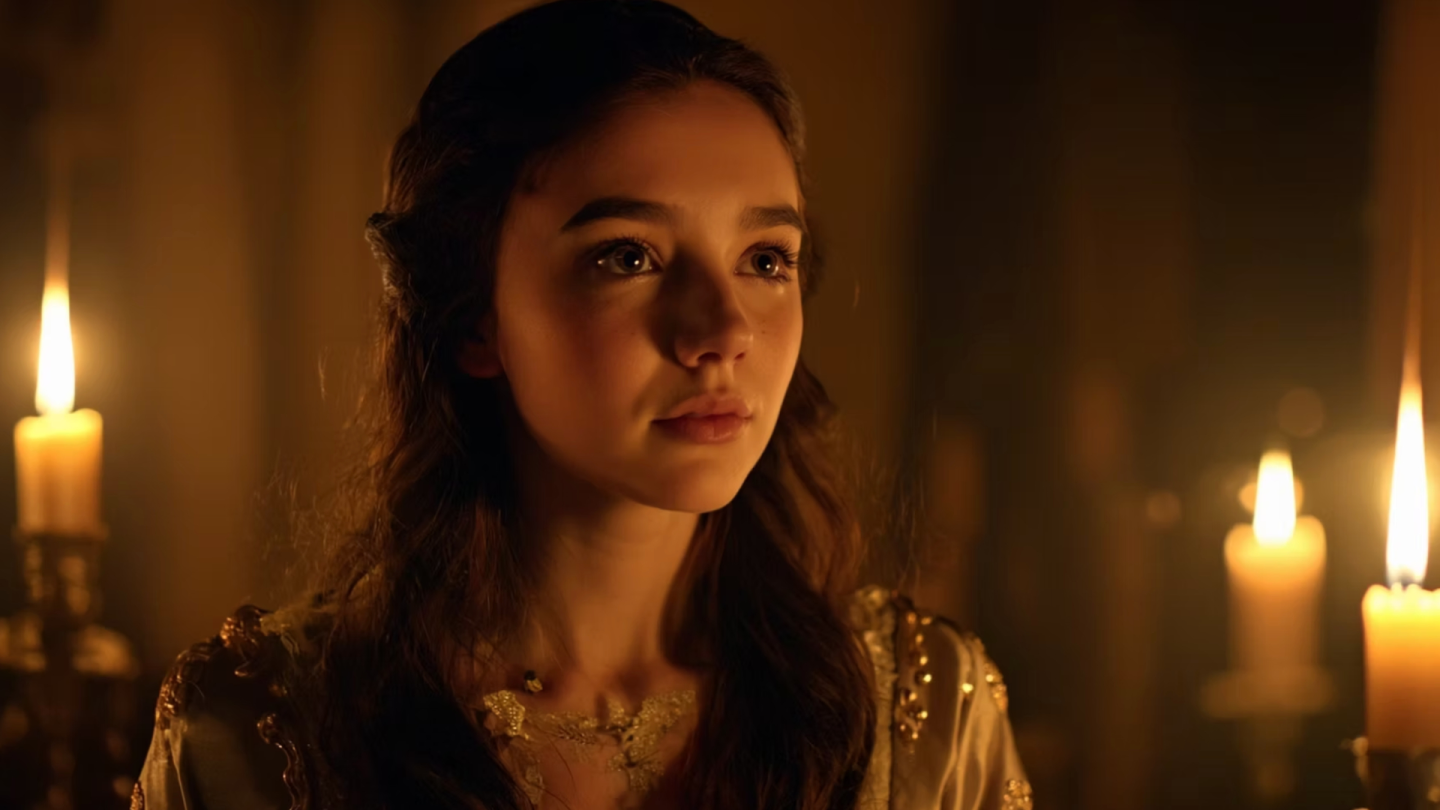
At first glance, Tilly Norwood looks like any other up-and-coming actress trying to make her way in the entertainment industry. She has polished headshots, social media accounts, and a growing online following. But Tilly isn’t a young performer waiting tables in Los Angeles between auditions. She isn’t human at all.
Tilly Norwood is an AI-generated actress, created by actor, comedian, and technologist Eline Van der Velden. And she may soon become one of the first AI performers signed to a major talent agency—a move that has ignited fierce debate among working actors and creators who fear this is the beginning of a dangerous shift in their profession.
Van der Velden, who recently launched the AI talent studio Xicoia as an offshoot of her production company Particle6, revealed the news during a panel at the Zurich Summit over the weekend. According to her, talent agents are already circling Norwood, and she expects to announce her representation in the coming months.
“When we first launched Tilly, people were like, ‘What’s that?’” Van der Velden told the audience. “And now we’re going to be announcing which agency is going to be representing her.”
The panel included Verena Puhm, head of Luma AI’s new Studio Dream Lab in Los Angeles, who echoed Van der Velden’s point: studios are already experimenting with AI behind the scenes. Both said the quiet rollout is deliberate, with public announcements expected as soon as early next year.
That sense of inevitability is exactly what worries many human performers. Actors Melissa Barrera, Kiersey Clemons, and Toni Collette all took to social media to criticize the prospect of agencies signing AI talent, some suggesting they’d boycott agencies that represent both human and artificial performers. Their fear isn’t abstract—it’s rooted in an industry already grappling with streaming economics, shrinking theatrical opportunities, and a bruising labor strike that made AI one of the central issues.
Van der Velden has tried to push back against the outrage. In a statement released after the Zurich Summit, she framed Tilly not as a replacement for real actors but as an artistic experiment.
“To those who have expressed anger over the creation of my AI character, Tilly Norwood, she is not a replacement for a human being, but a creative work—a piece of art,” she wrote. “Like many forms of art before her, she sparks conversation, and that in itself shows the power of creativity.”
She compared AI to other technological leaps in storytelling—CGI, puppetry, even animation—and argued that it should be understood as a new medium rather than a substitute for live performance. “Nothing—certainly not an AI character—can take away the craft or joy of human performance,” she added.
For many, the thought of agencies signing contracts with virtual characters feels less like a slippery slope toward human obselesence. Still, the momentum seems to be on the side of the technologists. As Puhm put it bluntly in Zurich: “All the big companies are already working on AI-assisted projects.” The question isn’t whether the industry will embrace AI, but how—and whether human performers will be able to hold the line in the process.



