
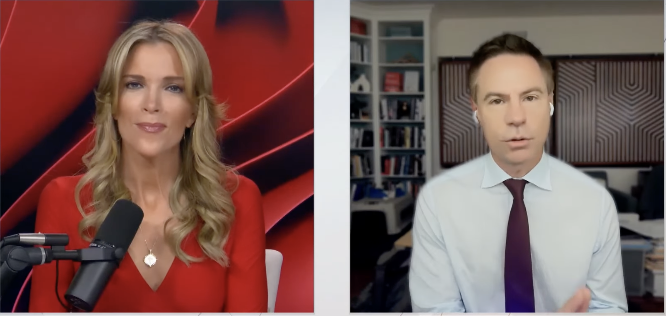
Megyn Kelly’s conversation with journalist Michael Shellenberger centers on a worry they share: growing comfort with political intimidation and violence, and what—if anything—might bring the temperature down.
Shellenberger says some progressive circles he’s encountered have reverted to framing politics as a fight against “fascism,” after briefly broadening their media diets following the last election. He argues that while certain “woke” currents are ebbing, they remain influential because they’re often the only organizing ideas available to parts of the left. Citing polling, he points to rising numbers of college students who say violence can be acceptable to stop a campus speaker and calls that trend a “civilizational emergency.”
As for causes, Shellenberger sketches a mix: social media rabbit holes, isolation, and what he describes as untreated mental illness. He also mentions sexual confusion and online subcultures as potential accelerants in recent cases, while acknowledging violent fantasies exist across the spectrum. In his view, the solution starts with concrete policy: tighten laws around crime, reform mental-health systems, and put forward clear federal legislation on contentious medical practices for minors. He wants national leadership—ideally from the White House—to advance a positive, practical agenda that reduces disorder rather than simply stages partisan showdowns.
Kelly shares the diagnosis about rising illiberalism but is less convinced that outreach can work. She notes episodes where reactions to high-profile crimes turned quickly into arguments about targets’ politics rather than clear condemnations of violence. She also pushes back on attempts to present “both sides” in equal measure when the facts of individual incidents don’t neatly align with partisan narratives. In her telling, former President Trump addresses many of these cultural flashpoints bluntly; she sees that tone as resonant with many voters even if it isn’t aimed at persuasion.
Both return to free expression as a pressure point. They argue that labeling disagreeable viewpoints as harm has encouraged censorship, shout-downs, and, in a minority of cases, justification of force. Shellenberger says the task is to “rehumanize” opponents and re-teach civic norms—protecting speakers while punishing unlawful acts, not outlawing ideologies. Kelly is skeptical that some actors want to de-escalate, noting inflammatory rhetoric from prominent figures.
The conversation ends where it began: with a call to cool the culture. Shellenberger presses for a policy agenda that reduces crime and treats mental illness; Kelly stresses moral clarity about political violence and concern that persuasion alone may not reach the most radicalized. On one point, however, they agree: a healthier public square requires defending speech, enforcing laws evenly, and resisting the impulse to answer ideas with intimidation.
Source: Megyn Kelly/YouTube



