
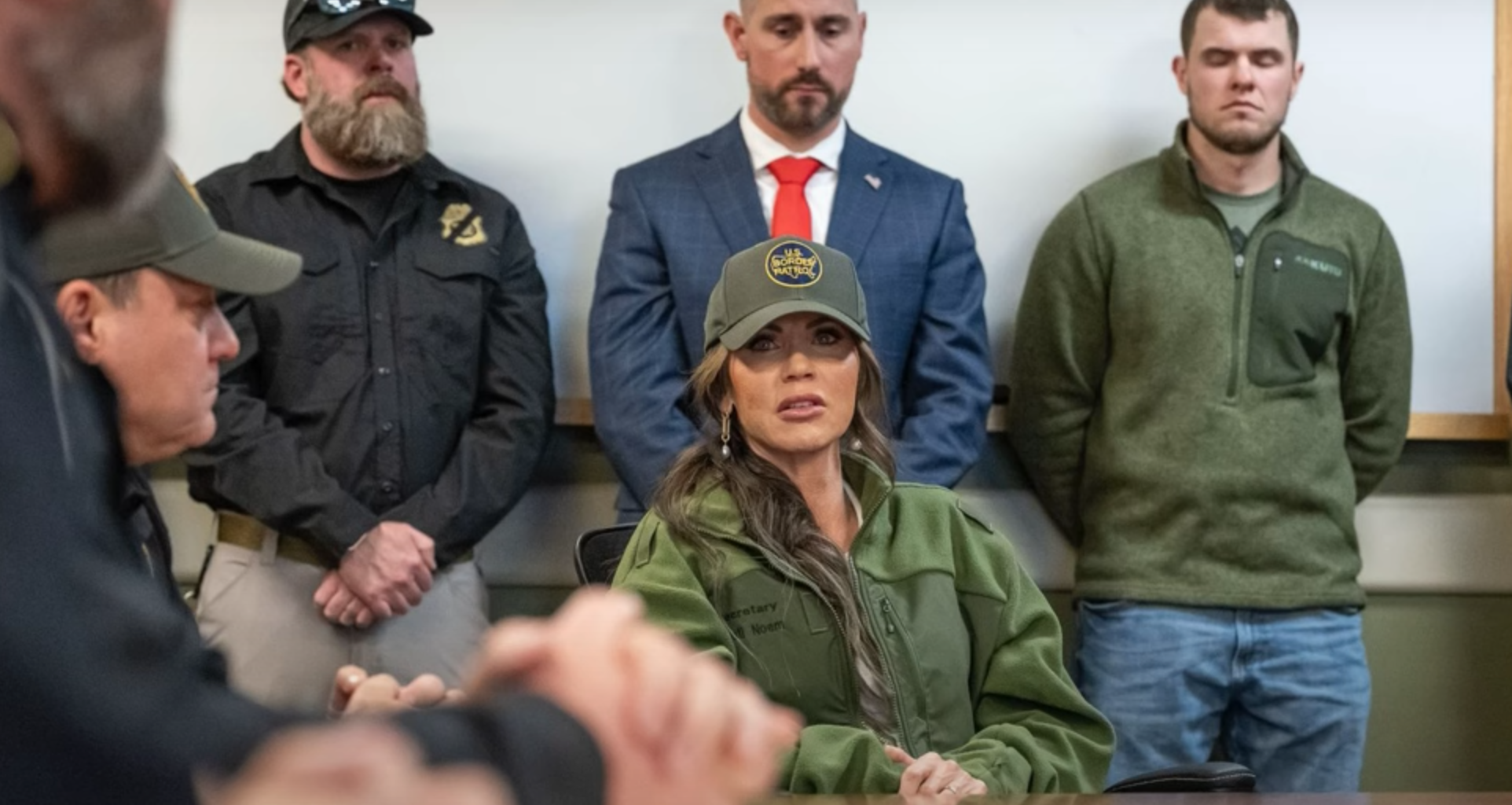

For months now, communities devastated by floods, hurricanes, and wildfires have struggled to get timely help from the federal government. Local officials in North Carolina, Texas, and elsewhere say the Federal Emergency Management Agency (FEMA) has been slow to release disaster aid, leaving families and towns in limbo. Much of the blame has landed on Homeland Security Secretary Kristi Noem, who in her current role oversees FEMA.
Noem Has To Personally Sign Off On FEMA Funds

The delays, according to multiple reports, stem from a new policy requiring Noem’s personal sign-off on any FEMA expense above $100,000. On paper, it looks like a bureaucratic safeguard. In practice, it’s meant that lifesaving relief gets stuck on her desk. “I can’t get phone calls back,” North Carolina Sen. Ted Budd recently complained. “It’s just a quagmire.”
Noem Freed Up Millions in Funds For a Pier in Florida

Newly released records tell a different story about who can get through. According to ProPublica, Noem intervened quickly to free up more than $11 million to rebuild a hurricane-damaged pier in Naples, Florida—just weeks after a major campaign donor reached out on behalf of local officials. The pier, battered by Hurricane Ian in 2022, had languished in FEMA’s review pipeline for months. Naples leaders had pleaded with the agency and even hired consultants, but little progress was made. Then the city’s mayor, frustrated by the gridlock, asked cardiologist Sinan Gursoy—one of Noem’s longtime political supporters—to help. Within days of his text to the Secretary, FEMA staff were suddenly “at warp speed.” One agency email noted they were “pushing project immediately, per leadership instruction.”
It’s Unclear if Noem’s Trip to Florida Was For Business of Pleasure

Two weeks later, Noem herself arrived in Naples aboard a government plane. She toured the pier, praised the work ahead, then dined with Gursoy at the French restaurant Bleu Provence. She stayed through the weekend at a resort marina. The trip blurred official business and personal relationships, raising questions about who benefits most when disaster aid is tied to political connections.
A Troubling Pattern

Homeland Security Secretary Kristi Noem speaks at a press conference near the intersection of Eighth and Scarritt streets in Springfield on May 7, 2025. Noem chastised Illinois Gov. JB Pritzker for its sanctuary state policies.
Noem’s office insists her actions weren’t political. A DHS spokesperson pointed out that she also visited flood-ravaged communities in New Mexico at the request of a Democratic governor. But critics see a troubling pattern. “Politics has always been a factor in disaster relief,” said Jeffrey Schlegelmilch of Columbia University. “But I’ve not heard of anything this egregious—a donor making a call and money moving right away, while others wait.”
Bad Optics All Around

U.S. Secretary of Homeland Security Kristi Noem speaks to the crowd during the 25th annual Faith and Freedom Coalition fall banquet on Sept. 20, 2025, at the Airport Holiday Inn in Des Moines.
The Naples pier is both a tourist attraction and a hub of wealth and political fundraising, where billionaires vacation and candidates court dollars. Noem herself has held fundraisers there. Her close adviser, Corey Lewandowski, is listed as a homeowner nearby. The optics of fast-tracking aid for that project while other communities wait—some still digging out from deadly floods—are hard to ignore. Noem claims that she’s protecting taxpayers. She’s argued that her tight control of FEMA spending has saved billions.



