
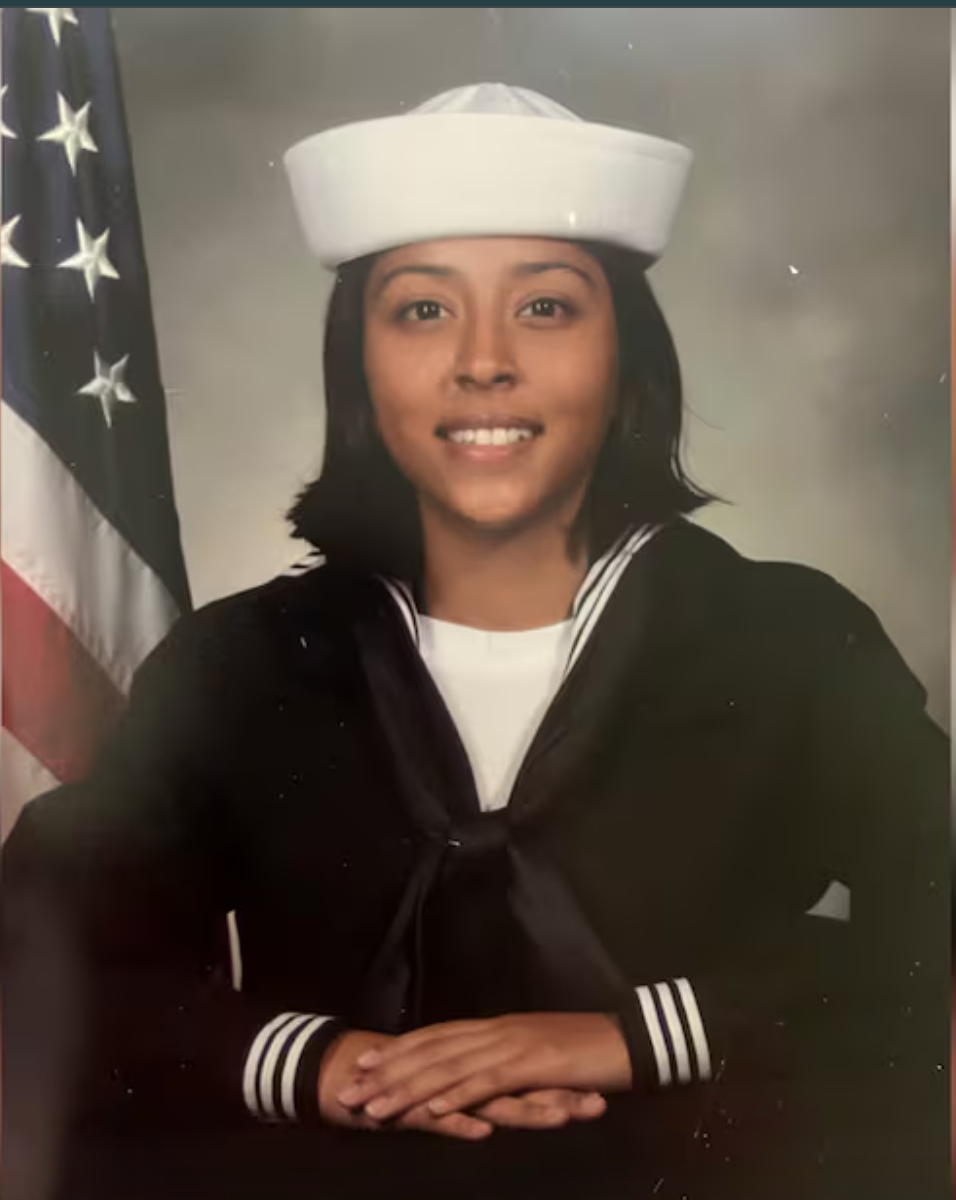

The death of 21-year-old Navy sailor Angelina Petra Resendiz has left her family and community searching for answers, not only about what happened in her final hours but also about how the Navy handled repeated warnings about the man now accused of killing her.
Her Body Was Found in A Duffel Bag

Resendiz disappeared on May 29 after she was last seen at Naval Station Norfolk. Ten days later, investigators with the Naval Criminal Investigative Service (NCIS) discovered her body in a wooded area off-base, concealed inside a duffel bag. The Virginia Department of Health’s Chief Medical Examiner has ruled her cause and manner of death as undetermined, a finding her family says reflects the condition of her remains but does little to resolve the troubling circumstances of her disappearance. “This does not change the fact that Angie lost her life and was found in a wooded area under circumstances that remain deeply troubling,” the family said in a statement. “Closure cannot come until the truth is revealed.”
Her Alleged Killer Is Facing a Litany of Charges

Their grief has only deepened as details emerged in court about the case against Jermiah Copeland, a fellow culinary seaman who served on the same ship as Resendiz. Copeland is currently being held in pretrial confinement on charges of premeditated murder, sexual assault, aggravated assault, domestic violence, and obstruction of justice.
Her Attacker May Have Kept Her Body in a Closet For Days

According to testimony at a recent Article 32 hearing, Resendiz spent the evening of May 28 at Copeland’s barracks. Hours later, she sent a brief, expletive-laced text to a friend—a message prosecutors argue was typed by Copeland. Around 2:15 a.m., she made a tearful call to another friend, asking to be picked up. Witnesses on Copeland’s floor later reported seeing her body in his room. Prosecutors allege that Copeland kept Resendiz hidden in his closet for several days before moving her body in a borrowed Jeep and abandoning it in a wooded area roughly 10 miles away.
A Pattern of Violence

Jan 7, 2025; Washington, DC, USA; Soldiers march alongside the U.S. Army’s Caisson Detachment escorting the casket of former President Jimmy Carter from the U.S. Navy Memorial to the Capitol to lie in state in Washington on Tuesday. Carter died Dec. 29 at the age of 100. Mandatory Credit: Brendan McDermid-Pool via Imagn Images
For Resendiz’s mother, Esmeralda Castle, the revelations are devastating but not shocking. She has argued that the Navy overlooked a clear pattern of sexual violence, transferring Copeland from ship to ship rather than removing him from service. In Norway, prosecutors allege, he recorded himself assaulting a female sailor. Months later, he was transferred again—this time to the USS James Williams, where he became shipmates with Resendiz. “There is a pattern, and there is a practice [among] people in the military who have these issues that hurt each other and instead of taking care of it, we move it around because people don’t want to get in trouble,” Castle said after the hearing.
Her Family Wants Answers

The Navy has maintained that it followed procedures. But Resendiz’s family—and many outside observers—see echoes of a broader, long-standing problem in the military: a culture of protecting the institution’s image over protecting its members, particularly women. For now, the official cause of death may remain unresolved. But prosecutors are moving forward with a case that could put Copeland behind bars for life without parole. Resendiz’s family says they won’t stop pressing for answers—about what happened to her, and about why she was put in harm’s way in the first place. “Angelina was a kind and compassionate young woman who brought light into our lives,” Castle said. “Her loss leaves a void in our hearts that can never be filled.”



