
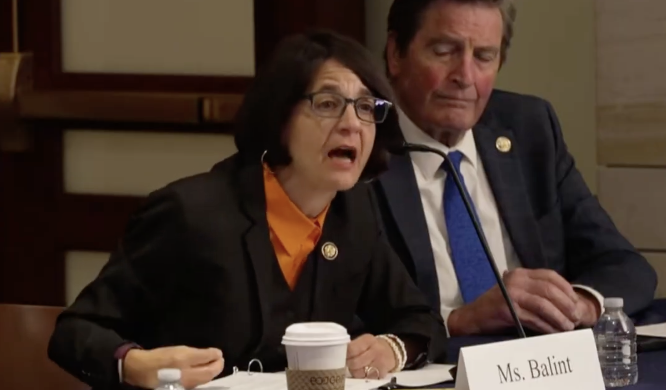
At a recent congressional hearing, Representative Becca Balint of Vermont delivered deeply personal and emotional remarks about the impact of immigration enforcement policies on children. Speaking without her prepared notes, Balint drew on her own family history to emphasize the lasting harm such practices can cause.
She recalled how her grandfather was killed in the Holocaust, and how her aunt—then a young child—was asked at school whether she had Jewish parents at home. That moment, Balint explained, left her aunt with a lifelong sense of guilt and trauma that followed her until her passing last year.
Balint connected that painful history to present-day accounts of children in the United States who feel responsible for exposing their undocumented parents when asked questions in schools or by authorities. “This is what we are doing to our children,” she said, stressing that young people are being placed in impossible situations where their trust and innocence are used against them.
She called the practice “trauma perpetrated by our government” and described it as “craven cruelty in our name.” Balint urged her colleagues and the public to confront the reality of what children with undocumented parents are experiencing. She framed her remarks as an appeal to give voice to those children, to ensure their struggles and fears are not overlooked in political debates about immigration policy.
Balint’s testimony highlighted the human consequences of enforcement practices, shifting the focus away from abstract policy discussions to the lived experiences of children and families. Her words served as a reminder that debates about immigration touch directly on questions of compassion, trust, and the responsibilities of government toward vulnerable communities.
By drawing on history and personal loss, Balint underscored the urgency of protecting children from lasting psychological harm and called for a more humane approach.
Source: Congresswoman Becca Balint



