
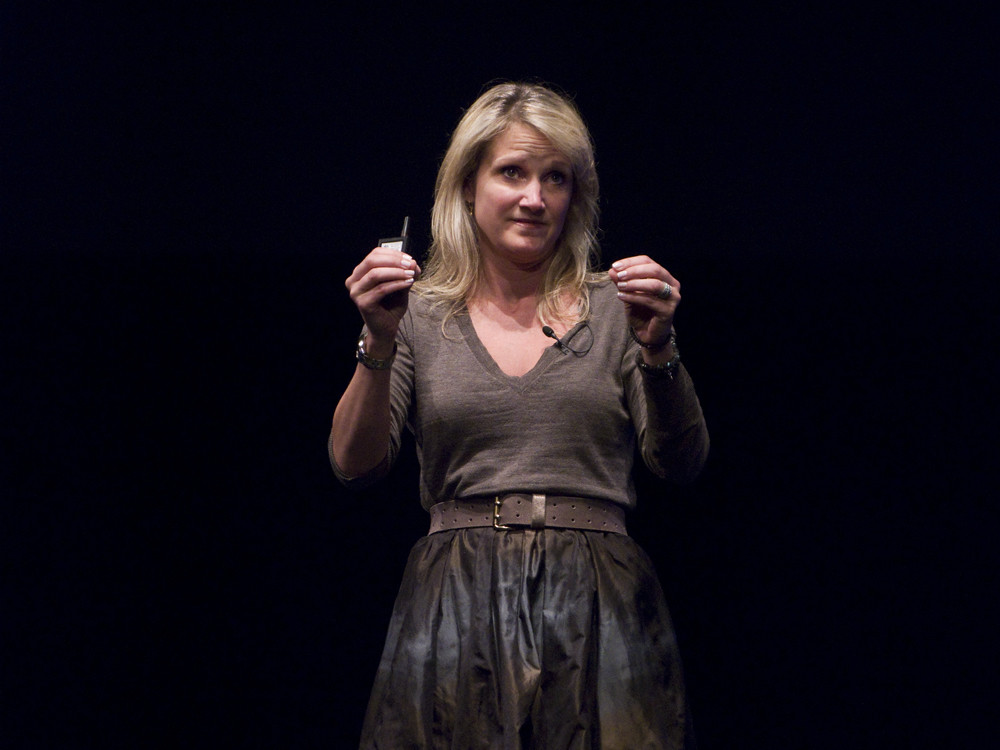
On Sunday’s “Meet the Press,” Mel Robbins—author, podcaster, and evangelist of practical self-help—offered a stripped-down case for her latest big idea: the “Let Them” theory. Its premise is deceptively simple. Stop trying to control other people, she argued, and you’ll reclaim the time, energy, and attention to control the only thing you actually can—your response.
Robbins told moderator Kristen Welker that the concept has two parts. The first is the headline: “Let them.” Let people be who they are—late to meetings, sloppy with boundaries, stubborn in their views. “The moment you’re stressed or frustrated, say ‘let them,’” she said. That phrase, she argues, interrupts the reflex to micromanage and lowers the temperature on daily frictions, from traffic to tense family dynamics. The second part is where the work happens: “Let me.” As in, let me decide what deserves my time; let me change my behavior; let me respond rather than react. It’s a modern gloss on old ideas—Stoicism, Buddhist detachment, the spirit of the Serenity Prayer—translated into a tool you can use mid-commute or mid-argument.
The pitch lands differently because Robbins frames herself as the antagonist in her own story. She described years of living by other people’s moods and expectations, culminating in a nadir in 2008–09: unemployed at 41, $800,000 in debt, drinking heavily, dreading the day before it began. That’s when she stumbled into the “5 Second Rule”—counting down 5-4-3-2-1 to force action before anxiety talks you out of it. The same logic runs through “Let Them/Let Me”: interrupt the pattern, then move.
Robbins says the appeal is partly that the tool is usable immediately. Psychologists warn that trying to control the uncontrollable breeds stress; Robbins’ counter is a boundary you can speak out loud. She also leans hard on research—she cites dozens of experts in the book and says clinicians use countdown “starting rituals” to break avoidance loops. The larger message, she insists, is agency: “Fear kills action, but action kills fear.”
Her success gives the message reach. Robbins has sold millions of books and built one of the world’s top podcasts; TIME has described her as offering listeners “a reason to believe in themselves.” In the interview, she said The Let Them Theory is a No. 1 bestseller, with more than 6.5 million copies sold, and that the podcast has amassed tens of millions of viewing hours. Those numbers, and her plain-spoken delivery, help turn a familiar insight into a shareable habit.
Critics say the advice can be simplistic, and Robbins doesn’t dispute that it’s simple—she embraces it. She’s not a therapist, she reminds audiences, and she doesn’t take private clients. Her goal is to distill the “exquisite” science into something a tired parent can remember at the kitchen table. If professionals sniff at the meme-ability, her response is, fittingly, “Let them.”
The broader promise of “Let Them,” though, is less meme than method. It’s an argument for reallocating attention in a noisy, anxious era: let them be who they are—and let me choose, on purpose, how I show up. For Robbins, that is where focus returns, relationships soften, and change—personal, then communal—actually begins.



