
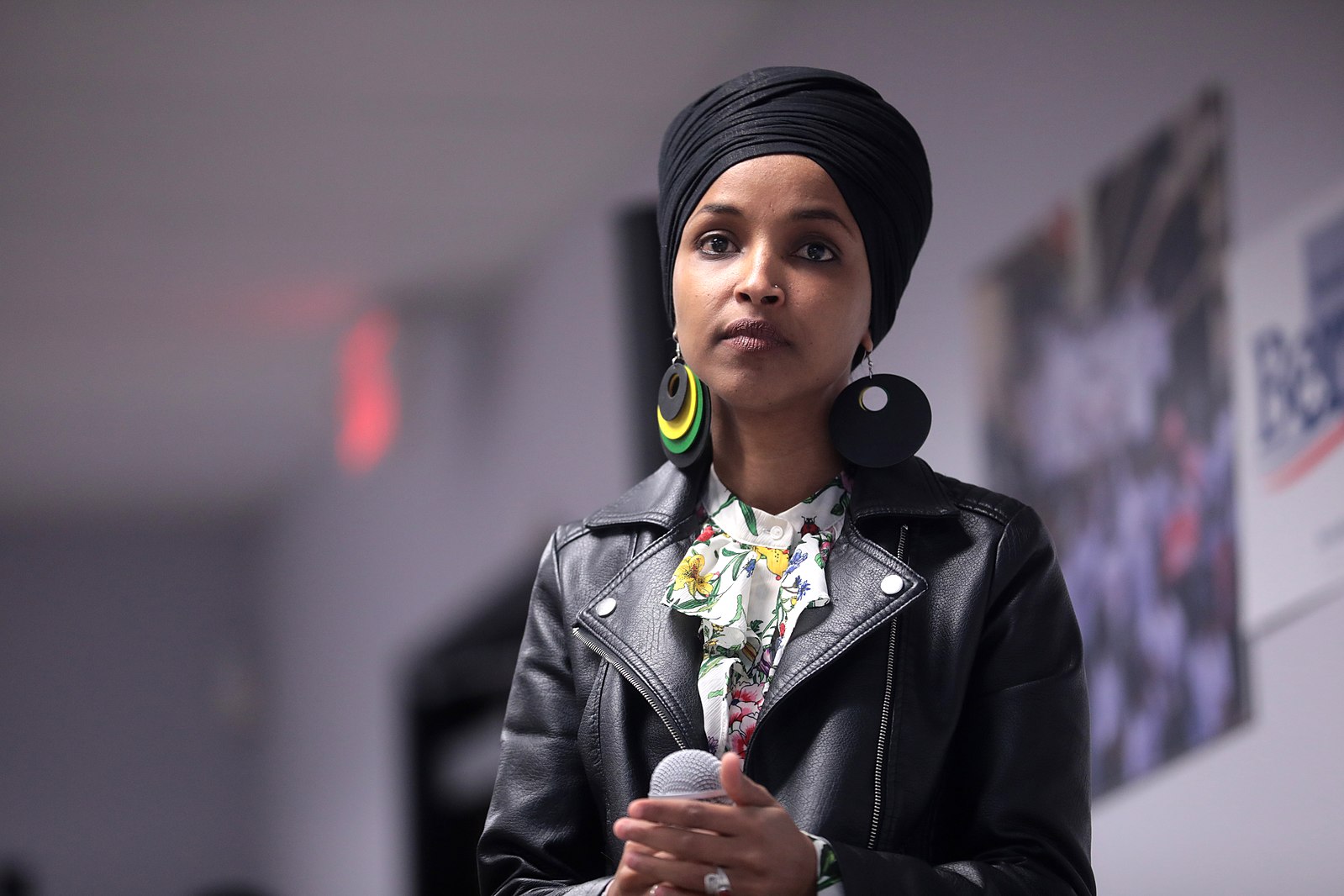
Representative Ilhan Omar of Minnesota has long been a lightning rod for criticism, but this past week has carried a sharper tone than anything previous.
The spark came after Omar’s remarks on the assassination of conservative activist Charlie Kirk. Representative Nancy Mace of South Carolina quickly moved to censure her — a bid that ultimately failed but unleashed a torrent of ugly language. Conspiracy theorists and Republican lawmakers alike escalated the attacks, with some calling for Omar to be deported or banned from Congress altogether. Then Donald Trump joined in, taking to social media to question her loyalty to the country and, later aboard Air Force One, mocking her Somali heritage in a sweeping tirade about immigrants.
For Omar, none of this was new. She has been targeted by Trump before, and the consequences were not just rhetorical. In past years, the threats against her became so pronounced that she required full police protection. This week, speaking about the renewed attacks, Omar said the cycle was predictable: “Here’s a president who is always unhinged, always deranged, always creating chaos and division. And he seems to have a real obsession with anyone that is an immigrant in this country that is not of European descent.”
Omar also pointed out the double standard. Trump, she noted, never criticizes his own immigrant wife’s accent or background. Instead, he reserves that scorn for elected officials like her — officials chosen by hundreds of thousands of Americans. “I serve over 700,000 constituents in Congress,” she said. “I literally have the same certificate he does.”
But beneath her frustration was a more sobering warning. The rhetoric, she argued, isn’t just noise. It has consequences. She spoke about past threats to her life, people arrested with weapons after threatening to kill her, and the constant stream of voicemails and messages that follow every round of attacks. When colleagues or pundits call her a “terrorist” or an “enemy of the state,” she said, it’s not political sparring. “That, I believe, is an incitement for someone to take action. And that is very dangerous.”
She framed the attacks as part of a political strategy — a way to gin up hate, energize a base, and raise money. But she was clear about one thing: “One thing they are not going to succeed in is silencing my voice.”
Omar also tied the rhetoric back to the real-life struggles of her district. Minnesota farmers are facing economic strain from tariffs. Families are worried about health care, food insecurity, and job shortages. “This is a president presiding over an economy that is not working for anyone,” she said.
Democratic leaders, from Hakeem Jeffries to Chuck Schumer, have spoken out in her defense, condemning the vitriol and warning of the dangers it poses. “As Americans,” she said, “we should not be comfortable with leaders exposing themselves in this way. It embarrasses us as a country — and it puts lives in danger.”



