
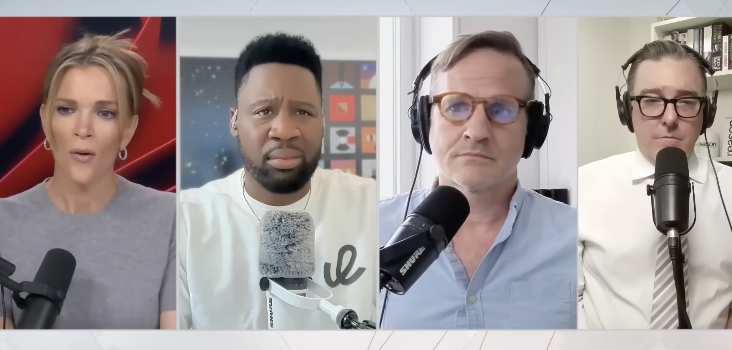
Megyn Kelly, joined by Kmele Foster, Michael Moynihan, and Matt Welch of The Fifth Column, reflects on the assassination of Charlie Kirk—a frequent guest and colleague—and the unsettling online reaction that followed. The hosts commit to continuing their planned live tour with Kelly, framing public engagement as the appropriate response to intimidation.
They pivot to a broader concern: cultural decay revealed by the immediate spin, denial, and celebratory posts that surfaced after the killing. Kelly cites a National Review essay warning of a mounting “pattern of violence and madness,” and the panel agrees that the past week’s discourse felt like gaslighting—claims rushed out with certainty, often contradicting emerging facts. Their core plea is simple: pause, gather evidence, and resist tribal certainty when tragedies become politicized.
A striking point is how unusual this crime appears: targeted violence against a pundit, not an officeholder. Moynihan notes the rarity, recalling the 1984 murder of Denver radio host Alan Berg, and argues that debates over the shooter’s politics can eclipse the essential truth—Kirk was killed for what he believed and said. That should not require throat-clearing qualifications like “I didn’t agree with him,” they argue; condemnation should be unequivocal.
Still, the episode acknowledges moments of grace. Kelly highlights an essay by New York Times columnist Ezra Klein, which defended open argument and civility, even as Klein faced criticism from his own side. She also shares a private, compassionate note from Pod Save America’s Tommy Vietor—an example, she says, of humane solidarity that needs amplification.
Foster cautions against drawing conclusions about an entire movement from its worst actors. He warns that social media magnifies fringe behavior and that a culture eager to brand opponents irredeemable can drift toward endorsing rhetorical or physical harm. Polling, he says, suggests most people—across parties—reject political violence; the challenge is getting the broad majority to call out the zealous minority within their own ranks.
Throughout, the panel stresses epistemic humility: in the immediate aftermath of violence, it is okay to wait. Don’t assert with “a thousand percent” certainty—especially not the opposite of what early evidence indicates. This standard, they argue, should apply to media outlets, intellectuals, and anyone with a platform.
The discussion closes on a sober, human note. Kelly and her guests speak of Kirk as a colleague encountered in countless hours of spirited debate—relationships real and meaningful even without friendship in the traditional sense. The best response, they agree, is to keep showing up: on stage, on air, and in good faith. If anything constructive can emerge from a week of shock and vitriol, they hope it is a renewed commitment to argue fearlessly, to reject dehumanization, and to model disagreement without cruelty.
Source: Megyn Kelly/YouTube, Our Cultural Decay Exposed After Charlie Kirk Assassination Leftist Reaction, with The Fifth Column



