
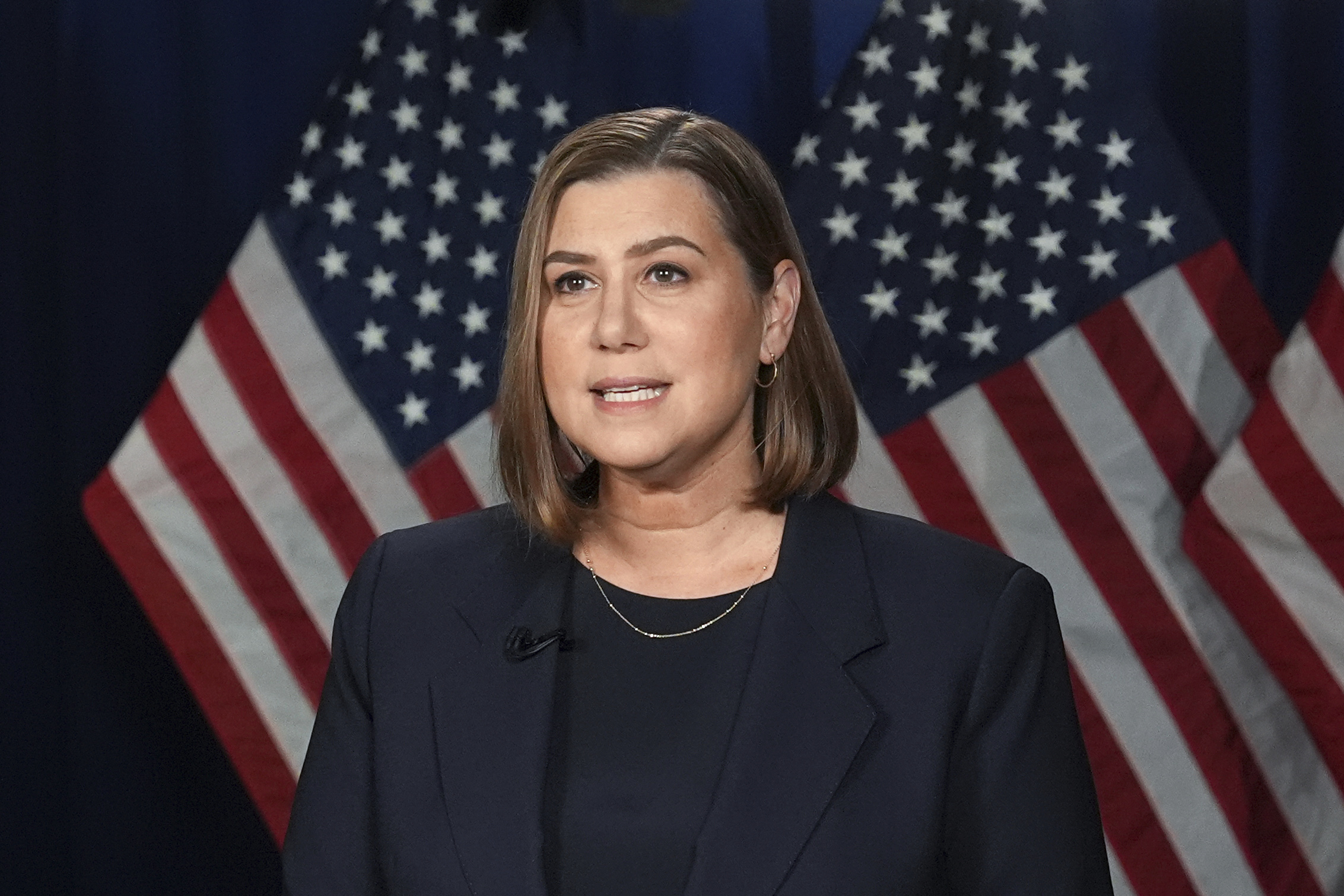
Michigan Senator Elissa Slotkin used her address to the Levin Center for Legislative Oversight and Democracy this week to deliver both a personal tribute and a pointed warning. Speaking before former colleagues of the late Sen. Carl Levin, Slotkin praised the man she called her model for public service while underscoring how fragile democratic oversight has become in today’s political climate.
The event marked the tenth anniversary of the Levin Center, founded to carry on the work of the longtime Michigan senator who built his reputation on integrity and a relentless commitment to congressional oversight. Slotkin, just months into her own Senate career, framed her remarks around Levin’s example and the lessons he left behind.
She recalled her earliest memories of Levin as an 11-year-old touring his Capitol Hill office, later as a young CIA analyst briefing senators in Baghdad, and then as a Defense Department nominee sitting before Levin’s Armed Services Committee. Slotkin noted that Levin’s reputation for integrity often carried more weight with voters than whether they agreed with him on any particular issue. “I didn’t agree with him on X or Y,” she remembered constituents saying, “but he had integrity, so I voted for him.”
Slotkin emphasized that for Levin, oversight was not about partisan advantage but about protecting the very structure of American government. She pointed to his investigations into corporate tax loopholes, campaign finance violations, and Enron’s accounting abuses as evidence of how he turned difficult, technical issues into fights for fairness. Even against his own party, she noted, Levin did not back down — citing his sharp questioning of the Obama administration’s Afghanistan troop surge as proof that his loyalty was to the truth, not to political expedience.
That willingness to push back, Slotkin argued, is in short supply today. She lamented what she described as her colleagues’ willingness to hand over congressional power to the executive branch. “Oversight should not be a partisan exercise,” she said, stressing that the American tradition of questioning authority was born out of distrust of power itself, not of a particular political party.
The senator also linked Levin’s legacy to the present moment, where she sees attempts to undermine independent institutions like the Federal Reserve, to block the release of congressionally appropriated funds, and to profit personally from public office. These actions, she said, would have appalled Levin. “He hated when people got rich off the backs of the taxpayer,” she told the audience, imagining him today “leading the charge” against such abuses.
Slotkin described Levin as humble to the end — recalling how he arrived at her campaign endorsement event in a Honda Civic because he didn’t care for trappings of power. That humility, combined with a dogged sense of purpose, made Levin, in her words, the model she aspires to emulate as a senator.
“I constantly think to myself, what would Carl Levin do?” Slotkin said. “When faced with difficult questions, he never simply admired the problem. He acted.”
For Slotkin, the task now is to keep that flame alive. “I will do everything in my power to carry on that legacy every single day in the moment we find ourselves in,” she concluded.
The speech was both a eulogy for a bygone model of political service and a call to action: to return to the basics of Article I authority, to insist that oversight is patriotism, and to remember that integrity is still the highest standard an elected official can reach.



