
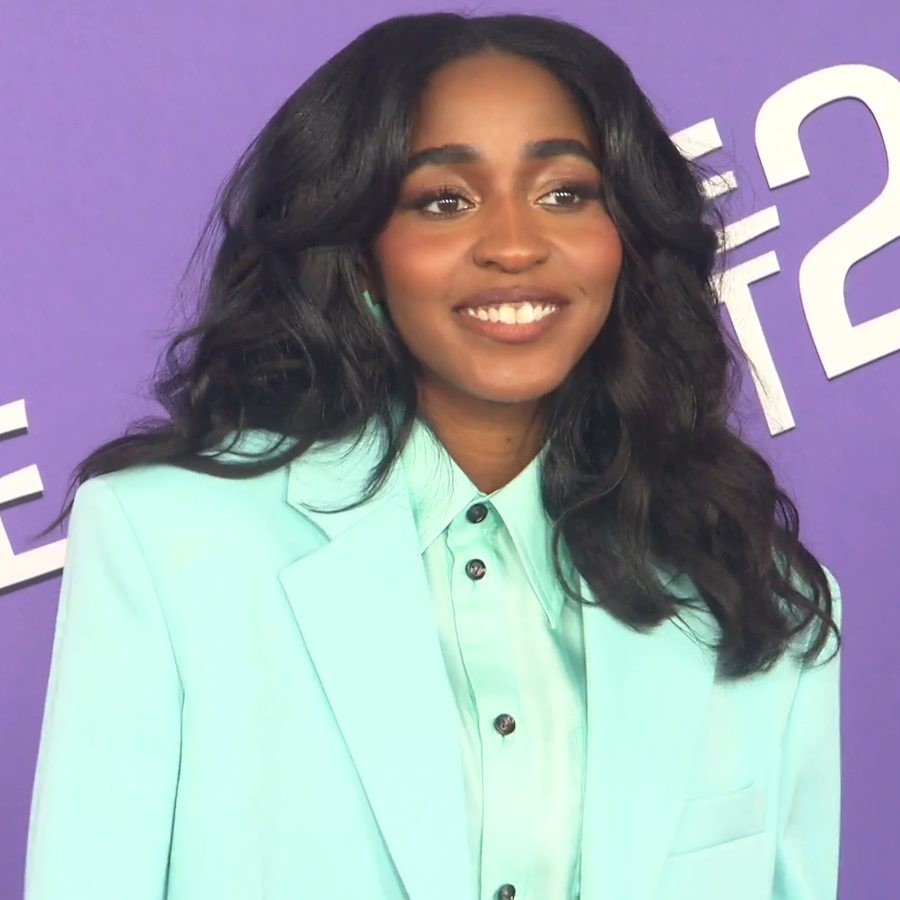
The question was already awkward, but the way it was framed made it worse. Actress Ayo Edebiri and her After the Hunt co-stars Julia Roberts and Andrew Garfield were seated for an interview on Italy’s ArtsLife TV when journalist Federica Polidoro asked them to reflect on “what was lost during the politically correct era” and how Hollywood might move forward now that the #MeToo and Black Lives Matter movements were “done.”
The three actors were visibly taken aback. Roberts asked Polidoro to repeat herself. Garfield looked toward his colleagues as if to measure their reactions. And when Polidoro clarified that her question was only intended for Roberts and Garfield — pointedly excluding Edebiri, the only Black cast member — the moment shifted.
Edebiri, who has quickly become one of the most celebrated young performers in Hollywood, refused to stay quiet. “The movements aren’t done at all,” she said. She noted that while the hashtags may not trend as loudly as they once did, the work itself continues every day. “I do think that there’s work being done by activists, by people every day that’s beautiful, important work, that’s not finished, that’s really, really, really active, for a reason, because this world is really charged.”
Roberts and Garfield echoed her point, agreeing that neither #MeToo nor Black Lives Matter could be described as finished.
The exchange, clipped and circulated online within hours, set off an immediate backlash against the journalist’s phrasing and framing. Social media users described the question as dismissive, racist, and deeply unprofessional. TikToker Chae’ Jones called it “blatantly racist” in a video that drew more than 1.5 million views. Others praised Edebiri for her composure and Roberts and Garfield for visibly signaling that she should be included in the conversation.
That the exchange happened during the press tour for Luca Guadagnino’s After the Hunt only underscored its weight. The film follows a Yale professor, played by Roberts, whose life unravels when a colleague and close friend is accused by a student of sexual assault — a storyline that directly engages with questions raised by the #MeToo movement. To ask whether the movement was “done” while promoting a film so clearly in conversation with it struck many as tone-deaf.
Polidoro defended herself afterward, saying her intent had been to ask “uncomfortable” questions and accusing critics of trying to “muzzle journalism.” In her follow up she said that the real issue is how people misinterpreted her phrasing. Her response, however, only amplified the criticism, with many pointing out that she never addressed why Edebiri was omitted from the original question in the first place.



