
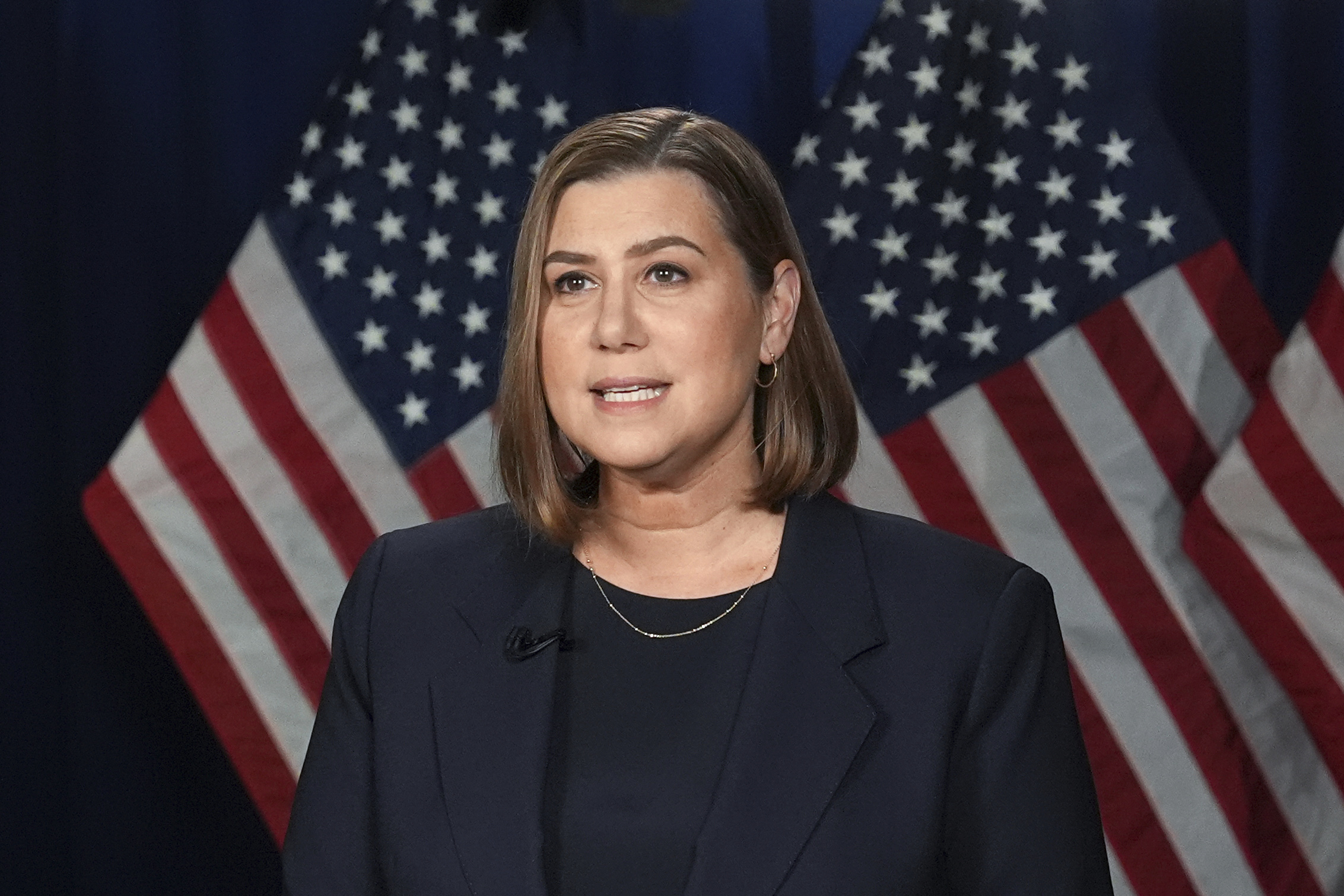
Rep. Elissa Slotkin (D-Mich.) is not known for mincing words, and when she spoke this week about Russian President Vladimir Putin, she reached for a metaphor that cuts to the heart of the moment. Watching Moscow launch its most aggressive strikes on Kyiv since the early days of the war while simultaneously testing NATO’s patience, Slotkin said Putin was behaving “like a toddler,” pushing limits to see how far he could go.
Slotkin’s frustration was aimed at both Russia and Washington. She laid out the timeline: Trump “rolling out the red carpet” for Putin in pursuit of a Nobel Prize, Putin responding with a series of public rebukes, from his high-profile meetings with Chinese leadership to a barrage of attacks in Ukraine. Now, she argued, Moscow is escalating again — sending drones across NATO borders, daring the alliance to respond.
“This is testing, plain and simple,” Slotkin said. “And like a toddler, if you don’t respond firmly, you’re only encouraging more of the same.”
The question facing NATO — and by extension, the U.S. — is how to respond without falling into a direct confrontation with Russia. Slotkin acknowledged the dilemma. “It’s damned if you do and damned if you don’t. No one wants a direct war with Russia. But what message are we sending if we keep letting these violations slide?”
She pointed to the possibility of invoking Article 4 of the NATO treaty — the consultation mechanism that could escalate to Article 5, the collective defense commitment that would obligate all members to act. The line drawn by President Biden and other NATO leaders early in the war was stark: “not one inch” of NATO territory could be violated without triggering a response.
For Slotkin, the U.S. has already fallen behind. She criticized the administration for stalling on a bipartisan sanctions package that, she argued, could be passed tomorrow. The bill, crafted by lawmakers across the aisle, would tighten economic pressure on Russia. Instead, she said, the president has been hesitant, still hoping to coax Putin toward restraint.
“I don’t think a Nobel Prize is in his future,” she added, with a bite of sarcasm.
The underlying tension in Slotkin’s remarks is about credibility. If NATO’s warnings are repeatedly tested without consequence, the deterrent effect weakens. Slotkin framed it in plain terms: a toddler only respects boundaries once they’re enforced.
Her comments also reflect a broader anxiety: that Trump’s overtures to Putin have left the U.S. appearing soft, and that continued hesitation could embolden Moscow even further. The stakes, as she sees them, are not just about Ukraine, but about the integrity of the international order.
“We need to send a strong message,” Slotkin said. “Otherwise, Putin will keep walking all over us.”



