
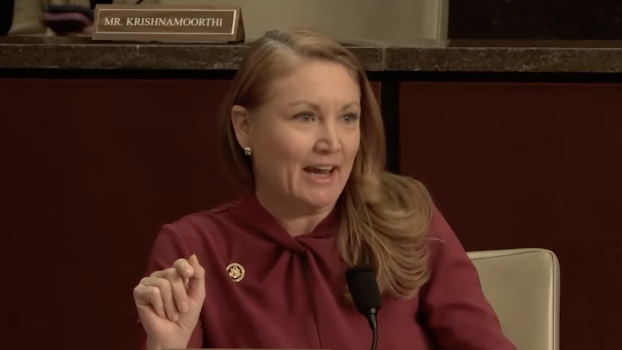
During a heated committee hearing, Representative Melanie Stansbury voiced sharp criticism of federal efforts to pass new laws affecting Washington, D.C., without local input. Speaking to a room crowded with residents and activists, she underscored that none of the bills under discussion had been given public hearings or vetted by the city’s leadership.
Stansbury argued that the timing of the markup — coinciding with the final day of the National Guard’s federally ordered occupation of the capital — was no coincidence. She pressed committee leaders on whether the White House had coordinated the legislation, repeatedly asking if the bills were drafted at President Trump’s request. The chairman and bill sponsors denied direct coordination but admitted they supported the administration’s approach.
Her central criticism focused on the lack of consultation with D.C.’s elected officials. “Not one toe stepped in D.C. City Hall. Not one consultation with D.C. City Council or law enforcement. Not one public hearing. Not one voice from D.C. heard,” Stansbury declared. She challenged the bill’s sponsors, asking whether they had ever attended a D.C. City Council meeting, consulted the mayor, or even lived in the city. Sponsors responded that they had spoken with police officers, business owners, and residents — but avoided confirming engagement with city leadership.
The debate highlighted a long-standing tension: D.C. residents pay federal taxes and follow federal laws but lack voting representation in Congress. Federal lawmakers frequently impose policies on the city, a dynamic critics call undemocratic. Stansbury leaned on that history, urging colleagues who wanted to shape the city’s future to run for mayor instead.
“This is just another power grab dressed up as ‘public safety,’” she said, framing the legislation as a partisan attempt to override local authority. Her closing words drew applause from attendees: “Until then, the people of D.C. say, hands off this city.”
The markup continued despite her objections, with supporters emphasizing public safety and declining crime rates as justification. But the clash illuminated broader questions about self-governance, federal authority, and whether Washington, D.C. — home to more than 700,000 residents — should control its own future without congressional interference.
Source: Congresswoman Melanie Stansbury



