
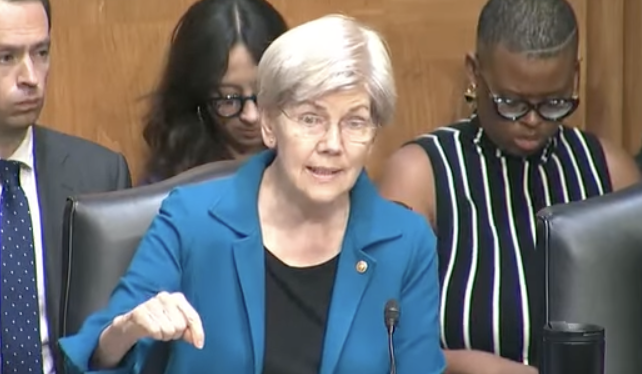
At a Senate nomination hearing, Ranking Member Elizabeth Warren issued a forceful warning against confirming Stephen Miran to the Federal Reserve Board, framing the decision as a test of the Senate’s commitment to central bank independence.
Warren opened her remarks by accusing former President Donald Trump of seeking to “seize personal control of the Fed in an attempt to escape accountability” for the nation’s ongoing economic challenges. She argued that instead of revising tariff or energy policies, or restoring health care coverage for millions of Americans, Trump is using the Federal Reserve as a scapegoat for rising costs and a weakened job market.
The senator expressed deep concern over Miran’s ties to Trump, saying the nominee had “failed every independence test” expected of a Federal Reserve governor. Warren noted that Miran, currently serving as a White House economist, refused to resign his role while seeking confirmation. She argued that holding both positions would create an obvious conflict of interest, describing it as “one day too many” of divided loyalties.
Adding to her concerns, Warren highlighted that Miran declined to acknowledge the results of the 2020 election, calling him “the first admitted election denier to sit on the federal board” if confirmed. She warned that such a stance would erode public trust and credibility in the Fed’s decisions.
Central to her critique was the risk of undermining the Fed’s independence — a principle that Warren said has been critical for maintaining market stability and public confidence. She cited historical examples, such as President Nixon’s pressure on the Fed, to show how political interference can lead to long-term inflationary spirals.
“This nomination sets up an obvious Trump loyalty test,” Warren said, not only for Miran but for Senate Republicans as well. She urged her colleagues to put constituents’ interests over party loyalty, warning that confirmation could lead to “years of potentially higher prices and higher unemployment.”
The hearing underscored the sharp partisan divides over monetary policy, executive influence, and the future of the Fed’s independence. For Warren, the stakes go beyond a single nomination: she framed it as a broader test of whether senators will uphold their responsibility to protect the integrity of one of the nation’s most powerful economic institutions.
Source: Senate Banking, Housing and Urban Affairs Committee



