
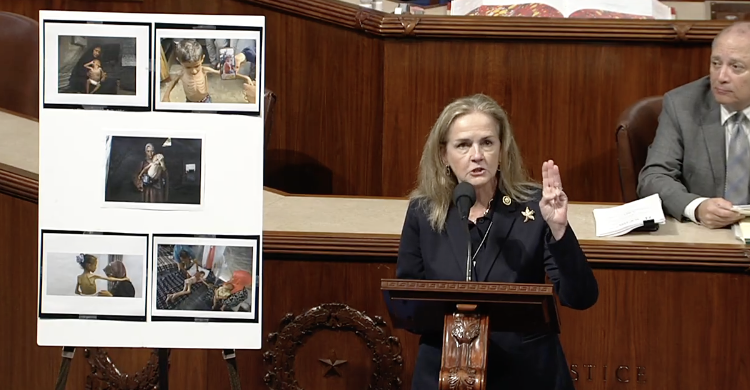
On the House floor, Representative Madeleine Dean of Pennsylvania delivered an emotional appeal for urgent humanitarian action in Gaza, describing what she called a “man-made famine” that is endangering children, families, and aid workers.
A Dire Situation
Dean, a member of the House Foreign Affairs Committee, painted a stark picture of conditions inside Gaza. Nearly two years into the Hamas–Israel war, she said, civilians are paying the highest price. According to her remarks, it has been nearly 200 days since the Israeli government blocked food, water, and medicine from entering the territory, leaving Palestinians with almost no resources.
She described emaciated children too weak to walk or speak, doctors and journalists struggling with hunger, and aid workers risking their lives to deliver care. Photographs of the crisis, she noted, were “very difficult to look at” but essential to understanding the gravity of the situation.
The Humanitarian Argument
Dean emphasized that the suffering in Gaza is not the result of natural disaster but deliberate policy. “This massive suffering is man-made,” she said, “thus, it must be stopped by man.” Her remarks stressed the moral responsibility of governments to respond with compassion, rather than what she characterized as neglect or cruelty.
She criticized both Israeli leadership and the U.S. administration, faulting them for failing to protect civilians or provide humanitarian relief. According to Dean, policies have even denied Palestinian children passage to the United States for medical treatment.
A Call for Action
Dean’s demands were direct: an immediate ceasefire, the release of all hostages—living and dead—and the delivery of humanitarian aid. She framed these as urgent moral imperatives rather than political choices.
Her speech concluded with an appeal for “mercy and moral clarity,” urging both American leaders and the international community to end the suffering.
The Larger Context
The conflict between Hamas and Israel has persisted for nearly 700 days, leaving deep scars on both societies. Dean’s remarks highlight growing concerns in Congress about the humanitarian consequences of the war, especially as civilian casualties and shortages worsen.
While lawmakers remain divided on foreign policy approaches to the conflict, Dean’s statement reflects a broader push from some members of Congress for stronger humanitarian interventions and accountability in the Middle East.
For Dean, the message was clear: government actions, or inaction, determine whether innocent people live or die. “Children are starving,” she said, urging colleagues to confront the crisis with urgency.
Source: Congresswoman Madeleine Dean



