
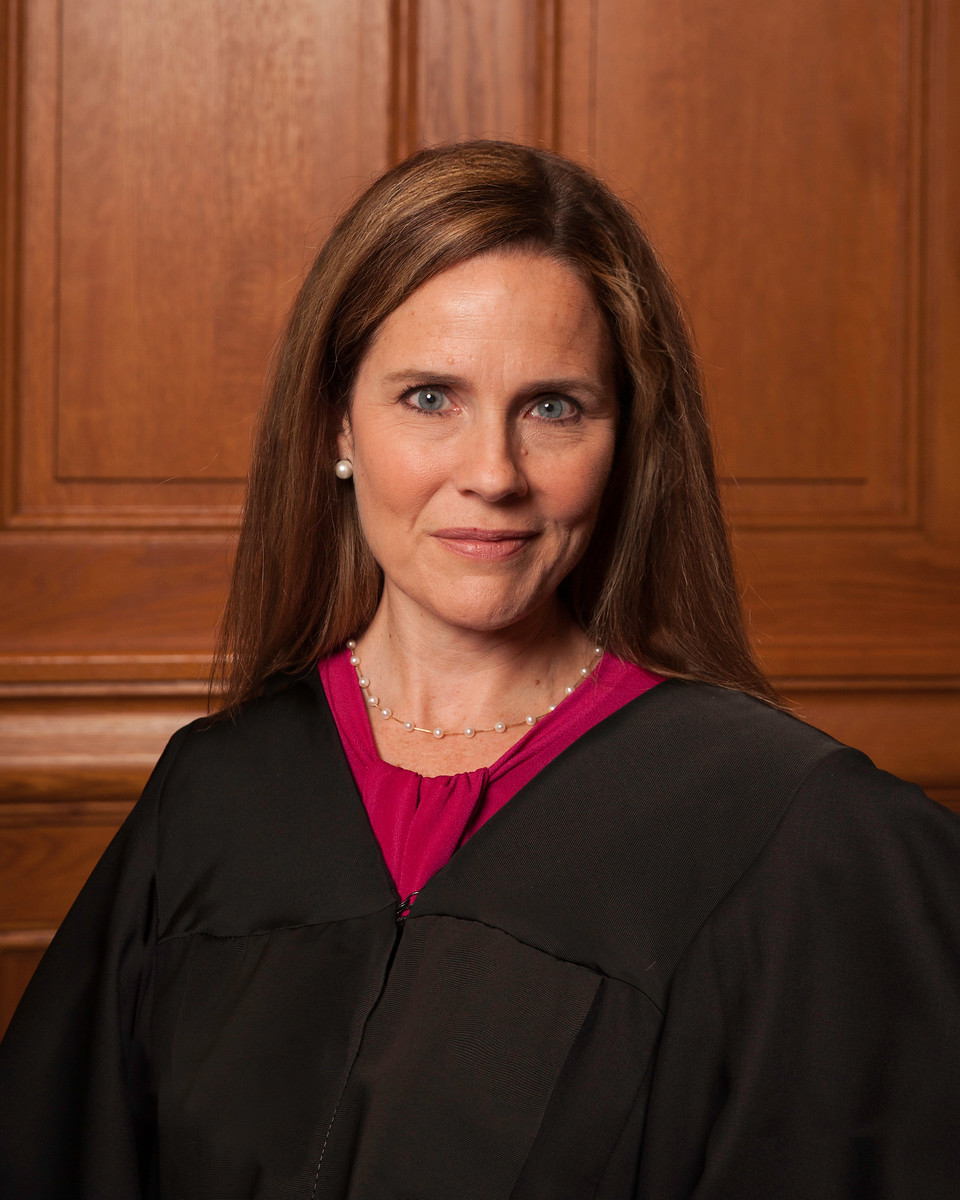
Justice Amy Coney Barrett is talking more than Supreme Court justices usually do. In the past, the inner workings of the court were guarded, cloaked in tradition and silence. But with her new book and a round of interviews, Barrett is trying to explain both herself and the institution she serves on at a moment when public trust in the court is at historic lows.
Barrett’s book, Listening to the Law: Reflections on the Court and Constitution, comes out this week. She has been promoting it in high-profile settings, including a 55-minute sit-down with CBS’s Norah O’Donnell for Sunday Morning. The book is billed as an insider’s reflection on how the court operates, though critics argue it raises as many questions as it answers.
At the heart of Barrett’s argument is a denial that politics drives the court’s decisions. She writes, “My office doesn’t entitle me to align the legal system with my moral or policy views. Swearing to apply the law faithfully means deciding each case based on my best judgment about what the law is.” She told O’Donnell something similar: “I want Americans to understand the law and that it’s not just an opinion poll about whether the Supreme Court thinks something is good or bad.”
That insistence on independence is complicated by Barrett’s record. Since joining the court in 2020, she has been a reliable member of the conservative majority, a bloc that has overseen a sweeping shift in American law: overturning Roe v. Wade, dismantling affirmative action in college admissions, and loosening gun restrictions. As The New York Times’ Jodi Kantor notes, Barrett is part of a three-justice fulcrum that often decides close cases. While she has occasionally joined her Democratic-appointed colleagues, it has rarely been on the court’s biggest decisions.
Barrett’s reflections on Roe are particularly striking. In her book, she argues that abortion rights never held deep roots in American legal tradition. “The evidence does not show that the American people have traditionally considered the right to obtain an abortion so fundamental to liberty that it ‘goes without saying’ in the Constitution,” she writes. That perspective reinforces her view that questions like abortion should be resolved through legislatures rather than courts.
But her public comments also hint at a desire to push back on speculation that the court could revisit other rights. Asked about Hillary Clinton’s prediction that the court might “do to gay marriage what they did to abortion,” Barrett said critics “say a lot of different things” and emphasized that the court has long recognized marriage as a fundamental right.
Still, the broader context is unavoidable: Americans are skeptical. A Gallup poll last year found confidence in the Supreme Court at its lowest point in half a century. Barrett acknowledges that concern, saying she wrote the book in part to build trust. “I wanted people to understand how the court works,” she told O’Donnell. “Because the court belongs to every American.”
Whether that effort will succeed remains an open question. Barrett is both defending the legitimacy of a court that has ushered in a conservative legal revolution and trying to cast herself as independent of partisan politics. For a justice who may shape the court for decades to come, the tension between those roles is now part of the story she is telling — and the story the public will continue to debate.



