
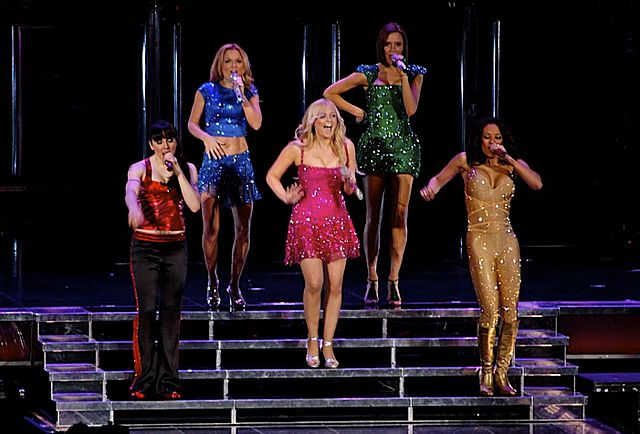
In the mid-1990s, five young women from the United Kingdom burst onto the global stage with platform shoes, bold personalities, and an unapologetic message: girl power. The Spice Girls — Mel B, Mel C, Emma Bunton, Geri Halliwell, and Victoria Beckham, (or Scary Spice, Sporty Spice, Baby Spice, Ginger Spice, and Posh Spice if you’re nasty) were a cultural phenomenon that changed the way young women saw themselves and the world.
Their story began in 1994, when the five singers were brought together by a management company eager to create the next big act. But almost immediately, they proved they were more than just manufactured pop. Unhappy with how things were being run, the women walked out on their management, redefined their own vision, and landed at Virgin Records. That decision — to seize control of their careers — was an early sign of the independence and determination that would come to define them.
Then came “Wannabe.” Released in 1996, the single rocketed to the top of charts in 37 countries and became one of the best-selling singles of all time. The song was playful, chaotic, and joyful, but it also carried a clear message: friendship and solidarity mattered more than anything. For millions of young women, “Wannabe” was more than a catchy tune — it was an anthem.
At the heart of their appeal was girl power. Sure, it could have just been marketing fluff but the Spice Girls made it special. Theycelebrated individuality and encouraged young women to be loud, confident, and themselves. To be a part of their hyped up girl gang you didn’t have to fit into a single mold. You could be playful, serious, glamorous, or tough, and all of it was valid.
Their influence stretched far beyond music. The Union Jack dress, glittering tracksuits, pigtails with scrunchies, and those towering platform sneakers all became signature fashions of the era. The Spice Girls made it cool to stand out and break the mold.
The group also crossed into film with Spice World (1997), a delightfully surreal romp that critics may not have loved but fans adored. Watching the film today, it’s so clear that the girls were making their version of the Beatles Hard Day’s Night. It’s fun, it’s campy, it rules.
Of course, their journey wasn’t without bumps. In 1998, Geri Halliwell’s departure felt like an earthquake, testing the group’s resilience. The remaining members continued with new albums and tours, and though their chart dominance eventually faded, their influence never did. Reunions in 2007 and 2019 drew massive crowds, a reminder that the affection for the Spice Girls had never gone away.
Why do they still matter? Part of it is pure nostalgia. Their songs — “Wannabe,” “Say You’ll Be There,” “Spice Up Your Life” — still have the power to turn a party into a singalong. But it’s also their message. The idea of girl power — that women can define themselves, support each other, and own their voices — is timeless.
The Spice Girls gave the world more than pop hits. They gave a generation of young women permission to dream bigger, to speak louder, and to make space for themselves.



